All tech companies need to re-think manufacturing in China, it was always a risky proposition, but not, you'll really be handing your IP over to the Chinese Government, and they'll be collecting IP from every company.
Where will it move to? Tech manufacturing is till pretty labor intensive, at least for the consumer electronics that I believe we are talking about. India probably has better IP laws on paper, but they're hardly ever enforced.
The only real alternative seems to be that we reach such a level of automation that these factories can be viable in the West. Still, China's integration into the supply chain of global manufacturing is breathtaking. Not saying it can't be done, but it would take some amount of determination, deliberation and a lot of Capital and skilled labor force.
Come to South Asia -- Bangladesh, India, Pakistan. Weak institutions and governments concerned solely with infighting mean that your IP is probably safe from marauding governments.
All your clothes are already made there, why not your electronics?
I noticed some electronics components I order are coming from Thailand. Stem is strong in those regions and China's workforce are demanding higher skills jobs. While factories are moving towards automation because of rising wages.
I fear it might even be too late. Tech-hotspots like Shenzhen are so highly specialized on producing any kind of tech extremely fast, that the Western world cannot replicate that without massive costs that would instantly double all hardware prices. The kind of expertise needed to create those manufacturing powerhouses might not even be in Western hands anymore.
Nowadays, if you are a hardware start-up that needs specialized components, you don't start in the EU or NA - you go to Shenzhen to get your prototypes cheap and super fast. Often within two days from design to working prototype.
Tesla has just found out that producing 100 cars a week is absolutely different than producing 5,000 cars a week. The same applies to every other product. A few PCB fans will not have the expertise to build factories that output millions of PCBs a month.
This is interesting. Is the problem here a lack of skilled labor force to do so? I'm wondering what prevents the US from having vocational programs to teach American workers those skills and kickstart that kind of manufacturing again.
Maybe we as consumers in the west just need to suck up the higher costs for our tech stuff to be manufactured back here in the Americas and Europe. Sure it won't be pleasant for our wallets, but it'd be worth it.
Are you saying that African nations have laws that protect American IP? I think you're sorely mistaken.
China has been moving to Africa mostly for influence building and securing supplies of raw materials. It is a brilliant strategy, and I would argue that as long and they're helping improve the quality of life, an overall good thing.
China is NOT opening up high-tech manufacturing plants in Africa. In fact most of the infrastructure in Africa is sourced from Chinese Companies (e.g. railway coaches)
The "trade war" thing has been the most/only interesting ideas to come from trump, to me.
It was interesting in that he did recognized (fluked into?) an actual shift in public/expert position. China is the pro-trade side. They'll be willing to make concessions, do the work, etc. It's the beijing consensus now, not washington.
Large american companies are still on the pro-trade side, being multinationals. They also have pretty obvious interests. They want market access, american IP protection, they want freedom to operate mostly independently of the CCP.
Market access is a typical request. This has been the basic definition of free trade for a while. They probably can get this protection. Independance is a trickier one. I'm not sure it's realistic. Imagine a Chinese company operating in the states, with an a fully imported senior management and all "c-level" discussions in chinese. I dunno. I doubt they'll get what they say they want.
The "IP" point is interesting. Why does the american economy want US IP rules everywhere so bad? Same reason Disney does. They have the biggest IP portfolio. A pharmaceutical company's value (for example) is mostly IP. IE, the market cap is the IP portfolio.
Why would china want to use this IP system, where they start with fewer chips than the US? I'm not sure. Who says a fake Gucci is a crime, if the buyer knows it's fake. Why should a US drug patent grant a worldwide monopoly. This one would be a concession.
Anyway, it's not just pharmaceuticals that need IP. The economy is ethereal these days. Capital isn't building and machines. It's intellectual property of one sort or another, whether or not it's legally formalized as such.
..
PS: I'm Irish, not American. Realize from the wild votes in both directions (didn't think) that I've obviously waded into live american politics. I wasn't trying to make any political points. Just musing and bullshitting on the shifting world of political interests after reading the morning paper. I'm not against anyone, nor do I mean anything too seriously.
> Who says a fake Gucci is a crime, if the buyer knows it's fake.
It's not enough for the buyer to know it's fake, everyone who sees it must also know it's fake, or else the fake is freeriding on the cachet generated by Gucci's marketing.
People buy prominently branded fashion objects for their signalling value more than their utility value. Signalling which is easy to fake isn't very valuable.
It's perfectly possible to think that social signalling using fashion objects is wrong and should be eliminated, but signalling appears biologically determined and is common across many species, it's unlikely to be eliminated without committing greater wrongs.
It's worth having a dialogue about this. This specific type of signaling (flashing brands) is enforced by social rules that prevent chameleons. It would be pretty easy to imagine relaxing this - allowing products to appear externally in any form, as long as their nature is always recognizable to the owner (to prevent fraud). It's not clear this would be bad for society.
IANAL, but it seems to me that plastering logos all over a handbag is an abuse of trademark functionality doctrine. The function of the pattern is to make the owner appear wealthy, not to prevent buyers from being misled.
The purpose of brands and high fashion is not to be functional in the utilitarian sense. They are meant purely for signalling and their utility is an afterthought at best. See for e.g. women's jeans which have fake pockets.
For people who care about such things, its more important for their outfit to be congruent to some fashion principles (color, fit etc.) rather than the actual utility that such things provide.
Fashion is but the extreme end, where 90% or more of the value is created by the branding and designer cachet, but it goes all the way to much more prosaic items, like washing machines (Miele) and DIY tools (Makita), where the brand is acting much more as protection for a promise of quality, yet the branding still has pose value - showing off your middle class credentials when someone is visiting your house or borrowing your tools. I don't think there's any real cut-off point where you get to say it's an abuse, because value is whatever we humans think is valuable, whether that's high quality or socially desirable.
I wasn't trying to make a semantic point, more of a sovereignty or legislative point.
I'm perfectly willing to concede the semantic point: that bag is fake. The legislative one is "does thia have to be a crime?"
Trademark (like most IP rules) are ultimately decided mostly on utility grounds. Does this IP system produce or destroy economic value, and who's value is it producing and destroying.
Maybe China can do without trademarks and patents. Whatever you think about ip laws in general, there is certainly a self interested swing in favour of more liberal if you don't currently own any IP.
This has always been the case. America "stole" IP from Britain during the industrial revolution. China is doing the same now. IP laws are part of the legal doctrine of any country; another Sovereign entity cannot be compelled to follow it legally. So you use other tactics, e.g. membership in the WTO, which gives access to Western markets, to try and force other Sovereign nations to respect those laws.
It is very fascinating. There is a LOT of nuance behind the question of why certain countries manage to industrialize/develop and others fail to. And then answer isn’t obvious or simple. I think this is a nice article about this specific topic: http://foreignpolicy.com/2012/12/06/we-were-pirates-too/
It's more important to know where your money/the profit is going IMHO, who is being rewarded for their effort, etc, what type of behaviour is rewarded/perpetuated.
Similarly, do we want to reward people who participate in and perpetuate Pyramid-Ponzi scheme-like structures?
Where money and resources flows will have an impact on quality of life, the amount of offspring, and the role modelling/knowledge/behaviours passed down through generations.
Please stop to reconsider reality before labeling China "pro-trade".
As a foreigner, China is truly off-limits:
* In China, nearly all innovative industries are completely legally restricted from foreigner owned businesses (in contrast, in the US, the lone restricted industry is mortgages).
* Likewise, in China, most non-innovative industries require you to setup a company with foreigners as minority shareholders, so control is never in foreign hands.
* In China, all foreign private investment is also highly restricted with all transactions needing government approval.
* Large foreign-owned businesses operating in China seemingly always lose to local Chinese companies, not on merit, but by red tape or shady government practices: Google, Facebook, Amazon, Uber, and others
Sure, China is "pro-trade" in the sense of wanting to making money off the status quo trade imbalance.
But don't kid yourself, apart from wanting to strategically own foreign companies and import trade secrets, China has no desire to integrate its markets with the rest of the world in any fair way.
> * In China, nearly all innovative industries are completely legally restricted from foreigner owned businesses (in contrast, in the US, the lone restricted industry is mortgages).
Umm, what? Airlines must be majority owned by US entities, broadcast is controller (why do you think Murdoch got a US passport), Qualcomm couldn't be sold to a company incorporated in Singapore...I could go on.
Which is the historical norm. It took a series of extraordinary crushing defeats and the fallout therefrom to produce a China weak enough to be willing to "open" it's markets on terms not its own. Reversion to previous patterns is not terribly unexpected.
Serial foreign entrepreneur in China here. Your points are so incorrect I wonder where do you get this information that you feel stating it as fact is acceptable?
I feel compelled to dispel these because it's dangerous and unconstructive for the community to have such completely false information presented as fact. I might actually share a detailed post on this in the near future since I feel people here completely misunderstand China regularly.
As a foreigner, China is truly off-limits
No, it's not. Visas are not easy but they are easier than the US. As a founder, you get infinite renewal on long term business visas instantly, with low capital requirements and essentially no other requirements. I would say that China is very friendly and more welcoming to foreign investment than many other countries in measurable ways. In addition, corruption is very much under control and the business environment is overall pretty advanced. It's not all rainbows and unicorns: documentation and process can be very frustrating, but it's fundamentally an open and welcoming system. Once you're on the books, it's awesome. Digital tax, 100% mobile payment penetration, automated banking APIs, etc. Having been through the experience of applying for a US work visa and many types of Chinese visas, both for myself and employees, I am speaking from direct experience here and therefore feel qualified to comment.
In China, nearly all innovative industries are completely legally restricted from foreigner owned businesses
Absolutely, completely untrue. Restrictions exist only on particular industries (chiefly media, telco and some sectors of finance). Pretty much everything is open. China really likes innovation and key cities such as Shenzhen are actively seeking to bring in more foreigners, with an international entrepreneurial recruitment drive to bring startups to the city underway right now.
Likewise, in China, most non-innovative industries require you to setup a company with foreigners as minority shareholders, so control is never in foreign hands.
Absolutely untrue. You can set up a wholly foreign owned enterprise in almost any sector.
In China, all foreign private investment is also highly restricted with all transactions needing government approval.
Corporate setup requires government stamping, but I have never heard of a rejection of investment. There is an approval process on international corporate transfers and some restrictions on minimum domestic capital maintenance (largely for asset seizure in case of domestic legal concerns) but this is cleared if a company is wound down and there are so many workarounds in place that one could see these processes being streamlined in the near future.
Large foreign-owned businesses operating in China seemingly always lose to local Chinese companies, not on merit, but by red tape or shady government practices: Google, Facebook, Amazon, Uber, and others
The political reality is that it is not in China's national interest to allow the creation of vast databases of its citizens and their movements by foreign companies for storage on foreign ground. As with any market, it is important to understand where the limits are when doing business in China. However, the good news is the government is more likely to come knock on your door and let you know if they are getting uncomfortable with how things are going and offer you an opportunity to correct than outright shut down your business.
My personal experience with Amazon in China was that they had copy-pasted foreign process to China with little thought, and that seriously undermined their offering to the point where, even as a foreign business owner with some international infrastructure requirements, it made no sense to deal with them.
Even small foreign-owned businesses in China get weeded out through dubious enforcement
Food is my industry so I can probably add some context here. While I hadn't heard of this case, it's true to say that Shanghai has been particularly strong on cracking down on food safety related issues recently. This is partly due to the shake-up of food safety regulation which occurred recently at the national level and the evolving enforcement framework trickling down as a result. Frankly some areas are currently inadequately detailed, and it is unclear whether the case mentioned was due to an honest mistake, an upset former employee, or shady business, or some combination all three.
As a foreigner, if you marry a Chinese national, getting a Chinese work visa actually becomes harder
I am on my second marriage to a Chinese national and my second business. The Chinese visa system is not designed for people who cross categories - ie. doing business, also married. That's OK, it just means you have to apply for one category or another. The truth is, it is actually easier for founders to get long term visas than for people married to Chinese citizens. The visa rules are constantly evolving, in short it was very easy pre-2008, now it is a hassle but getting better. Unless you have visited Turkey or Syria, in which case it is very hard.
Sure, China is "pro-trade" in the sense of wanting to making money off the status quo trade imbalance.
Every country's government wants economic fortune.
I’ve worked for Microsoft in China, our C suite was all Chinese (well, many Taiwanese). The nearest foreigner headed up sales for the region, was a German. Americans were common, but they were almost all Chinese or Taiwanese who naturalized.
Our SVP based in Redmond was also a Chinese (In charge of all of Microsoft Research and advanced research). He would try to conduct our meetings in Chinese, and then would demure to English when a few of us foreigners walked in.
I do of course, and said so in my comment (I referred to them as Americans who naturalized from Chinese and Taiwanese nationalities). I was just pointing out that they were all Chinese speakers and were born in China or Taiwan. Conducting business in Chinese is not a problem for them.
It isn’t, but since we were talking about China anyways. Note that many Microsoft employees (as in most big tech companies) even in the states aren’t American, which is already quite different from Chinese tech companies. As for Europe, my colleagues in Cambridge conducted most of their business in English and most of the management was from Europe (not necessarily the UK). We didn’t have much presence in the continent.
Thank you. Although to be honest, I did not misunderstand OP. My comment was just a lazy (and therefore impolite) way to point out that things may be different in China compared to Europe and that OP's comment may not be a relevant response. As such my comment may actually deserve downvotes. I will try to do better in the future.
Ah, thanks for the honesty. I wish some days when commenting I had actually taken a break from HN due to the lesser quality, less thoughtful replies I'll make.
Europe and the US have a very extreme history. These trade norms were established when America was either your (as a west European) your saviour from fascism and protection from Stalinism, or your occupier. They were also fabulously wealthy, successful and powerful.
People have forgotten over the last 10 or 20 years, how things were until the early 90s, at least in terms of narrative perspective.
You think it's odd that in Europe, where the UK/Ireland play a substantial role, that meetings are conducted in English? Especially at tech companies, where US-based companies play a substantial role in the world?
From my experience, English is the common denominator of languages across Europe and tech. Most tech documentation is in English.
Regarding your postscript edit, there are many global participants of varying agendas working to disrupt faithful discussion of real issues and it is easy to be misconstrued, so I wouldn't take it personally.
Not to mention Korean ones (Samsung is famous for this). There are enough Chinese expats in the states that I’ve heard there are even a few American startups that conduct business in Chinese.
> China is the pro-trade side. They'll be willing to make concessions, do the work, etc. It's the beijing consensus now, not washington.
China isn't pro trade per se. They're pro export, in the old mercantilist sense. They've spent the last 30 years heavily restricting trade access into and within China by foreign entities.
They'll amass around a $900 billion to $1 trillion trade surplus with the EU over the five years 2015-2019. For the US of course it's even worse, closer to a likely $1.7 trillion over that time.
Here's how the China trade illusion works (and the West keeps falling for it for some reason):
Have vast, rigid restrictions on market access that few to none of your big trading partner nations have. Use an endless variety of means - some subtle, some beligerent - to thwart foreign entry and competition with domestic businesses (whether state owned or entirely private).
When caught behaving badly or not living up to promised standards (eg for the last two decades re the World Trade Organization), promise to improve, drag your feet, buy more time, make subtle improvements, tout those improvements while moving backwards on other things. All the while your actual goal is to get big enough to not have to ever play nice.
While you do all of that, pretend you're in favor of free trade. Tout that you are, yell it from the roof tops. It doesn't matter if you actually are, it doesn't matter what the actual condition of trade access is on the ground, what matters is that you act as the face of free trade through the process of touting it. It's all about buying more time by sowing confusion over what the real picture is and what's actually occurring (are they liberalizing, are they not, are they going to?).
Then one day in the near future you wake up and have a $30 trillion economy with little to no need of the imports from the EU or US. You also no longer need their capital at all. The foreign traders and investors can see themselves out if they disagree.
> Imagine a Chinese company operating in the states, with an a fully imported senior management and all "c-level" discussions in chinese. I dunno.
All foreign corporations are free to do exactly that in the US market. The sole practical consideration is being able to speak English to interact with the wider economy. If Toyota or Nintendo want to run their US subsidiaries with imported talent, they can do so. There are probably no large economies that have been more welcoming to foreign companies and imports than the US over the last 30 or 40 years. We let Toyota come in and kick Detroit's ass, and that was at a time when Detroit still had immense political power. Picture China allowing Google to do the same to Baidu right now.
The west acted as if mercantilism basically couldn't work. Ricardian theory of comparative advantage was elevated to near-religion status in the 90s and early 00s.
China not opening up fully was seen as an aberration that would ultimately only harm China rather than a potential long term threat. That was the prevailing attitude among policymaking circles (you can see this attitude reflected by checking old issues of The Economist).
Ultimately the fact that lots of profit could be made out of managed Chinese trade kept western countries from reacting in a sensible, self-interested manner.
Mercantilism still doesn't work, but like most bad things in capitalism, the corrections can take so long they may not be worth the pain they cause.
The idea is that we take advantage of China's willingness to make stuff for us (west) cheaply while they grow their exports, then when they try to raise prices, we switch away. The risk is the switching costs are expensive.
>Here's how the China trade illusion works (and the West keeps falling for it for some reason):
Plainly, its because most Western Governments (especially in the US) are heavily influenced by business interests via lobbies, PAC's etc. And Businesses simply want to use cheap labor in China to improve their bottom lines, even if that means the labor force in the US suffers as a result. They do not give a shit if China reneges on its WTO promises or destroys other Western companies.
Sometimes the kind of skilled labor force or logistical supply chain is simply not present in the US, or is too expensive to implement in the US.
Trump might be fighting for a good cause, but he is doing it in the most stupid way. The road to hell is paved ...
Case in point: the original TPP had plenty of protection for American IP. The orange demagogue ditched the treaty, all the other countries removed those protections and now he wants to come back. The pattern of stupidity is pretty obvious: the US needs international allies to prevail against China, but it won't get any ally with an "America first always" policy.
> the original TPP had plenty of protection for IP. The orange demagogue ditched the treaty
You mean the same position taken by the other party's entire field in that election? (even if you suspect that Clinton's opposition was disingenuous, and forced by pressure from Sanders)
There’s a difference between saying it needed to be changed and ceding economic leadership to China. Trump’s flip-flop is presumably after hearing from large businesses about the cost of being left out entirely versus changes they would have been comfortable with.
The world economy is not a zero-sum game. You're making the same mistake that Trump is. Everyone benefits from China, the United States, Europe et al becoming (and staying) rich and prosperous. We should all be concerned.
This is true, but status is always relative to others, and I get the impression that those with more nationalist leanings would prefer a slightly worse off America if China would remain a 3rd world country instead of rising to challenge America on the world stage.
The concerns I saw raised were about subverting sovereign power while elevating corporate power. I didn't read the source documents myself, but I would before getting too deep into the weeds on this topic.
Certainly, walking away from the table with some doctrine of, "unilateral agreements only" is shortsighted.
> Tencent Holdings Ltd., with nearly 1 billion users, reported that its net income almost doubled in the last quarter, to $3.3 billion. Alibaba Group Holding Ltd., which dominates online retail, is expecting growth of 55 percent this year. Investors may worry about Chinese debt, but they're giddy about Chinese tech.
Anyone knows the SEC equivalent site for pulling revenue numbers for Chinese companies? If possible, direct links for Tencent and Alibaba will be even more helpful.
The reason I am asking is Alibaba has been investigated for their creative accounting:
One of the highlights in the documentary was the financial reporting. There was a huge gap between revenues western Media and US markets was seeing vs what was being reported in China. The whole idea being accessing financial data for Chinese companies was hard.
Actually this is not even close to nationalization.
The article's title is misleading even by the standard's of the article, which goes on to call it, "quasi-nationalization".
But even that is misreading the situation.
The objective is not "control" of the tech sector as the article pretends, it is just greater collaboration. So the state and tech companies can both benefit.
The state doesn't want the burden of taking control. Plus they don't want to interfere and slow things down. They want to learn from tech to better their own ogranizations and also to teach tech how they can benefit from working with the state more closely.
It's about greater integration, not control. And since China is so successful at organizing and governing more than 1 billion people already, the more they work with cutting edge tech, the better things will get.
You can say they are making a police state, but at least they can maintain law and order, and are willing to keep thinking long-term and keep innovating even in government. The government wants to support its nation's tech companies. If Chinese tech companies can become the best / most valuable in the world, it will be more advancement toward the great rejuvenation of the Chinese people that China is pursuing.
In the drive to find any negative spin to put on Chinese progress, commentators frequently miss important points, and mischaracterize / misread significant developments. Finding fault is easier, and perhaps more satisfying for someone who is really desperate to feel good about themselves without other reasons to, but seeing what's really going on is more useful.
> The objective is not "control" of the tech sector as the article pretends, it is just greater collaboration.
From the article:
> This quasi-nationalization applies to China's startup scene, too. One recent report found that 60 percent of Chinese unicorns have either direct or indirect investment from the BATs. China's venture-capital sector is dominated not by traditional tech dealmakers but by the state: There are more than 1,000 government-owned VC firms in China, controlling more than $750 billion.
So the Chinese government buys stakes in most Chinese startups, through its wholly-owned VCs and other vehicles.
These stakes give the Chinese government control over these startups.
You further claim:
> You can say they are making a police state, but at least they can maintain law and order, and are willing to keep thinking long-term and keep innovating even in government.
> These stakes give the Chinese government control over these startups.
Does it? Any more than it already has, what with China being communist and all.
I don't see why the general ideas /u/reeedom discusses can't be true, and can't turn out to in fact be a perfectly workable way to successfully run an economy. This isn't to say it's not risky and scary, with so much power in the state, all it takes is one tyrant to come along and screw everything up, but this is something altogether different than believing it is impossible to govern a society successfully in this form, for a very long period of time.
> but this is something altogether different than believing it is impossible to govern a society successfully in this form, for a very long period of time.
The West seems to have forgotten its own political history, which was based on the divine right of kings far longer than the current populist democratic consensus, which only has a 100-year history.
As for China——well, it's had something like 2500+ years of cycling between Imperial dynasties. China (along with India) was the world's pre-eminent economic power for the majority of that period.
The hubris of the West is that anything it does necessarily represents a permanent form of progress, rather than a single swing of the pendulum. That's not to say that societies that are more rooted in common law and popular representation aren't desirable, but blithely assuming that the 'end of history' has arrived is a bit silly.
Yes, comrade, you are so very right! It is much more useful for us to see the truth of how great China and it's future are! Truly there is no need to worry, the Party will take care of all!
For what it’s worth you can “maintain law and order” without having to have a dictatorial state in place. Not living under a dictatorship also comes with the added benefit of being free to read and speak whatever you want to, which I (and other people like me) regard as a fundamental human right.
Yes this is HN so expect relentless and ignorant anti-China sentiment. Just ignore it.
What's happening in China is extraordinarily interesting. Nationalization is not the goal. The government has invested enormously in tech. And it's not just a matter of money, the government has rebuilt whole cities in order to house the growing number of tech workers. (What's happening in San Francisco would never happen in China.)
It's a level of government investment not seen since the US gave it's military-industrial complex a blank check in the 50s and the 60s. And this is exactly what China is trying to copy: just like those massive US investments led to world changing innovations like Silicon Valley and the internet itself, China is going its own investments will produce similarly huge innovations around AI and much else. The goal here is not to produce a few unicorns here and there or to have a Chinese version on FANG but to produce another transistor or Internet. This is what's necessary to produce whole new paradigms and whole new markets and will ultimately generate the real lasting wealth and power that the Chinese think they need to "take care of everybody."
The interesting thing is that this money isn't being tunneled through the military. China is handing money straight to the technologists.
It'll be interesting to see if it pays off. The biggest problem in Chinese tech is not the enormous stream of government money but that it is still very insular. What China is missing that the US had in its hey day was very open borders that allowed the best and the brightest scientists and entrepreneurs from all over the world to come and put all that money to good use. The danger here is not simply that Chinese tech will fail to penetrate other markets but that it will fail to even really innovate due to lack of global input.
Baidu is horrid, even in Chinese. Baidu doesn't have nearly as big stronghold on advertising in Chinese market as Google has in every market outside of China. End of discussion.
Alibaba - Amazon
On commercial side, Alibaba steamrolls Amazon with some margin remaining. Tech-wise, Alibaba sucks big time. Their search algo is something horrid. Alibaba has a relatively big part of Internet ads pie in comparison to Amazon.
They need more competent tech people, or better to say let more competent people to lead, and less talking big. I personally knew the person who nearly single-handedly created half of all business Alibaba group has outside of China, yet he did quit the company because he was denied promotion and never given recognition for his efforts. Moreover, his superiors were intentionally keeping quiet of his existence and appropriating credit for his work.
Tencent - Facebook
Company-wise Tencent is way better on focus and management quality. People there are very well conscious what the company needs and for what. They don't have much random RnD initiatives or "see what sticks to the wall" internal startups.
Their money cow are their horrid mobile games, and WeChat wallet.
While they are unquestionably a social network company, they are almost invisible as such. WeChat team prides themselves on their "Zero popups" experience.
Their idea is plain - solidly done, undisturbed by ads social side of the ecosystem must be kept as such so that users will have less impediment to use value added services from the commercial side of the ecosystem when they want to. This is what FB can't do.
Tencent is undisturbed by ads because it’s subsidized by the state to funnel user data back to the state. Tencent is one of the companies leading the development of the social credit system that the Chinese government is pushing. The only possible thing worse than Facebook funneling data for the highest bidder, would be Facebook funneling data directly to an oppressive state, which is exactly what Tencent is doing.
It's only worse because the oppressive state exists there and not here. You think the highest bidder would hesitate to sell it on to an oppressive state?
why it is subsidized? as if Tencent doesn't make enough money already? If the government wants it, it can have the data for free. I thought you have access to all Tencent information.
Amazon vs Alibaba - to simplify, this game will be won by the best supply chain, And sure Amazon leads by far. But what happens when the "one belt one road" railroad is finished ? Will Alibaba get a preferential treatment ? And if so, could Amazon handle that ?
Have you tried Amazon outside of the USA? It sucks. In the UK I've been told it is ok. In Australia, Thailand and China it is not a great experience. In China Tmall is an amazing experience. In their home markets they both seem to be entrenched but globally I'm not sure if either will win.
I am certain that almost all the issues you experienced are due to the chain from the plane to your house - mainly customs, who are the laziest, most incompetent stereotypical govt employee jobsworths you can imagine. I've had tiny camera lenses sitting at Sydney Airport for a week. You call their contact numbers and no-one answers. Clearance times are slow to begin with and spike wildly. They make AusPost look like hyperefficient geniuses.
Probably the same for the other countries. In the US, SG and (local store) Japan it's been stellar.
Don't know about other countries but Amazon India gives amazing experience. Maybe it is because of cut-throat competition from local players like Flipkart.
We used Amazon a lot in Beijing and it wasn’t that bad. It was on par with everything else (tmall, jd, ...) that we also used, it wasn’t especially sucky, do you have anything more specific?
The Amazon supply chain is fantastic indeed. And the end-user experience can be astounding.
I'm in Singapore and am thinking about ordering a standing desk from the USA. Delivery is free in 7-9 days. The desk cost $200. At any other company the delivery would be $200. The local cost is much more. How can anyone compete with that?
And in-country, tonight at exactly 20:45 I placed an order for a tripod and about 50kg of boxed water on Prime. It's being delivered, free of course, 10am tomorrow. The total order cost was S$60.
Think about what it takes to orchestrate that. First you have to have the stuff and know you have it, ok that's standard. Then the app with realtime inventory & delivery availability. Then you have about 12 hours to get that picked and packed, labelled, and into the delivery van you knew you had available at that time, oh and sorted in the optimised delivery order you meanwhile figured out please so you do that at the last minute. You need to make all that happen for what, $3 max to still be profitable? Frigging amazing.
>The Amazon supply chain is fantastic indeed. And the end-user experience can be astounding.
>Amazon vs Alibaba - to simplify, this game will be won by the best supply chain, And sure Amazon leads by far.
Amazons supply chain begins in China. Alibaba's supply chain begins in China.
The only issue here is that Amazon pays quite a lot to warehouse their own stuff in states and Alibaba don't (after discovering the obvious fact that doing that in America is not as cheap as in China)
They have totally lost appetite for American market after spending years trying. They don't want to be a global company now. There was a period in Alibaba's history when they thought "we are just few minute away from swatting Amazon like a fly," they hired tons for expensive, but useless American execs, spent tons on marketing, spent ton on logistics ("fulfillment by aliexpress"), only to find out that simply nobody bothers to do anything with them even when they are ready to sell same widgets for half the price on same terms as Amazon.
Their problem is that they are INVISIBLE to an American customer, and this will not change for many years -- this is what is called a "Toyota phenomenon" in action.
During Toyota's early years in US market, everybody was puzzled: why heck they have such bad rep and sales when everybody prize their cars - costs 1/3 of GM garbage, has double the fuel efficiency, virtually unbreakable vs half the vehicle price in maintenance over its lifetime.
Only when Toyota steamrolled competitors on quality on a level beyond comparison, and dispelled the myth of "Toyota - poor man's car" they took off. GM managed to set much of the population into a mode of thinking where "if you buy a Japanese car, you admit that you began to realize that GM was totally fleecing you all those years" and "you have the money to driver the big, bad, American car"
I worked for 2 years for an sourcing company that worked for Amazon and a number top tier US retailers, all of above is consistent with my experience working with Amazon guys.
It's interesting to observe how China has managed to fuse together, almost seamlessly, the major functional modules of it's government -- Communist Party committees, for example -- with the tech sector.
As other commentators in various publications have pointed out, this deep integration coupled with massive investments in auxiliary sectors, a culture of scientific inquiry and a heavily STEM focused primary education[0] will only keep the scale of the momentum tipped in China's favor going forward.
The Soviet Union was badly afflicted by dutch disease and engaged in an eye wateringly expensive arms race. China isn't.
Though, because of their lack of mineral and agricultural wealth is that if they were subjected to a successful shipping blockade they would begin to starve relatively quickly.
This lack of fuel/food security is why they're so domineering in the South China sea, why they're spending ridiculous amounts on the new silk road, why they're so keen to get the US and the rest of the world hooked on Chinese exports and why they're leaders in green energy.
The first catastrophic failure of the Soviet Union was agriculture. When the West was beginning Borlaug's Green Revolution they were deep into Stalin's great famine, the Holodomor. Their inability to put bread on tables is at the root of their collapse.
Most tragedies in China's recent history also have their cause on failure to produce food.
I wonder how China is prepared to handle the impact Global Warming will have on agriculture.
>Stalin's inability to put food on tables = cause for USSR's failure
I need to clarify something on this point. Stalin's famine was deliberately engineered to kill Ukrainians.
It was not a failure of central economic planning, but actually, shockingly, a triumph.
Stalin confiscated Ukrainian citizens' guns and land, and forced them to work 180 days per year on centrally planned crop attempts. The product of their labor- grain- was then placed on a train and sold abroad at bargain prices. This money was then directed back to Moscow only, and the Ukrainians were left to starve.
I am against central planning. I am against totalitarianism. But the Holodomor was no accident of central planning.
This is pretty much how the Irish potato famine happened, too - they grew enough food, it was just exported - along with the wealth it generated.
The English justified it by invoking the divine right of the free market.
In the Soviet Union's case the money derived from exporting the grain abroad supposed to be to help industrialize - which it did.
It's a bit hazy whether or not it was deliberately engineered to kill off the Ukrainians. It hit every grain producing area of the Soviet Union - it just hit Ukraine the hardest.
Stalin may have simply been indifferent to their plight rather than actively trying to kill them.
Thank you so much for your comment! I agree that the Great Famine in Ireland was also man-made. It was not a divine and natural condition that Ireland grew potatoes- rather the English and Protestant Aristocracy used Irish land to graze cattle for beef exports to English markets. Potatoes were the wage for those Irish who toiled the land.
Once the famine killed the potato crop, as it had 6 times before in the 1700s and 1800s, the English deliberately blocked grain imports and relief efforts for the Irish Catholics. It would be intellectually lazy to suggest that this was not a terror famine- the English government greatly desired to see 2 million Irish starve or emigrate abroad. The English only wanted Irish land for grazing, not Irish labor or Irish voters to contend with.
However I must insist that the famine in Ukraine was man made. Stalin deliberately, once again, blockaded Ukraine from sea and land. Shipments of grain left Ukraine- shipments of food into Ukraine were blocked. Moscow deliberately engineered news and propaganda to convince the Ukrainians that there was not a famine in Ukraine, and that in fact there was a famine in Germany and the USA instead! This is all documented on film.
In Ukraine, Moscow would feed a horse before it fed a Ukrainian. One horse carriage operator told the local Western journalist, "Moscow gives us the grain to feed the horses. We need the horses to cart away the dead from the streets before anyone sees."
The English, who were ruling Ireland at the time, who gave most of that land to absentee landlords, justified perpetuating the famine by invoking the divine right of the free market:
"Laissez-faire, the reigning economic orthodoxy of the day, held that there should be as little government interference with the economy as possible. Under this doctrine, stopping the export of Irish grain was an unacceptable policy alternative, and it was therefore firmly rejected in London."
I honestly don't see much difference between Ireland and the Holodomor except size. Both famines were caused by foreign occupiers exporting food during a period of bad harvest.
Is there anything analogous to potato-driven growth & potato blight in Ukraine?
I thought the two stories were completely different because of this. Ireland had a spectacular mono-crop boom, followed by a crash, and I think it's uncontroversial that this was triggered by a disease, whatever the view of the response. I don't know of any similar boom in the Ukraine prior to the famine, nor any trigger besides what the guys with guns in Moscow wanted done.
> I wonder how China is prepared to handle the impact Global Warming will have on agriculture.
Look up China's artificial rain furnaces in the Himalayas. Also on a related note, China controls a large portion of neighbouring countries' river sources. Combined with dams, which are so numerours in China that there should be a dam on its flag, China can control water flow to its neighbours, or polute it, or refuse to provide information relevant to forecasting floods. All of which it has already done.
I'm waiting eagerly for financial instruments for shorting water supply.
Whilst I don't fundamentally disagree with your concerns, I'm not following the logic behind the Holodomor being the root of the Sovet Union's collapse, given that it occured 60 years prior?
The connection is that the USSR never managed to produce enough food. After the collapse and famine of collectivisation, mechanisation helped a bit, but never back to 1917 levels IIRC. From the 1960s there was little more growth, and a growing urban population.
The other half of the story is oil, which was more amenable to communist production. And exporting oil let them buy food from the west, for a while.
I highly recommend reading Yegor Gaidar on this topic:
Let's not forget that that previous grand experiment certainly did not look like a failure for 20-30, some say 50 years. Even after that there was a never-ending chorus of people proclaiming it's success. And yes, that was because they were of a particular political bent, but still ... Some still haven't gone silent.
Unless of course, you were one of it's subjects living within it's borders. Then there was no doubt. Even now, very few Russians outside of Russia are socialists. Given that most of them would only have experienced Soviet Russia as small children or through stories of family members, that's quite an accomplishment.
Most Chinese outside of China seem to be, one terrified of their opinion becoming known. Two terrified of returning to China without the option to leave again (in fact quite a few seem to have changed opinion in the last few years. They seem to think that traveling there at all could result in never returning). Three they seem to be terrified of having their money anywhere near or otherwise dependent on China.
>Maybe with help of good IT, this is manageable better?
USSR's math and science was on the global forefront during upswing years. I dare anybody to deny that. Soviet cybernetics was just few steps away from Norbert Wiener's school, up until the point Khrushev decided to put a lid on it. USSR was the only country to apply real hardcore math to economic modelling and planning. Yet, no mathematical model survived its first encounter with an average soviet bureaucrat.
China has a billion people and produces vast and rapidly growing numbers of highly skilled academics, both in their local universities and by sending students abroad. Many of the smartest people I know are Chinese and have returned to China after completing their degrees and collecting experience in western companies.
I don’t want to take a side but the parent is almost certainly going to point out that academic papers != innovation (especially with the news that lots of papers from China have falsified data, paper mills, etc).
What are actual innovations made by China in the past 20 years? On demand bikes comes to mind as one example.
As someone with parents who experienced the USSR, this is what really terrifies me about China's rise, and the reason I can't say I'm against a trade war if it hinders them more than us.
Imagine a world in which China holds more control... a country with little legal or social respect for individualism, where your fate is 'centrally planned' by how impressive your maths skills are. By contrast, ~30% of American billionaires are dropouts. We highly value ambition in the U.S., and we attract (and reward) people who have it; those people, upon coming here, largely have the freedom to create and build and be in charge of their own future.
It just seems like the U.S. will self-select for the ambitious and the inspired and those who desire freedom, and it would be immensely worrying if this model we have appears wrong.
> where your fate is 'centrally planned' by how impressive your maths skills are
Is it better than a fate that is generally determined by how rich your parents are? I give you that there are more options in the States, but this plays a huge role. Social mobility has been declining in the US.
This isn't really a good comparison. The US has its problems and rising inequality has been a huge one for sure. But the biggest strength of the US has been its institutions and a society and economy that is based on laws. The independent Universities, Judiciary etc. are all extremely hard to get it right and the US has managed to do so (mostly; there are still many many problems e.g. school-prison pipeline, unequal treatment for minorities and poor communities etc.)
It seems much more likely to fix the US's problems with inequality rather than try to build all these institutions from scratch in China, at least in its current environment.
And in addition to the rule of law, the US gives it citizens the opportunity to rise above their situation (some would use the term "class"). There are few countries where this is the case. In most countries, the state determines your fate.
Most countries don't allow this? You need to give some evidence of that.
European countries have free markets and most have better social mobility than the US. If you check the link in my original post you will see the US has relatively low social mobility for a developed nation.
My European friends have indicated that kids are "tracked" from grade school, and your career is basically determined by your scores in 6th grade. In America you can flunk out of high school and still choose to pursue your chosen career. I have many friends who did just that, and have become very successful in their careers.
Do they really? The compensation for Software Engineers at least seems to be ridiculously low compared to those in the US, moreso in SFBA. I get that the social safety nets are very good but I don’t agree that social mobility is any easier in Europe.
Salary levels don't say anything about social mobility. Social mobility is about how easy it is to climb to highly paying jobs such as software engineering for people from underprivileged backgrounds.
There seems to be evidence that Americans overestimate social mobility in the US while Europeans underestimate social mobility in European countries. In practice, European countries also perform better in that regard. https://www.economist.com/blogs/graphicdetail/2018/02/daily-...
you become a party member after you become a billionaire. Then there is responsibility comes with it, you will need to help the government with jobs and other things. Sometimes you will need to help to revive a bankrupt company for example.
Yea I agree, it's far from an exact analogy. Some certainly did get very rich from Party power, and some were invited to join once already rich... does anyone refuse such an invitation, and stay rich?
I think that's a severe misrepresentation of China. They're communist in name, but extremely capitalist in practice. Jack Ma is the man behind Alibaba and now one of the richest people alive, let alone Chinese alive. Check out his background [1].
In my opinion, the main difference between China and the US is nationalism. And that's also what I think that slogan is indicative of. It also, I think, explains their government actions. Supporting their companies is not about nationalizing them, which implies a motivation of state driven control, but growing and improving Chinese companies on the national scene.
I think we have a great analogy in the US today versus the US in the past. Think about our space program in the 60s. We dumped immense amount of money into US companies and managed to, in 7 years, go from having never even put a man into orbit to putting a man on the moon. The primary motivation there was nationalistic - showing how kick ass America, and implicitly capitalism, was.
Compare that space program to today where there's no real nationalism. Now a days we're building the Space Shuttle 2.0, known as the SLS. And we've spent 8 years on it so far, obscene amounts of money, and it's still not going anywhere. The thing is now the motivation for the spending is not about America, but about a handful of congressmen using it as a job's program for their election campaigns, and of course shelling out kickbacks everywhere. If we handed out a fraction of the SLS money to a private company like SpaceX we'd have a man on Mars in the 2020s, but again - the goal is no longer about America or space. It's become about the individual, instead of the nation.
So essentially I think China's goal here is not state control, but about showing dominance of the Chinese system. If there is any problem with the American system it's that I think we've become somewhat conservative with ideas. Elon Musk's ideas should not be as unique as they are. I mean they aren't - everybody has them, but funding for revolutionary ideas seems (based on the lack of these sort of companies) to be much more difficult to come by. Ostensibly it makes sense. Investors want to invest in things likely to turn a profit, and investing in something that's never been done before is not the easiest EV to predict. But with our technology and wealth today we could be doing so many much more interesting things than we are.
> In my opinion, the main difference between China and the US is nationalism. And that's also what I think that slogan is indicative of. It also, I think, explains their government actions. Supporting their companies is not about nationalizing them, which implies a motivation of state driven control, but growing and improving Chinese companies on the national scene.
I've noticed that a few times recently when comparing American and Chinese policies.
In the United States we've made a cargo cult religion around individual freedom, to the point where we often don't do what's best for the country and society as a whole.
The Chinese government seems much more concerned about making their country and society better as a whole.
Unfairly dismissive of the deep philosophy involved in the founding of this country. There are many solid underpinnings of American individualism, whether you agree the principles or not.
I think the gulf between individualism and collectivism is more similar to what has become of left versus right, which is to say it's completely insufficient by itself. With left versus right it's now also critical to consider libertarian versus authoritarian. So too with individualism and collectivism, I think you need to also factor in nationalism versus globalism.
The US was certainly driven by nationalism, but the individualism vs collectivism component is not clearly individualistic either. For instance in our founding, states were viewed as entities in and of themselves. Institutions like the senate and the electoral college are very clear reminders that the state was seen as more relevant than the individual.
In either case today we've gone more individualistic and globalistic. This diminishes the strength of the state. And I think many see that as a positive today without considering that things we consider rights and privileges we take for granted are not inalienable, but a product of our nation which creates that inalienability. The reason you can burn a flag as a protest without being rounded up and summarily 'removed from society' one way or the other, as would happen in many parts of this world, is because of what that very flag represents.
If we created a nation that was an aggregate of this world, it'd still be quite an awful place. This is in part why, though I'd hardly consider myself nationalistic, I think that keep our nations strong and independent is so crucial. I also find it trite that the push for extremes of globalism is largely coming from corporations and other power non-state entities. Guess who rules a society where the nation or state is secondary? Many would like to think it's the individual, but it's not. Globalism is analogous to union busting on the international scale. Many people were led to believe that unions were not in their best interest. That worked out well...
> The Chinese government seems much more concerned about making their country and society better as a whole.
They do what is best for themselves, which at times means doing what's best for the Communist Party. Suppressing dissent, denying Chinese people freedom and self-determination is only good for the people in power.
In case someone wants to argue that authoritarianism provides better governance (which is BS anyway - if it's so great, then hold an election and people will vote for you; who are you to decide that it's so great for everyone else?), all the most wealthy, most stable countries in the world have those freedoms (Europe, the U.S.), including the most wealthy and stable parts of China (Taiwan and Hong Kong).
> They do what is best for themselves, which at times means doing what's best for the Communist Party. Suppressing dissent, denying Chinese people freedom and self-determination is only good for the people in power.
The United States is often nearly as bad as China on human rights. At least China is overt about it. Nobody denies they're watching everybody, but it took an NSA contractor leaking information to bring up the issue in the United States.
For example, here's a story about 1300 people in jail >4 years with no trial:
Our systems punish people for different things, but they're both pretty bad.
> In case someone wants to argue that authoritarianism provides better governance (which is BS anyway - if it's so great, then hold an election and people will vote for you; who are you to decide that it's so great for everyone else?), all the most wealthy, most stable countries in the world have those freedoms (Europe, the U.S.), including the most wealthy and stable parts of China (Taiwan and Hong Kong).
I'm not saying China's system is absolutely the best without any downsides, but in a lot of cases it's clear that what they're doing is good for nearly everybody. For example, when they cut off imports of foreign waste and when they build and maintain infrastructure to their rural regions. Likewise, there are many cases where the American system has results that are clearly bad for us, like paying our teachers so little that they strike or move away because nobody wants to pay extra taxes.
I don't know what your point is, but you haven't provided any evidence that the United States is better than China on human rights.
And since it's on topic, just today I read an article about a state government trying to use eminent domain to kick people out of their own houses and build a FoxConn factory: http://beltmag.com/blighted-by-foxconn
I live in the United States, and love it here, but it doesn't do us any good to stick our heads in the sand and pretend that we don't have human rights problems of our own.
> They're communist in name, but extremely capitalist in practice.
Which is orthogonal to individualist.
State power serves individuals largely to the extent that influence is well-distributed over a population (and that population cares enough to be attentive and thoughtful).
Markets serve individuals largely to the extent that purchasing power and a reasonable level of information symmetry are well-distributed over a population (and mostly for areas in which incentives are well-aligned).
I'm definitely romanticizing the U.S. quite a bit. At the same time, that romanticization is inspiring (at least to me) and largely true today when you compare us to countries like China, where you have much less control over your future. Also, moving to a country that provides greater freedom and opportunity at the cost of less of a social net and lower taxes will almost definitely self-select for the ambitious.
Slavery also continued in practice in China until at least 1949 [1]
What do you call a US prison farm? [1] Even Wikipedia acknowledges that "the concepts of prison farm and labor camp overlap." Labor camps are even explicitly permitted by the 13th amendment "... which ended slavery, specifically perpetuated the concept of penal servitude – i.e., unfree labor as a punishment for a crime."
There is a difference between political prisoners and criminals. There is a rule of law in the US which means you cannot arbitrarily imprison anyone; there is due process and a trial. That is missing from the Chinese Judicial System which makes it much more akin to Slave Labor.
You are just human. So that means in general you are xenophobic, nationalist, racist and operate on the unstated assumption that you and your fellow nationals are 100X more worthy than any foreigner.
"moving to a country that provides greater freedom and opportunity at the cost of less of a social net and lower taxes will almost definitely self-select for the ambitious"
That's flawed logic.
1. There is no study that stated less social net and lower taxes will definitely self-select for the ambitious.
2. US does not have the lowest tax in the world.
The vast majority of physical and intellectual labor that “built” the United States was performed by free men. I’m not saying there wasn’t slavery, but your assertion is absurd.
If you were running the largest network of communications in any country you would also have a political requirement to maintain a public hat-tip to government at all times as well as private cooperation. While the brusque visual nature of this sculpture is admittedly unnerving, I can assure you based on nearly 20 years in the country that it is not some sort of oppressive symbolism but rather more likely a PR designed retro-communique to traditional party socialist mores in order to stave off criticism from party hardliners. Government interface is simply the nature of society and a requirement of big business everywhere. The US included.
Go ahead and not put that sign in there. See how long you last.
Also, it's possible that they believe it, say, "China needs this to be a strong country" even if some freedoms are sacrificed. A necessary evil for a while.
As for nationalizing: they are in a sense nationalized. You must x, y and z or you're done. The Party is judge, jury and the executioner.
Would a more accurate description be that China is "militarizing," its tech sector instead of "nationalizing" it?
When we think of nationalization, we tend to think of centralized control by committee, removal of competition, five year plans etc. But militarization of an economy, like that of Britain during WWII, means working toward and pricing based on a shared (if mandated) national objective.
Western aviation is largely militarized in this sense, and looking at communications tech in China the way we look at aviation here is probably a better simile.
There is a tendency to portray the Chinese communist party as a farce of clumsy peasants toeing the party line and driving their economy into ruin, as though they were the bolsheviks or Stalin's apparatchiks. Those tropes do a disservice to those of us who really do need to be aware of the sophistication and hyper-aggression of Chinese economic warfare.
Viewing China as an "emerging," economy and society presumes the end state will evolve to something resembling western democracy and a free market economy, which is the very hubris they are exploiting to consolidate and militarize their industries and territories for global expansion.
It would be helpful to everyone to elevate the quality of discussion of these topics, as CFIUS will only protect us so much.
You make an excellent point about nationalization being an inaccurate metaphor.
China sees it tech industry as a strategic asset the way the US and Russia see their defence industries as strategic towards advancing their goals as super/regional powers, so in a sense, militarization is probably a better metaphor.
Some threads are discussing Chinese companies, at C-level, doing business in Chinese language in US.
I'm curious to know opinions folks around the world have about the likelihood that Chinese language will somehow become an important international language? In my (perhaps biased) mind it appears the world is already well on its way to adopting English as THE international language.
I’d just like to point out that no Lingua Franca has lasted forever. It was French before English, till post WW2.
Also this doesn’t matter as much, but, English is one of the more difficult languages (compared to Spanish say) due to all of its spelling inconsistencies and large phonetic possibilities. I don’t know if a tonal, character based language will be any easier though.
I say it doesn’t matter because it doesn’t seem to be the difficulty of learning the language that matters, only the strength of the language in terms of economic opportunities.
Chinese is much more important in the rest of Asian than it was 10 years ago because of tourism. English is still the best language to get a long with internationally, but things could change.
But I don't think Chinese will become a significant business language for the rest of the world since they, like Japanese companies were found to be, are mostly insular. Not a lot of foreigners work in Chinese companies, Chinese companies don't have a lot of international exposure, China doesn't allow for much (if any) non-Chinese immigration. The reason English became dominant is that America (and before that the UK) is much more globalized.
I think it's very unlikely that (today's) Chinese will become a dominant language because it's too hard to learn. The writing system is just awful. Maybe if they manage to adobt Pinyin or something similar as the official way to write Chinese it has a chance. But until then I doubt that many foreigners will start learning it.
Well that's good for everyone else competing with China. It will slow innovation. Imagine if you had to worry about doing something that pissed off someone on your companies "Communist Committee" (or whatever the article called them). Yes, in general a company in China has to be careful how it treads with respect to the national communist party, but now they'll have to worry about the lower level people that are inside their company. And those "party" people will have ambitions, and when the company does good, they will do good. BUT, those (at least some of those) same party people will be risk averse, probably a lot more risk averse than a typical tech innovator. Think about politicians here in the US and how long it takes them to embrace things that are already popular with the general public (marijuana legalization for example). That's what these companies will be up against, and it will slow them down.
The greatest problem of the article critiques is that China economical politic is working. They aren't just the almost slave workers now, there are tech and innovation.
Public private partnerships are quite de-rigeur in the west, what's so special about China that the same is somehow not-so-subtly construed as a demonic plan to debase capitalism and instill the vicious vector of bogeyman communism in a Chinese community near you? Frankly IMHO the media on China coming out of the US - Bloomberg, NYT and Washington Post especially - reeks of xenophobia and tabloid hype.
America's journalists may do well to visit the museums of Chinese in LA and New York, as I did, and take a long deep look at the China side of their country's nasty and continuous history of whipping up anti-foreign sentiment at all levels of government and society then conveniently sweeping racism under the rug. Disgusting.
And thus the brain drain from China will commence at full speed (more than present). Seems government regulators in China don't understand market forces either. Good to know.
China has been and will continue to be authoritarian. Thier interests in tech is control. They need to control information. As a secondary objective, they want to see China's tech market expand so they can become more than the West's supplier of cheap labor-intensive goods.
Brain drain is a concern, but the world's most populous country will always be a target, especially as the new rich enjoy sending thier kids to get Western educations.
Something that should be apparently to is with the recent political events in the US is that when you control the media, you can control the narrative and to some extent the culture. Cons had far more control over this than any faction in America. Much of the early education is geared towards civil responsibility.
We also know that China isn't above flexing it's authoritarian muscle. Gifted students in math and science are often shanghaied (heh) into schools designed to feed thier own tech sector and PLA Unit 61398
Central planning has always proven to be an inefficient way to allocate resources, so I’m not sure why free markets would be worried about China implementing more central planning.
Unregulated free markets could prove to be at a disadvantage. We shouldn’t be engaged in free trade with China. Countries or robber barons of those countries shouldn’t be allowed to destroy their environment to have a cheaper price.
As a side note, here's an argument from Paul Graham regarding central planning (when writing about MIT and Harvard):
> [1] This is one of the advantages of not having the universities in your country controlled by the government. When governments decide how to allocate resources, political deal-making causes things to be spread out geographically. No central goverment would put its two best universities in the same town, unless it was the capital (which would cause other problems). But scholars seem to like to cluster together as much as people in any other field, and when given the freedom to they derive the same advantages from it.
The age old liberal hymn. I’m not going to say this is wrong, but it’s a very black and white stance in the matter. Plenty of succesful economies have been centrally planned and/or protectionist. Likewise speculative booms in unregulated markets have produced massive amounts of deadweight loss. Not to mention the administrative overheads of running large scale free(ish) markets we observe in all first world countries, it makes the USSR look lean and mean by comparison. This is not to excuse the flagrant absurdities seen in state-capitalist economies all troughout the 20th century. The best model of central planning appears to be government guided bank credit allocation as seen in postwar Japan and the Asian Tigers, this lets entrepreneurs handle the micromanaging aspects whilst the state can avoid boom-bust cycles typically associated with private finance.
You appear confused, I only mentioned the USSR once as a figure of speech. Communist countries were run by blind ideologues and I would never use those as good examples of central planning.
I've often wondered about the contradiction wherein it's argued that the economy thrives on competition and yet corporations larger than many nation states never apply the same model internally.
(I'm aware there are efforts in some companies at creating "internal markets" but never close to the scale of market forces that exist externally to the company)
Amazon does apply that model internally. This is arguably why Amazon is as successful as it is: Bezos turns internal products into external products. AWS started as an internal product. In order to keep it competitive with external offerings, they opened it up to external customers. If AWS fails to compete in the market, then Amazon knows it can get a better price by outsourcing.
Resource allocation is the single hardest problem to address in large organisations, and there’s numerous cases of companies withering and dying because they failed to properly align their resource allocation with market forces.
Except withering and dying for a company is not a humanitarian crisis, but it is for a country. A company can also fire an underperforming team member, or ditch an entire department. Where as terminating underperforming citizens, or unneeded communities is generally frowned upon.
This is why some strains of socialism advocate a regulated market wherein businesses can freely experiment, then the optimal path is nationalized.
Free market or centralized economy, at the end of the day someone is making an executive decision about how resources are allocated. Whether you believe that executive person (or committee) should be acting in the best interests of the public or a group of shareholders is a matter of principle, not logistics.
This creates exactly the same set of problems. A CEO has to compete with other CEOs, if they don’t do so efficiently they will fail and another will take their place. A government committe doesn’t have to compete with anybody, if they fail, you just end up with a society that gradually deteriorates. A CEO also has to deal with market forces, a government committe does not. A government committe doesn’t have to produce goods that people want, they only have to align their resource allocation with the central plan, as their country is gradually eroded underneath them. Your argument is trying to have its cake and eat it too, it doesn’t resolve any of the inefficiency of central planning, it just shifts it down the road a bit.
> A government committe doesn’t have to compete with anybody
In theory, a failing government is replaced by a different government. In practice, whether voters successfully identify problems and pick a better winner is an open question.
I think you don’t know what central planning means. It refers to a centrally planned economy, which has many problems to overcome that a single entity like Amazon doesn’t.
Once a company gets large enough, some of it’s inefficiencies can be caused by similar issues that centrally planned economies face, however the two are very different. Amazon still has to contend with market forces, and its resource allocation decisions have to be mostly aligned with that. In a centrally planned economy, resource allocation only has to align with the central plan.
Amazon also doesn’t have anything even close to the same supply chain complexity of an economy. I’d suggest you read ‘I, Pencil’, which convincingly asserts that not a single person knows how to make a pencil.
China’s tech boom largely comes from entrepreneurs innovating in a market that is in many ways under-regulated, which has been a very efficient environment for those entrepreneurs to operate in. If the communist party wants to take more control of that industry, it’s hard to see how it’s going to do that without impacting efficiency.
A centrally planned economy is still subject to market forces. They manifest as the effort required to implement the central plan.
The difference between centrally planning your household finances, a company or a whole country is really just one of scale. Because the plan can allocate internal resources arbitrarily so long as the external forces are matched out, it's possible for this internal allocation to be wildly imbalanced. But if you're personally overspending on some item, you're going to feel that pretty quickly, while a corporation might sink a lot of money into a doomed project before it gets axed, and a country can spend decades before correcting. The larger an organization is, the longer it takes for a pressure felt at just one part of the organizational border to propagate far enough that it affects the overall plan.
This is actually less a problem of central planning than of an aversion to change the plan. In a market, there is little attachment to other participants, and if a better supplier for something pops up, nobody has any qualms about switching to them. But most companies would hesitate much more before cutting an internal department than they would if it were just a question of hiring a different contractor. Because changing the plan feels like admitting failure, inefficiency creeps in.
So central planning could actually work, but you would have to continually adapt the plan to changing circumstances. The end result might look a lot like a market economy, though.
In a hypothetical perfectly efficient planned economy, you’d assume it would look just like a perfectly efficient free market. However the objectives of a planned economy aren’t market efficiency, the objectives are at least superficially supposed to be whatever the planners deem to be socially equitable wealth distribution. This requires overcoming market forces, by dictating supply with a central plan, and ignoring demand by arbitrarily distributing resources.
This doesn’t scale up from a household scale to an economy-wide scale for numerous reasons, but probably the most significant ones are:
1. The non-existence or competition means that inefficient enterprises cannot fail.
2. The mind-boggling complexity of centrally planning the supply chain of an entire economy unavoidably introduce massive inefficiencies.
If a household wants more bread, they can just allocate more resources to buying bread. But if I want to plan for an economy to produce more bread, I need to individually allocate more resources to every single element of the bread supply chain. There’s no way a central planner could be expected to do that with the same efficiency as market forces could.
> Central planning has always proven to be an inefficient way to allocate resources
Capitalism and planning isn't as far apart as it might appear.
What is a large multinational corporation except a centrally planned bureaucracy incentivized to maximize profits to shareholders? And where is the majority of wealth in the West (especially in the tech world), except in the hands of multinationals?
I downvoted the parent comment but your response is also disengenuous. Unless I’m allowed to claim credit for Rome’s victories the ‘China’ that invented those things shares nothing with the China being discussed right now.
>shares nothing with the China being discussed right now.
Seems like apples to oranges, assuming the implied comparison is with western post-industrial age nations, which began industrializing centuries ago, as compared to decades ago with China.
The tech sector in the west can breath a sigh of relief.
It's no surprise the power grabbing politicians would want to control the booming tech sector. But I naively thought that their affair with quasi-capitalism would run longer. We have been here before and know how nationalization affects innovation. Being a leader of a communist nation gives you perhaps more opportunity to run these kinds of massive experiments while thinking this time things will be different. Capitalistic (Darwinian) society wouldn't be as forgiving.
It seems tech companies in the US could definitely benefit from increased oversight on operations and stronger compliance with privacy laws, not only that but the establishment of integration with state-owned firms could boost domestic consumption of tech services that don't revolve around ad and social media consumption.
What state-owned firms do you mean with: "... but the establishment of integration with state-owned firms". Amtrak, USPS, National Parks or one of the Federal Loan Banks?


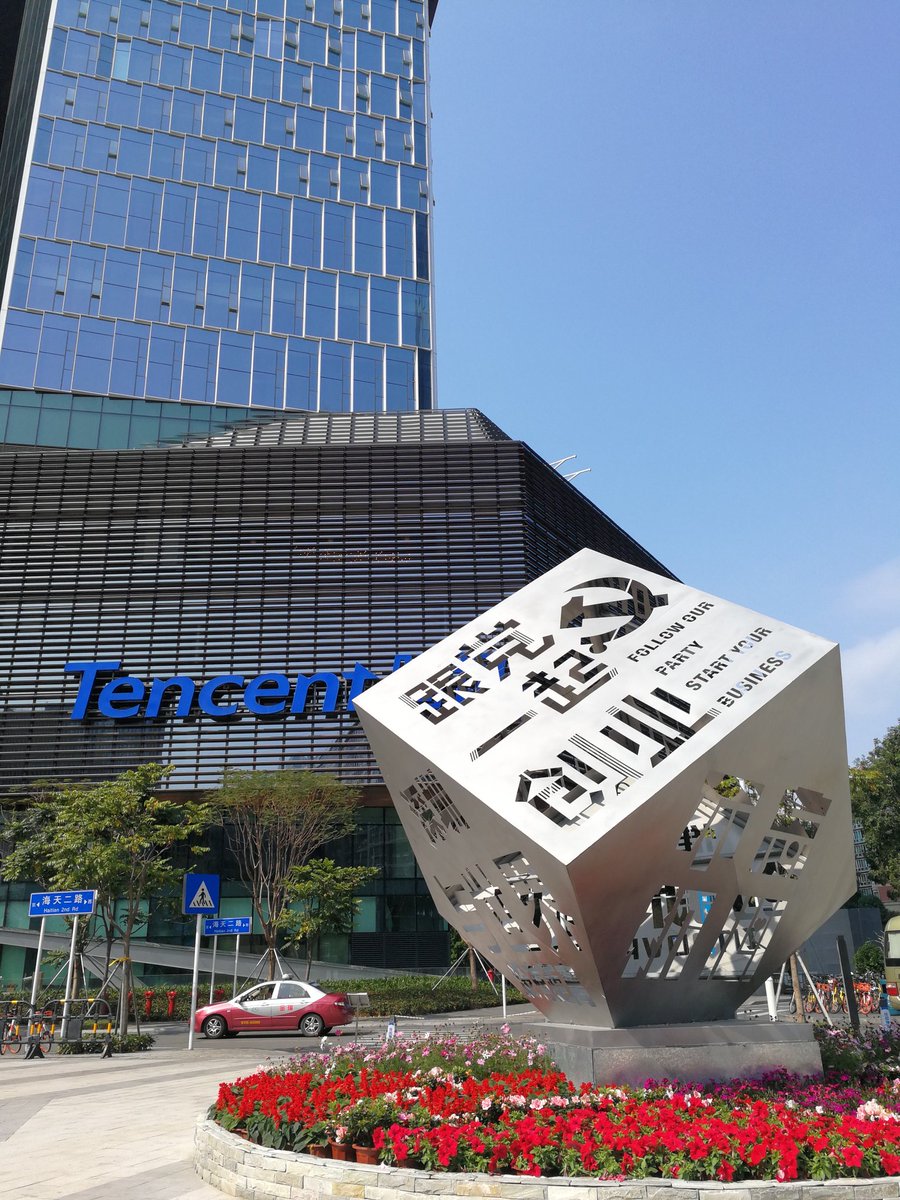
It's time for tech manufacturing to move.