It's bad, but California has the California Water Project, a huge collection of dams, reservoirs, and aqueducts built in the 1960s, to store water and move it around. Here's current reservoir status:
Levels were slightly lower in 1977, but the population of California was 16 million people lower then. The California Water Project was designed to store enough water to get through 3 years of drought. We just finished drought year 3. (The water year ends Sep. 30, before rainy season starts.)
San Jose has a new sewerage treatment plant so good it can be used to provide drinking water. It just came on line last summer. Right now, it's just being used for irrigation and recharging ground water, but if things get really bad, that backup is available. (http://www.mercurynews.com/science/ci_26160300/california-dr...)
So, yes, extensive preparations for this were made a long time ago.
Rain so far during this water year, starting Oct. 1, is slightly above normal.
Population has little to do with it. 80% of water is used by agriculture. The climate isn't helping, but actual water shortages are entirely manufactured by an industry that feels like it's infinitely entitled to grow plants in the desert.
To be fair, it's because they're feeding a population that feels like it's entitled to low cost food. Because we've never had to pay the true environmental and resource costs of our food.
Thank you for this reference! The good measures taken in the past seem to help tremendously.
Looking at the drought maps was depressing enough and that was compounded by the fact that the Bay Area does not feel anything like an area that is experiencing one of the worst droughts ever! I have always wondered how we (I live here) could survive all this time with water to spare for swimming pools, 24-hour tap-water supply, many-minute-long daily showers, restaurants full of water supply and wastage. Having been born and brought up at places where there were severe droughts and poor historic water management measures made me extremely cautious while using water, but it seems like that behavior was largely irrelevant here.
Whereas I like the comfort provided by California Water Project and pray for enough rainfall this year, I do hope that the approach of Bay Area Californians toward water preservation improves.
> The good measures taken in the past seem to help tremendously.
Sure did. Too bad the country has given up on investing in infrastructure. In fact the largest single investment seems to be in destroying other people's infrastructure instead of making ours better.
People keep saying that. Yet, in the last decade in the Bay Area alone, we've had
    - a major new dam in Fremont.
    - a new Bay Bridge eastern span
    - a second San Mateo Bridge alongside the first
    - a fourth bore at the Caldecott Tunnel
    - a new major tunnel at Devil's Slide
    - a new sewerage plant at San Jose
    - a third Hetch Hetchy water pipeline
    - an automated tram between BART and the Oakland airport.
Under construction are the new Transbay Terminal, the SF Central Subway Line, the new Golden Gate Bridge west approach, more light rail and BART stations...
You can go even further back to the Central Valley Project started in 1933 by the federal government http://en.wikipedia.org/wiki/Central_Valley_Project which led to the largest reservoir in the state, Lake Shasta. Agriculture was to be the primary beneficiary of the Central Valley Project, at a time when the state population was far smaller.
This drought seems pretty awful, and water resources in a lot of places in the US seem threatened by issues (either natural or man-made), which makes me wonder:
What if we were to build a bunch of desalination plants and just start pumping water into aquifers or something of the sort? Are there major issues with desalination on a large scale?
>What if we were to build a bunch of desalination plants and just start pumping water into aquifers or something of the sort?
If you're talking about conventional fossil fuel desalination, I invite you to do the energy audit on that activity. If you're talking about solar desalination in industrially-manufactured greenhouses, I invite you to do the energy audit on that activity. Don't forget to account for the energy-opportunity cost of land use.
I know there's a lot of hype surrounding desalination here, but a centralized energy-sucking plant (owned by the ultra rich naturally) is a counterproductive business-as-usual non-solution.
We can get a net-positive energy audit by redesigning our agricultural and storm water management. Right now they're designed with exactly the wrong goal in mind — shunt rainwater to the ocean in big straight hardware as fast as possible. This maximizes runoff instead of infiltration, so we're simultaneously preventing aquifer recharge and necessitating aquifer pumping by drying out the soil.
"Keyline" design—a method of cheaply altering landform to soak water—is probably a good start for these new infiltration maximizing strategies, but this is by no means a solved problem.
In California, like any desert, the name of the game is minimizing evaporation. This means all of the above, plus shading (e.g. date palms), sunken beds, buried drip irrigation, and dew/rain harvesting strategies like land imprinting.
Proper rainwater management is the lazy hacker's desalination. :D
Desalination can handle drinking water but 90% of water usage is usually for irrigation. It is not cost effective to do that with desalination.
As for Australia's 6 or 7 built/planned desalination plants: they are for backup and supplemental purposes only. They can't supply more than about 10% of the largest Australian cities' typical water usage. They would provide emergency water in a catastrophic drought and in low rainfall years can lessen the burden but they are not a replacement for good water catchment management.
If this can work and we can get the gov't behind this sort of solution, this seems good. Wouldn't this create a bit of water shortages downhill though? Like when you build a dam? Or is the quantity captured not on the same scale.
I guess the desalination plant is something that a single rich person can do, whereas going around drilling holes all over California is a bit more complicated. Sometimes we come up with solutions that work well in Sim City, but reality proves a bit more complicated.
>Wouldn't this create a bit of water shortages downhill though? Like when you build a dam?
Great question! Dams themselves don't causes water shortages. It's the pumping of water from the dam to a separate watershed, or into highly evaporative irrigation systems (e.g. the Aral Sea and cotton).
Keyline design actually proposes building dams, but on a smaller scale than is typically seen and with no pumping between watersheds. Picture multiple redundant dams for every farm, each a few megalitre in size and a few thousand dollars to construct.
Many small dams wet up the entire landscape by slowing water down. Maybe this sounds obvious, but if water takes 10 times as long to reach the ocean then you have 10 times as much water to work with in the landscape.
Infiltration does the same. Subterranean water continues to flow downhill, but thousands of times more slowly. You can even recharge old spring lines in this way, benefiting the downhill hydrology directly.
>Sometimes we come up with solutions that work well in Sim City, but reality proves a bit more complicated.
They are looking into something similar in the UK to manage floodwaters, so that instead of funneling water fast and out, which massively increases erosion and sometimes overwhelms bridges down stream, you work out where you can let the water hang around in times of flood and make agreements with farmers to have flash flood basins.
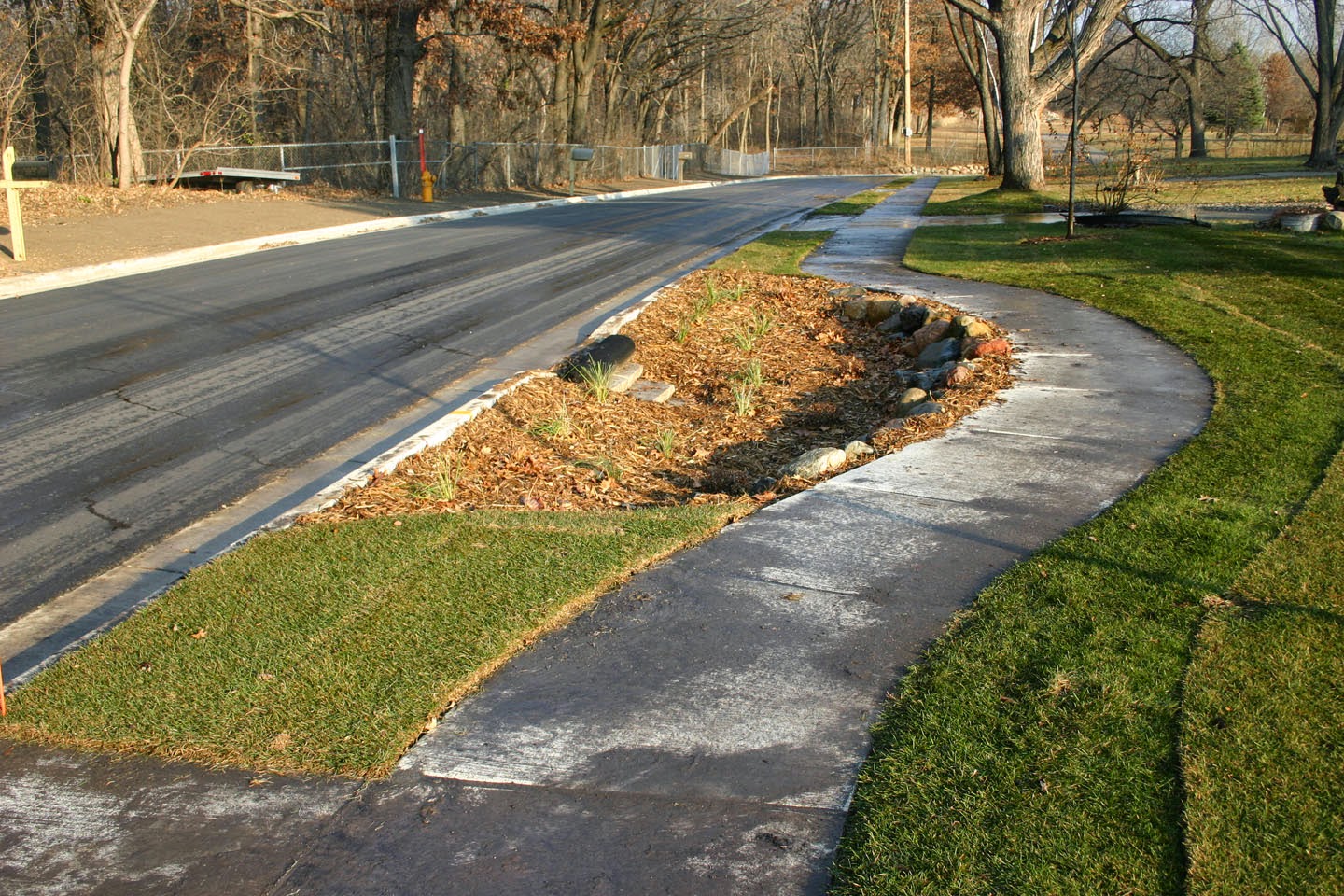
Portland Oregon does something similar on a much smaller scale. To prevent the sewage system from being overwhelmed in periods of heavy rain, they've installed "swales" and stormwater planters [1] that redirect the water into the ground. I've walked around in the rain and the difference is remarkable--typical curb drains would be overflowing with water, while the drains near the swales and planters would be dry.
The reason it's less economical than it could be is because of excessive regulation. We've come a long way with automation and safety engineering. Next-gen nuclear plants could produce energy far less expensively than coal if handled properly - with zero air pollution.
No, unless by "excessive regulation" you mean the fact that the industry is exposed to the same liability for unconsented harms done to third parties that every other industry is; because exemption from that liability is what the industry keeps lobbying for as the thing necessary to make it worthwhile to invest in new plants.
But usually, this kind of liability is wHat libertarians promote in place of regulation, not something anyone calls excessi regulation.
"No, unless by "excessive regulation" you mean the fact that the industry is exposed to the same liability for unconsented harms done to third parties that every other industry is; because exemption from that liability is what the industry keeps lobbying for as the thing necessary to make it worthwhile to invest in new plants."
Fossil fuel electricity generation kills an estimated 200,000 people a year worldwide. How many nuclear energy related deaths have happened since Fukushima (2011)? Approximately zero.
Nothing is perfect, but nuclear is the safest form of baseline, reliable power we have. A whole lot of propaganda (and stupidity) is holding it back. The waste problem is easily solvable given the will to do so, and I'm optimistic that Yucca Mountain will be restarted given the current political climate. If not, there's always the mid-Pacific subduction zone.
Regardless, there's a great need for improved nuclear power technology until the time that a better high-density energy source becomes practical.
The argument that US nuclear power projects face the same regulatory challenges as "every other industry" is completely untenable. There is an entire regulatory body (the NRC) charged with managing regulations for that one particular method of power generation. This fact alone is enough to refute it.
There is also an argument that the "regulatory ratcheting" from the NRC is due to political pressure rather than engineering principles[0].
Finally it is hard to read former chairman Gregory Jaczko's recent comments about Fukushima and not conclude that the NRC was, and quite possibly still is, actively opposing the nuclear industry with an ultimate goal of shutting it down[1].
I didn't say the nuclear industry faces the same regulations as any other industry, I said the problem that restricts the economic viability of the industry isn't special regulations, its general liability, which is why in a country where there is a major and powerful political faction that is favorably predisposed toward industry complaints of overregulation, the industry itself doesn't generally complain of overregulation but instead of the need for broad government-granted immunity from general liability.
If you're talking about the Price-Anderson Act, a law requiring plant operators to purchase liability insurance is a kind of regulation. Let's assume you are correct that this particular regulation is not uncommon in the energy industry.
Do you have an example supporting your claim that nuclear power companies are being hindered by the cost of this liability insurance rather than all the other construction protocols, environmental and safety audits, and permits from every level of government they have to pay for?
These two new reactors can only be built if NuStar spends $520 million on licensing, for example:
Yeah I was wondering if our storm-water sewage system is sucking the water out of our lands. But how much does this really matter? There would have to be some analysis of these systems vs land with no such system vs where they are to rain sources etc.
The city live in (Maplewood MN) recently built rain gardens in our neighborhood for catching rainwater.
They are basically deep pits filled in with gravel with slightly sunken garden on top. The water runoff from the street is diverted into them where most of it is absorbed into the ground.
The storm system drains all the "hardware" in an urban or suburban area — roofs, roads, parking lots, and sometimes even constantly mowed grass (which can form subterranean hardpan). Higher runoff rates lead to flow bottlenecks, flooding, and untreated sewage discharge.
This is a serious drought, but remember 80% of California's water goes to agriculture. More water is used to grow almonds than for all of residential irrigation. There are more non-farmers than farmers in the state; if the drought continues I expect the next step will be to cut back more on agricultural uses.
In terms of desalination, my recollection is that it's a reasonably mature technology now, it's used in many parts of the world that are freshwater-constrained, and San Diego is building a 50M gallon/day desalination plant that will go online in a year or two. But the per-gallon price is largely determined by the price of electricity, and California is rather hostile to new power plants going in. (I don't know enough about the state's aquifers; perhaps others do.)
Meanwhile in a few generations we may look back and wonder why we were flooding fields in California half a foot deep with increasingly scarce water to grow rice in an extremely dry climate. Especially when rice grows perfectly well in areas of the world that actually, you know, get rain all year round.
Rice is largely (~95%) grown in the Sacramento Valley, which has plenty of water for it [0].
California produces 82% of the world's almonds [1].
California is a big ag state for crops requiring irrigation because we have a lot of water (relatively), good weather, and damned good farmers. People would do well to start thinking about California's water problems with the assumption that the farmers have thought about it a lot more than they have.
Farmers are the direct beneficiaries of large, expensive water projects paid for through taxes and bond measures. You can certainly bet they have thought a lot about California's water problems, but I wouldn't accept their suggestions as impartial.
Claiming that the Sacramento Valley has plenty of water for rice is nonsense. The Sacramento Valley gets its water from the Sacramento River, which is "fully appropriated" and, from the view out my window, is looking a little shallow these days.
I've seen this hostility toward agriculture from Californians before on HN, and I don't understand it. Farmers grow the food we eat, so if they need water, we need them to need that water. There doesn't need to be a divide between farmer and non-farmer, with each side hating the other.
It's because food should be grown where it's economical to grow it, not where government subsidy is the fundamental thing allowing it. In a manner of speaking, California's chief source of fertilizer is Washington.
That's a fair point. I think it can be done more cooperatively, though, without the animosity.
Still, there are definitely parts of California that are the best place to grow certain things, and there's also something to be said for locally grown produce in terms of carbon footprint and national food security.
Since we do not live in a world yet entirely "safe for democracy," I am sympathetic to the idea of national food security. But my understanding is that rice, just to take an example, could be better grown in New Orleans, but because of subsidy is grown in California.
Now, if I've got some details wrong, I apologize. My point is that it's a safe bet that, even within this nation itself, subsidy is misallocating economic resources.
Considering that farmers are effectively living off of welfare, have been doing so for generations, and tend to be one of the furthest-right voting blocks in the state, I think a fair amount of animosity is warranted.
If they're living off welfare, we're living off the reduced food prices that welfare provides. It's effectively a regressive subsidy to those who most need it, low-income households for whom food is a significant expense.
I come from a suburbanized semi-rural area, and farms and dairies are shutting down all the time because it's not profitable. It's not like they're living large on government largess, at least not at the local farm level with a few square miles of land or a hundred dairy cows.
Aside from the fact that it would be more efficient to just give people money or food, a significant part of farm subsidy comes in the form of import tariffs and minimum guaranteed prices that force food prices up, not down. Furthermore these barriers have the insidious effect of keeping developing economies from participating in the global economy because their farm goods are untradeable. If you think farmers have it tough here, check out rural Guatemala.
I understand your emotional attachment to farming as a lifestyle. The farm lobby trades on this heavily ("my family has been growing sugar beets for eight generations, we need the subsidies!"). Change happens. The sooner we get the kinds of changes that stop farmers from growing rice growing in California, the better.
That link does not support what you've said. It's just an article about there not being enough water for farmers.. really the opposite of what you've said.
Much of the central Sacramento valley is floodplain which can be, and has been, more of an inland sea or lake during wet winters than a valley.
Before flood control was put in, Sacramento itself was subject to major inundations, though the last of these was in the 1950s as I recall.
During early settler / Indian times, substantially the entire central valley would flood. It's a watershed in which a 300-400 mile long, 50-100 mile wide region drains, all of it flowing out ultimately through the Golden Gate. Water can and does pile up there.
And that's the region where rice is typically grown.
Contrast this with southern California -- the arid southern part of the Sacramento / San Joaquin Valley near Bakersfield is pretty dry, but cross the Tehachapi Mountains to the south and you're in the Mohave desert. That region still gets water, via the California Aqueduct and state water project, and is also home to much agriculture, including alfalfa and cotton cultivation, which demands a lot of water.
The link was mostly for the 95% stat for the Sacramento Valley. A lot of people who trot out the rice talking point seem to think rice is mostly being grown in a "desert", when it's really not.
Someone thinking about it more is irrelevant. Let's see evidence, plans, and simulations about how the problem can be solved rather than deferring to yet another authority.
The regional water boards in California, along with the local water districts, have ample amounts of all of the above dating back to 1967 and beyond, funded by taxpayers, with publicly available data, and in most cases involving said farmers.
Feel free to look at the data and get back with your findings. In the meantime, no, "someone thinking about it more" isn't irrelevant. They've been thinking about it more, and taking action, for decades.
If you can't link me straight to what you're talking about, then it isn't good enough yet. If I had to attempt to verify every bullshit sounding argument that I came across, I'd never get any work done.
The fact is there appears to be a serious water shortage while the 'authorities' have supposedly been taking care of it for decades.
The argument that was made was that we should assume the farmers have "thought about it more than we have", with the implication that we should heed their opinion because they've been sioled away for decades, 'thinking about it'.
Show me the dashboard that shows real-time estimates for total water reserves and all the charts about how long that will last us under all scenarios.
But that's just an image posted on top of the state's ubiquitous CMS showing how far below average the water levels have fallen under the stewardship of the current authorities. It's not terrible, but the problem is that it provides very little context for what those water levels mean. How long is that water going to last (it seems like we want to find a way to make this 'indefinite')? How should water usage be modified to make it last longer? What are the effects going to be on food production?
These are the questions that we need to know the answers to. Furthermore,this information should be accessible to everyone through a URL so that most of us who don't have time to look back through ~45 years of data to figure out what is going on, can get the current, most relevant information to form rational opinions, instead of just trusting that the 'people in charge' are on top of it.
Sorry wooster, but "time spent thinking" is utterly irrelevant. Why? Because the expression is meaningless. To have meaning it needs to indicate to what end.
There's a world of difference between (for example) "thinking about how to assert as much control over a limited resource for the lowest cost possible" and "thinking about how to manage a limited resource as effectively as possible given the broad range of needs and interests in the state."
Farmers have been thinking about themselves for decades. The policies we have as a result reflect precious little interest in the well-being of California as a whole.
That's a fantastic idea, but it's far too practical and sensible for California. It doesn't include any feel-good meddling or opportunities for kickbacks for the powerful and connected.
> Almonds are one thing... we actually need those.
Unless I'm missing something major, we "need" almonds for exactly one reason: they're tasty. That exact same "need" exists for meat. Personally, I'm quite happy eating neither, since I'm not a fan of nuts in general.
I recognize some people love almonds, and I'm not running around trying to get them banned, but I definitely think, just as with meat, we need to think of these things as choices, not just plain needs.
Nuts do use water in California. Slightly less than rice (at least in 2003, there may be some variations since).
The point is... by far the biggest (and most unnecessary) user of agricultural water in California is Alfalfa. (Yes, I know there was a recent Slate article on Almonds. But the amount of water they use pales in comparison to Alfalfa.)
What is it we need almonds for? I like them myself from time to time, but I could live with paying 2x for them if they were scarcer. Raising meat does consume a lot of water, but of course there are many other meat-farming areas in the US so economically it's fairly easy to substitute. It certainly will be next year, as midwestern beef will be quite a bit cheaper following a bumper corn crop this year.
Make a point if you have one. I have better things to do than spend time wondering which of the many different possible points you were trying to make.
Another aspect of this is that farmers are paid by the weight of their produce, and the much weight of many crops comes from the water content. Therefore, farmers have a strong incentive to use a lot of water to "fatten up" the produce they sell.
I don't really think you have an even basic understanding about how plants grow or work.
Watering a plant in no way makes the plant magically contain more water than a properly watered plant, it just means more run off. Also, crops are often not sold by the farmer by weight, but rather by a mix of volume and average quality.
The info from my post came from someone involved in water use research. I fully believe that a lot is lost to run-off also, but how do you define "properly watered".
Is there a single set point per plant that is "optimal" and optimal by what measure? At the market, I have seen pretty large variance in the water content of different produce, often dependent on on the source.
Also, for what type of plant is volume not correlated with weight?
EDIT: The downvote of my prior post seems unwarranted. Even if it could be demonstrated that my facts were wrong, there was nothing pejorative in anything I wrote, unlike the first sentence of your reply.
Fixing our water shortage with energy consuming desalination plants will just continue the global warming negative feedback loop. Better would be to simply change what farmers are growing to conserve water.
* Edit: Why the downvotes? Look, solving water shortages with desalination plants, is like trying to fix air pollution with air filtration systems. Unless you're powering the plant with 100% clean energy, you're just further contributing to the core problem.
And even if you're powering the plant with 100% clean energy, that clean energy could instead be used to displace fossil fuels elsewhere if water was conserved instead of desalinated to continue business as usual.
Maybe you're getting downvoted because you misused the term "negative feedback loop."
As any beginning engineering student knows, a negative feedback loop is a system that tends to return to an equilibrium state when perturbed. A positive feedback loop is a system that magnifies any disturbance until the conditions change, because it's inherently unstable. When you engineer a dynamic system, you typically want it to have a negative feedback loop, so it doesn't blow up or something.
In other words, the term "negative feedback" does not have anything to do with the social consequences. Using it this way is painfully stupid.
Desalination works great for residential water use. It doesn't help the farmers that want massive amounts of ultra-cheap water. Better farming techniques could help. What would help most of all is if water was properly bought and sold at market rates, so people with major water rights would sell instead of wasting.
There are policy reasons why we don't want water to go to the highest bidder - Food Security is one of the key reasons we give agriculture so much priority on water, even when economically it doesn't seem to make sense.
Would it really affect the amount going toward farming very much? Taking away a few percent of farming use could give other uses huge amounts of water.
I could see a scenario where instead of some farmers getting underpriced water, there are more farmers competing to produce food at marginally higher prices, leading more of them to use better irrigation techniques and solving the problem.
Subsidies can be applied to the food prices after this point if desired, without the side effects of water shortages.
The issue is farming, though. There is more than enough water supply in California for residential use, which makes up less than 20% of water consumption in California.
This the right answer. Desalination is a last resort, that's why its used in places like Israel where there's no other option. Desalination is enormously energy inefficient.
Energy Inefficient for Agriculture use. The cost/efficiency of Desalination has dropped dramatically in the last 10 years. Singapore buys its water for $0.75/m^3. Plenty cheap for residential use.
An acre-foot is 1,233 cubic meters, so at $0.75/m^3, that cost would be $925. That's actually not too outrageously much higher then the quoted water rates, and the article discusses ag rates as high as $1,400/acre-foot, which would be higher than the desal rates you quote.
I was expecting desalination to be far less reasonable. It's not cheap, by a long shot, but if the values you're citing are valid, it's not beyond consideration.
Also note that ag water isn't fully treated municipal water supply, which is more expensive.
Energy Consumption is 4.2kWhr/m3 - and that was in 2006. Presumably technology is improving.
With reasonable conservation efforts (low flush toilets, low-flow showers, water efficient washing machine and dish washer) the average individual needs 200 liters a day, which, with desalination, would cost $0.10/day/person or $3/month to supply, (not including transportation - which isn't too expensive for coastal cities).
Follow on article: http://www.waterworld.com/articles/2013/09/singapore-s-secon...The 25-year WPA will see Hyflux deliver desalinated water – through a Design, Build, Own and Operate (DBOO) model - at a fixed low price of S$0.45 (USD $.36) per cubic metre for the first year
Singapore has been leading the way with desalination research, with projects hoping to reduce current energy requirements for membrane desalination from 3.5 kWh to 0.8 kWh/m3, including work on biomimetic membranes
If they do get it to .8 kWh/m^3, I expect we'll see wide(r) spread deployment in arid coastal regions like California for residential use.
That's actually the biggest problem with wind power; when you have excess power, you can't do anything with it except curtail your production and lock your turbines so they can't spin.
To be able to put that power to a good use, while also still realizing revenue (even at a lower per kwh rate) is win-win.
Wind power, without subsidies, is already as low as 3-4 cents/kwh. If the rate of install continues, price will continue to decline, and we'll have even more cheap wind available in the US for large-scale projects such as this.
"That's actually the biggest problem with wind power; when you have excess power, you can't do anything with it except curtail your production and lock your turbines so they can't spin."
There seems like countless ways a society could use "excess energy". What this article talks about is more like time-shifting the energy it's captured. But if excess energy were a problem, wouldn't you be able to store it in batteries, or apply it towards desalinization or other net positive activities rather than just locking the turbines?
That plant is a battery, it just uses potential and kinetic energy instead of chemical processes to store it. However, your comment, and Ufo's comment, got me thinking and exploring, and realizing that some of the biggest users of electricity in california, like the Edmonston Pumping Plant [1], don't have forebays or the like to store water to balance out power consumption throughout the day. Power consumption really needs time-of-day based metering on it so that power consumed during peak hours is more expensive than off-peak hours, to give incentives to better even out the load.
"Power consumption really needs time-of-day based metering on it so that power consumed during peak hours is more expensive than off-peak hours, to give incentives to better even out the load."
I was under the impression that something like this was already in-place.
I read that aquifers, at least the ones in the Midwest (as in Colorado) are essentially "fossil water", and that when you pump it out the rock collapses somewhat, making it impossible to pump replacement water back in.
The issue with desalination is the tremendous energy input, normally provided by the sun. At least right now, that would probably have to come from coal.
True, but the Carlsbad desal plant in San Diego is going to build a bunch of solar collectors to offset much of its electricity demand. It's not clear they'll be able to offset all of it, but some is better than nothing, anyway.
Desalination plants produce fresh water and salty brine, the brine is put back into the ocean. The effect on water salinity are negligible - in the sense that it will be less than the natural variance of the seawater salinity - beyond a few hundred meters from the brine discharge, even for city-scale desalination plants.
In the meanwhile, conservatives have "experts" like Anthony Watts to come and say that not only are we not in a horrible drought[0], but that our recent showers[1] are proof that the alarm over the drought is just part of the global warming conspiracy[2].
So, if you were wondering how conservatives in good conscience can oppose efforts to deal with climate change, here's one of the reasons. They have their own experts from a bizarre alternate universe, where they start with the same data but conclude that everything is opposite.
I like your approach, but let me see if I can get you to question some of your beliefs. First, Watts is actually only the author of your second link, the other two are guest posts by two other authors. I won't try to rehabilitate Watts, as he's likely already too tainted in your mind, but I'll guess that you don't yet have strong opinions about the other two. Please consider how well they fit the image that you have of them based on the articles you read.
The first piece was written by Robert Moore (http://www.nrdc.org/about/staff/rob-moore). Personally, having looked at the actual paper, I thought his article was more accurate than most of the media coverage. Moore does not "oppose efforts to deal with climate change". To the contrary, he's an analyst with the National Resources Defense Council (NRDC), which is one of the largest, staunchest and most effective environmental groups in the US, and lists "Curbing Global Warming" on the top of it's list of priorities. If you look at Moore's credentials, I think you'll be positively surprised -- he's legitimately an expert, and unquestionably an environmentalist.
The paper uses a very specific definition of "worst drought". It's a reasonable and defensible one (cumulative deficit on the PDSI scale), but it's probably not what most people would guess. As Moore says, the paper does not say that it's the longest dry spell, or the period of least rain. Would you have guessed from the other media coverage that despite the phrase "worst drought", there have been two other years with less rain just in the last 100 years? That there have been longer droughts?
I think Moore believes what he says in the piece: "Do these facts mean that we are in good shape re California’s water supply? No! But we shouldn’t be framing the search for a stable California water supply by starting from a wildly incorrect statement that seems focused on creating public panic." He's bothered (as I am) about the level of hyperbole and inaccuracy in the media reports of climate change, and wrote the piece to counter that. Neither he, nor Watts, nor Tim Ball (the author of the third link) believes "that recent showers are proof that the alarm over the drought is just part of the global warming conspiracy".
While I fear that some of the kookier commenters at WUWT might believe that (I don't read the site, although I highly recommend Steve McIntyre's climateaudit.org) many of those you demonize care a lot about the environment and climate change, but disagree on the causes and the approach that should be taken to deal with it. For example, try reading this piece on Urban Forests by Tim Ball to see if he matches the pathological business-comes-first stereotype often associated with "climate deniers": http://drtimball.com/2012/importance-of-urban-trees/
I haven't seen anyone mention the drought in Brazil. It's possible that deforestation in the Amazon is at least partially responsible for that[1]:
   Some scientists have suggested that the recent
   uptick in deforestation in Brazil may be partly
   responsible for the drought, since loss of
   evapotranspiration from trees is known to reduce
   cloud formation.
I know its the other hemisphere, but it's certainly possible that drought, deforestation, and changing weather patterns in South America would also affect us. Yes, no? I'm just spitballing here.
I have friends in the Central Valley, smakc in the middle of farm country. Farmers there mounted a big campaign against the new state water plan, as promoted by the governor and voted onto the ballot by the legislature, where it passed with an overwhelming majority. So enough politicians in key roles are willing to stand up to the farm lobby to make some big changes in long-term policy.


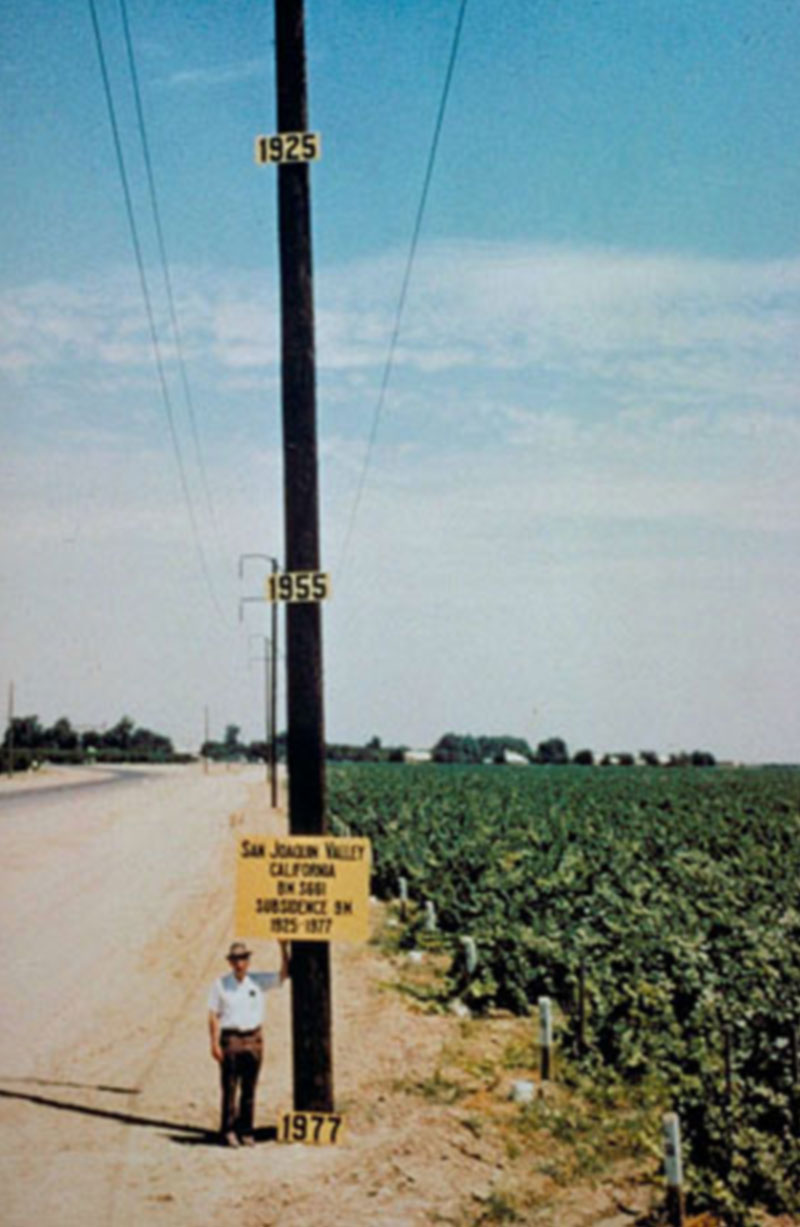
http://cdec.water.ca.gov/cdecapp/resapp/getResGraphsMain.act...
Levels were slightly lower in 1977, but the population of California was 16 million people lower then. The California Water Project was designed to store enough water to get through 3 years of drought. We just finished drought year 3. (The water year ends Sep. 30, before rainy season starts.)
San Jose has a new sewerage treatment plant so good it can be used to provide drinking water. It just came on line last summer. Right now, it's just being used for irrigation and recharging ground water, but if things get really bad, that backup is available. (http://www.mercurynews.com/science/ci_26160300/california-dr...)
So, yes, extensive preparations for this were made a long time ago.
Rain so far during this water year, starting Oct. 1, is slightly above normal.