The ARM based Acorn Risc PC [1] from mid 90s had a case with up to 7 stackable slices. It made the internal volume larger and you installed a longer backplane for expansion cards.
Someone built a pizza oven in one of the slices [2]
Some examples of "nonflexibly-attached expansions" I can think of, though not arbitrarily expandable like the TI-99/4A:
* Sega Genesis (CD, 32X, Modem, Sonic & Knuckles, Game Genie, Power Base Converter -- most of which could be attached at once [1], and a few games even required both the CD and 32X)
* Nintendo GameCube (the Game Boy Player attached to the bottom) [2]
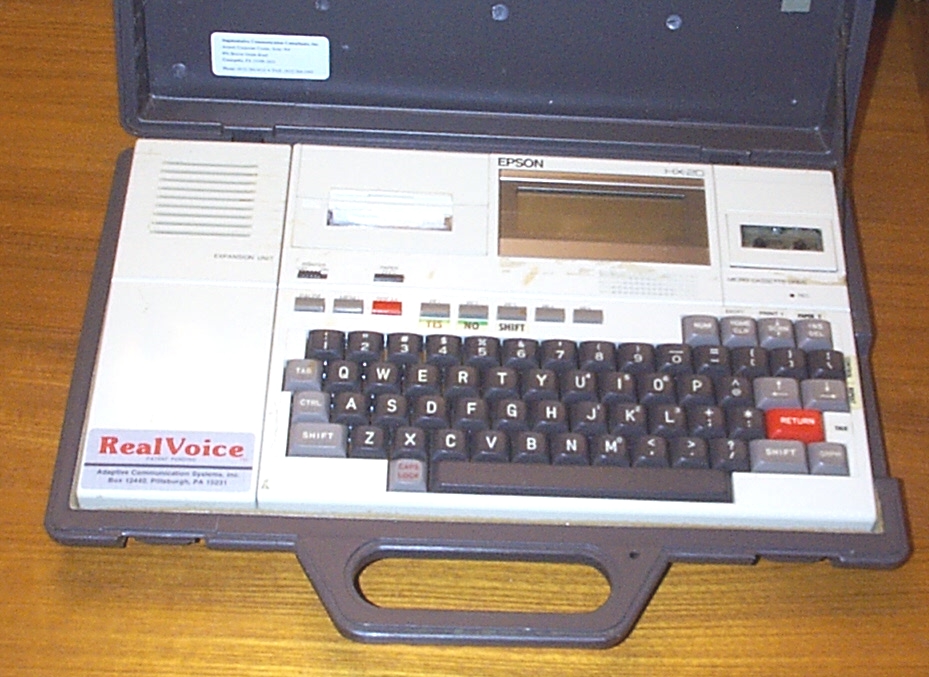
* Epson HX-20 laptop (various expansion units could attach to the side, though only one at a time) [3]
The East German KC85/2../4 line was one example of this (scroll down for an 'expansion tower', theoretically such a tower could be 64 units high (the system could address up to 256 expansion modules, and one expansion unit had 4 slots):
I also remember a similar module system for the Sinclair ZX computers, but my google fu is failing me at the moment. Such 8-bit home computers usually had their entire system bus exposed via a connector at the back or side, so even if the original manufacturer didn't support a stackable module system, 3rd parties could jump in and offer a solution.
More of a “back car” - the Sinclair ZX80 and ZX81 used piggybacking RAM with passthrough to other peripherals. It was a really fragile setup - the ram pack in particular would glitch out when typing.