post operation choke point Visa, and MasterCard have been increasingly making moral and political judgments on who is allowed to transact. Even when the transactions are perfectly legal.
This is a potential way around these behaviors. but I assume it will eventually be blocked by visa and MasterCard simply by threatening to blacklist stripe as a payment processor.
What we actually need is federal regulation treating card networks as utilities that cannot discriminate against lawful transactions. We need payment network neutrality.
What you're thinking of are wire transfers. We have that already. You can argue that they need to be made faster (I agree), but V and MA aren't the reason why they're slow (banks being lazy and batching payments is).
You may not like the logic, but the reason it was so easy for V and MA to cut porn is because the insane amount of porn chargebacks ("yeah I didn't make that purchase, it's fraud").
Crypto is just a wasteful overcomplicated bad solution that's worse than wire transfers, so I agree, let's work on visa-like payments on different rails with no fraud protections (so that way consumers can choose when they pay for that protection, rather than you and me subsidizing people who regret buying porn).
I'm definitely not thinking of wire transfers, I'm thinking of credit cards. I want Visa and Mastercard to be required to process all legal payments. If that means certain classes of high-risk transactions have to be offered without certain protections, I think that's completely fair.
> ... You can argue that they need to be made faster (I agree)
Luckily that's already well under way. We should have RTP and FedNow next year.
> ...rather than you and me subsidizing people who regret buying porn
Good news! We're not, and at least in recent history we never were! :) Merchant acquirers charge high-risk merchants significantly more to cover chargeback risk. That risk isn't meaningfully transferred to your Costco run. While a Costco may pay 1-2% in interchange, your average adult video business may pay 10-12%. Sometimes more.
>I'm definitely not thinking of wire transfers, I'm thinking of credit cards. I want Visa and Mastercard to be required to process all legal payments. If that means certain classes of high-risk transactions have to be offered without certain protections, I think that's completely fair.
So a few things.
1) A credit card is a consumer loan and by nature, there's plenty of limits on the things you can buy with loans (both crypto and fiat), so you're at a dead end there (and if it weren't Visa, it would be the bank extending you the loan that would ban the porn payment).
2) Given that, you probably are referring to debit cards in this case. Ok that's more of a dumb utility so let's run with it. What Visa does for debit (I implore you to learn more about this!) is serve as a messenger intermediary between your checking account and the merchant's account (plus they make sure the issuer gets their cut of fees, more on that later). Ultimately, they help the banks settle their accounts via inter-bank accounts. Banks themselves can/should do this! The government should force them to do this! But that's then just faster wire transfers (look at Europe).
I mean I'm very happy to be wrong here, but you need to explain to me why Visa needs to be involved for a fraud-protection-free bank-to-bank transfer when everywhere else in the world just has that via wire transfers (which is just a fancy name for settling payments via inter-bank accounts)
>Luckily that's already well under way. We should have RTP and FedNow next year.
Yeah.
>Good news! We're not, and at least in recent history we never were! :) Merchant acquirers charge high-risk merchants significantly more to cover chargeback risk. That risk isn't meaningfully transferred to your Costco run. While a Costco may pay 1-2% in interchange, your average adult video business may pay 10-12%. Sometimes more.
Ok again so a few things.
1) You are citing the entire take rate on transactions but you're calling it the wrong thing. Interchange is the fee that's paid to the issuing bank; in the US this is, on average, 70% of the fee-rate you're citing (it is a rate set by Visa, but it is passed directly through to the issuing bank). Merchant Discount is the fee that the merchant acquirers get; in the US this is, on average, 15% of the fee-rate you're citing (but as you rightly point out, it can be anything since its a contract between a bank and a business for service). Network fees are the fees that Visa collects; in the US this is, on average, 15% of the fee-rate you're citing (Visa makes $30bn of revenue $10tn of transactions processed). Since it is acquirers who can choose to set their merchant discount at whatever they want, it is again a banking issue not a Visa issue (Visa doesn't even see the merchant discount)
2) Now that we understand who charges what to whom, you'll see that in fact, Visa does not charge a different rate for porn [1], they instead collect a pretty small fee on all transactions to support infrastructure that disproportionally serves porn users who regret buying porn. Sure sounds like a subsidy to me!
I’ve worked in payments for 10 years I know what I’m saying, imprecise wording was just rounding for the audience.
I’m very clear that faster wires is not what I want, and neither is debit, although that’s fine too.
I want equal access for all merchants to VisaNet and its peers. Not because debit or faster wires wouldn’t meet needs but because they are not how people are choosing to pay. I’m being pragmatic.
To be clear I agree with basically everything else you’ve said in this thread.
>I’ve worked in payments for 10 years I know what I’m saying, imprecise wording was just rounding for the audience.
Ok.
>neither is debit, although that’s fine too. I want equal access for all merchants to VisaNet and its peers.
This is such an odd thing for a payment professional to say. Are you under the impression that debit transactions don't run on Visanet?
>not because they are not how people are choosing to pay. I’m being pragmatic.
Again I implore you to look to Europe/Asia, where there are plenty of non-network cards that work just fine for essentially free domestic payments (and would you like to guess how those transactions are settled? You must know...) [1]
> This is such an odd thing for a payment professional to say. Are you under the impression that debit transactions don't run on Visanet?
I think you're misunderstanding me. That's not what I was saying at all.
My argument is that payment networks, issuers and acquirers should not decide unilaterally what kinds of lawful merchants, customers and transactions they permit. I'm talking about various merchant acquirers not permitting lawful gun or drug sales, networks going after OnlyFans in 2021, and PayPal shutting down WikiLeaks' account back in 2010. [1,2]
I don't necessarily agree with what these people or businesses are doing personally but it is not my decision to make nor should it be that of any other private entity. If they are lawful, they should be permitted. If they aren't then the business owners/operators should be prosecuted - or at minimum there should be a legal proceeding that can be appealed by the target party when payments processing is suspended.
Somehow we hold domain name registrars to a higher standard than the aggregate of payments entities in this regard.
> Again I implore you to look to Europe/Asia, where there are plenty of non-network cards that work just fine for essentially free domestic payments (and would you like to guess how those transactions are settled?
That's not really the point.
My point is that these aggregated payments entities are the infrastructure of the modern economy. Giving a few private entity gatekeepers the ability to extrajudicially decide what is and is not permitted in the modern economy - without appeal or recourse - is undemocratic, and it's wrong.
While different options exist in different places, one should not be forced to seek them out to participate in the lawful economy. It's simply too important.
I am advocating for a modern, digital equivalent of '[valid] for all debts public and private.' We have granted these aggregate systems a de facto duopoly on commerce in the United States. They are quickly becoming or already are essential and so it's time we treat them from a legal and regulatory perspective more like what they are.
How long would Amazon last if they were cut off? Why do we give two private entities the ability to decide if Amazon can continue to exist?
That's an interesting take. The actual transfer is the one big upside I see of crypto over wire. And remember 'wire' is not a currency, we're comparing transfers here not the suitability of a currency ('wire' as an independent concept has none).
I've done many wire transfers and many crypto transfers and the one consistent thing I've found is the crypto transfers are both cheaper and faster. If I could do crypto transfers with old school stable currency (not some cheesy stablecoin hoodwinker in the Bahamas) it'd be the holy grail.
>I've done many wire transfers and many crypto transfers and the one consistent thing I've found is the crypto transfers are both cheaper and faster.
Don't fall into the trap of "current centralized system has problems, current decentralized system is different (in your opinion better), therefore decentralized is better"
Centralized payments will always be faster/cheaper than decentralized, just from a first-principles architecture standpoint, so we should be working on making those better (cynically, we are, they just get less attention because retail investors can't speculate on those technologies as easily)
"Better" is not a universal truth. It is dependent on the context of the individual transaction.
If you simply refuse to acknowledge that crypto might be cheaper and/or faster than available traditional finance options for some particular transactions, not in the theoretical but in the real-word options present, then I simply yield that you must live in an alternate reality than many people. One thing I really hate is losing money and losing time, and the very narrow circumstances where I have used crypto to buy goods (legal goods) I sure as hell wasn't going through the pain in the ass of dealing with crypto for ideological reasons.
>"Better" is not a universal truth. It is dependent on the context of the individual transaction.
Where did I call anything better?
>If you simply refuse to acknowledge that crypto might be cheaper and/or faster than available traditional finance options for some particular transactions, not in the theoretical but in the real-word options present, then I simply yield that you must live in an alternate reality than many people.
Uhh, ok what transactions are currently cheaper using crypto? Don't you dare say Forex because you're wrong if you do.
Then what are the ones you think could be cheaper and why?
Mastercard handled the transaction. Stripe only handles the on-ramp into the ecosystem. Once the money is in crypto, Stripe loses the ability to influence what happens to it. 3rd parties lose a lot of traditional options to shut people down, that part of the crypto promise seems to have held.
I'm thinking through a potential pessimistic scenario here so take this with a grain of salt.
let's say a verboten but legal business embeds this widget on their website. a user then uses their visa credit card to exchange for cryptocurrency and make a purchase. I believe Visa would argue that stripe is laundering money through cryptocurrencies to get around high risk payment processing.
Visa could demand all cryptocurrency addresses associated with stripes embedded widget and compare that against known blacklisted destination addresses. It would do so under the guise of preventing terrorism, child exploitation, and money laundering.
stripe is huge so rather than immediately cutting them off as is what happened to new project 2, I believe they would give stripe an ultimatum of sorts to remove the functionality, or demand stripe prevent transactions to any of the vague/subjective categories of
businesses deemed high risk.
The latter would likely be impossible because a high risk business could generate a new address easily which would only later be blacklisted and associated with the business landing stripe in breach of the agreement.
> believe Visa would argue that stripe is laundering money through cryptocurrencies to get around high risk payment processing
> It would do so under the guise of preventing terrorism, child exploitation, and money laundering.
It doesn't really care about these things all that much.
I don't think this would realistically happen. But I doubt visa would be pleased about being a crypto on ramp.
Most "high risk" credit card businesses (read: porn) are high risk due to charge-backs. Something Something about telling your wife you didn't actually pay for that...
If you use crypto to buy porn... no chargebacks to the business, so the business isn't risky.
The big risk becomes stolen credit cards, where StolenCC->Crypto becomes a perfect avenue to steal from Stripe/CC Company. You move the crypto, then let the CC owner charge-back stripe or the CC company for the funds. The thief gets to keep the crypto, the victim gets their money back, but the big corps have to eat the cost.
That last bit (who loses) is why this project might die. Visa isn't really focusing on catching terrorism or whatever, they're trying to avoid chargebacks due to fraudulent behavior.
If you think Visa & MasterCard will be stumped because "oh no, they're not actually using our cards to pay for sex workers, they just buy a funny internet coin that can be used for many things including sex work", you're mistaken. They'll pressure Stripe into giving the list of purchases under threat of banning Stripe from their network if they don't cooperate, see that many have been made to "Porn Company Inc.", then threaten to ban Stripe from their network if they do not prevent such purchases.
The way you get around the utterly stupid rules set by them is not through more technology layers. It involves a bit more physical violence at MasterCard HQ, as it always happened when unjust rules were made.
You may not like the logic, but the reason it was so easy for V and MA to cut porn is because the insane amount of porn chargebacks ("yeah I didn't make that purchase, it's fraud").
A system without fraud protections (i.e. wires) is a much more efficient solution than a farm full of GPUs in Austin.
> So what is the point of crypto again other than giving Stripe (and similar centralized providers) a needless cut?
Access to BUSD, USDC, (shudder) USDT, DAI, CUSD for folks across the globe is a good enough reason [0] (right now, the Stripe on-ramp is US-only, but that needn't be the case)? Stripe did bootstrap an alt global payments network in Stellar.org, but that hasn't worked as expected, it'd seem? Stripe is wise to participate in the stable-coin business, which is a way better bet.
MobileCoin, which is embed in every Signal installation, also has Stellar-like features but it isn't mainstream, just yet. Meta's Diem / Libre had similar grandoise visions for an alt payments network given its very global, commerce-hungry Instagram and WhatsApp userbases, but for some reason, they never got the legal side of things over the line.
I don't see any reason why global payments with stable coins and KYC are at odds. This is a long game. I can see why the governments may resist this, but I suspect not all countries would disallow stable coin payouts and payments.
It's going to be hilarious, after all the time spent world-wide to snuff out self-custodial bearer bonds and shares, if governments actually explicitly legitimize self-custody decentralized stable coins.
I don't think this is targeted at traditional merchants who would want to convert anything to fiat. It is targeted at crypto companies that want to streamline user onboarding. The blog post lists 3 partners and they are all crypto companies.
Enabling fraud and embezzlement by the next generation of Sam Bankman-Fried's and ensuring that the pool of greater idiots and potential victims continues to expand?
Send fiat overseas and let me know how that goes. Crypto has plenty of issues but calling people who use a decentralized form of currency as "idiots" doesn't paint you as the sharpest tool in the shed.
I live in the UK. I can send money instantly anywhere in the EU for nothing via SEPA and frequently do. That covers 28 countries. If I do want to send money to someone in another country I can use paypal, or for larger sums, one of the myriad international wire services that are regulated by the FCA and where I have recourse if something goes wrong.
A common refrain I hear in these threads is "I live in $COUNTRY and I trust their banking system". Do you think that's equally true for everyone on earth? Because if not, you're only explaining why it's not useful for you personally, and not why it's not useful in general.
Are you saying they are? Even if they are, it's beside the point; they are paying for massive amounts of advertising in countries that have functional banking systems.
I think everything crypto companies do is beside the point. Satoshi created a system where you can be self-sovereign and not have to trust anyone. And now these companies want you to forget about all that silly trustlessness, and trust them, so they can take a cut of your money. So you should, almost tautologically, ignore anything they say on TV. By a similar principle, you shouldn't base your opinion of gold's value on those cash4gold commercials.
I hate crypto as much as the next guy, but try sending some money to Iran and see how well that goes. There's a legitimate use there for people with families in tumultuous countries.
I've had domestic wires held up for days just to go through yet another KYC when wiring between two already KYC'd accounts. If the authorities decide to civil asset forfeiture it in the process, the recourse is to pour 10s of thousands in lawyers and just maybe get the money back after the legal process eats half of it and my life gets looked over by a fine tooth comb because some middle-aged fat belly government man who's entire self worth is how much he can seize without the decency of a criminal trial had his feelings hurt that the citizen had a minor win.
So I don't think wire is necessarily a perfect substitute. There are different ways to get fucked and you have to decide which risk looks most palatable for each individual transaction. It's sort of a pick between a traditional finance system set up to fuck the little guy or the crypto landscape which is a fraud fest wild-west of living at your own peril.
> Send fiat overseas and let me know how that goes.
I've done that a number of times this year, UK->Australia, in the six figure range. It went great, fees were low (in the range of 0.3%) and the transfers were usually complete in an hour or so. All of this was regulated and insured at every stage in both countries.
Example: a centralized game distributor builds an in-game marketplace for certain assets and user-generated content—think skins, plugins, and game mods that might cost $1 each. The owner of the platform collects a small fee on each sale in crypto, allowing them to have funds that are outside the control of Stripe or even a bank (useful to avoid the regular "Stripe killed my business" posts[1]). The rest of the amount goes automatically to the content creator, unlike Apple's 45 day settlement time for in-app purchases. Through on-chain contracts, these could even be split collaboratively, such as if a team builds a plugin and each member wants an equal % cut without pooling it into a single user's account. The owner and users benefit from the lack of payment processing fees (2-5% or up to 30% in app store models).
All of this is interesting, but the system also needs an easy way to get "into" and "out of" the system for those that don't want to hold crypto (or for those that are just coming to the game without any crypto). Instead of forcing them through a shady CEX like FTX, they can just buy tokens through this Stripe embed.
>All of this is interesting, but the system also needs an easy way to get "into" and "out of" the system for those that don't want to hold crypto (or for those that are just coming to the game without any crypto). Instead of forcing them through a shady CEX like FTX, they can just buy tokens through this Stripe embed.
and unfortunately, we still have to rely on a company who can choose to deny you business for any reason they want (perhaps stripe doesn't like the addresses you are sending crypto to, for example).
This could be an actual use case for central bank digital currencies though I expect the result will be more fine-grained control and micromanagement rather than less.
This is only for the on-ramp and off-ramp on that site. If a user is censored by Stripe, and very determined to get into the digital game economy, they could probably find a local crypto exchange that would handle on and off ramps. Once they are in the crypto system, which may already be the case for many users if we imagine these embeds are in more parts of the web than just niche game marketplaces, that censorship becomes very difficult.
In the long-term, I can see a very real benefit to this. Credit card transaction fees are insanely expensive as they're typically charged at a percentage of the purchase. For instance, if I pay my rent online with a credit card, I am changed a $100 fee. If there was an easy way I could pay my rent with Eth, the transaction fee would be a lot lower. So I can see this working in the following way:
1) Stripe builds out the current functionality as a beta for accepting crypto payments.
2) Stripe lowers fees and expands the merchant base.
3) Stripe begins offering stable-coins on credit. Stripe is now Visa, but with way lower fees.
SEPA is fixed rate. Everything else is a percentage. Also, you don’t get any purchase protection from bank transfers, but of course the protection is paid for via fees.
Which blockchain are you talking about? Ethereum switched to proof-of-stake almost 3 months ago now, and gas fees were pretty much unaffected from what I can tell.
If you wanted to see the effects of the PoS switch (3 months ago), you'd have to choose a shorter timescale, like 6 months. It's been going down slightly, but not drastically, and only in proportion to the decrease in daily transaction count (as simpsond mentioned).
PoS hasn’t had much impact. The leveling out there is more like related to fewer transactions. Proto dank sharding, which may ship in 2023, should have a bigger impact on gas fees.
Someone needs to build an inflation adjusted RAI equivalent. Yeah, let me tell you, that is the tiny amount of potential that is left in cryptocurrencies and I would require abandoning everything that cryptocurrencies stand for. All the post rationalizations would have to be ejected from your mind.
On the other hand, it would be immediately visible why a cryptocurrency with both low volatility and no inflation would be very popular and you wouldn't even need to shill it to a greater fool.
In addition to cross-border, fees can end up being much lower. Especially when there's multiple transactions or change of hands happening on the chain side.
Just use your exchange! Which ones of those aren't collapsing this week?
Sorry "experiencing a temporary liquidity problem in the wake of FTX"?
Or "suspending withdrawals temporarily"?
Even in the good times there's been no shortage of horror stories about exchanges not honouring withdrawals and ghosting customers, but now the exchange might not even be there next week. Your deposit might be considered part of bankruptcy proceedings and get rolled into general creditor compensation as part of a multi-year wind-up...
Coinbase, Kraken, and Binance have (so far) stood the test of time and proven that they either hold assets 1:1 and/or are working towards a system to display their proof of reserves.
Personally, I think the risk is low enough for them to hold onto my assets for a few days/minutes (depending on method/direction) while transfers are completed.
The point of crypto is that trading parties don't have to trust each other and have no recourse to fix issues post payment. The problem with that is, only illegal transactions happen between parties that don't trust each other.
Therefore, this having a KYC probably narrows its use cases quite a bit. You won't be able to sell drugs, you won't be be able to collect ransomware payments.
It work only in the US, which means its not good for international payments.
Unbanked people either don't have money or keep their funds outside of the governments reach for tax or legal reasons, therefore not good for them too.
What you can do? Maybe if you are so much and crypto and what to do transactions in crypto as an ideological performance, then this could be for you.
> The point of crypto is that trading parties don't have to trust each other and have no recourse to fix issues post payment.
You trust random people on the street?
This comment falls apart because your premise here is wrong. All trading parties (and the individuals that make them up) do NOT trust each other without shared history.
Crypto as a base layer recognizes this - the base layer is supposed to be trustless with game theoretic rules to keep the system functional and secure.
Layers on top of crypto can have all the rules and functionality you desire. That includes KYC, that includes reversing transactions, that includes wallet recovery through social multi sig mechanisms.
All the time, no transaction is possible without trust. The crypto enables one sided trust, i.e. the payee doesn't have to trust anyone but the payer needs to trust that will receive whatever is promised.
You pay your ransom with hope that the attackers will unlock your files, the attacker doesn't have to hope.
When you build traditional system over crypto, you don't use crypto. Like exchanges basically being unregulated banks that might just disappear with your money. Your money is now gone because you wasn't using crypto, you were using an illegal service and you were paying with crypto and that's what crypto is good for.
I'm no crypto fan but this is a strange question. Yes, generally people trust each other on the street. If I were walking and someone dropped something, I would (at least attempt to) hand it back to them. Same as if I visit a new store, I generally trust the cashier or storeowner not to take my money and run.
> All trading parties (and the individuals that make them up) do NOT trust each other without shared history.
Really? When you're paying at the supermarket, you have no trust that the cashier won't just run away with your cash? When you pay someone in the market, you don't trust that they will give you your bags after counting the cash?
I've seen this with lots of crypto enthusiasts, where they seem to live in a parallel dimension where people only comply with basic social norms under fear of loss or violence. The reality is of course the opposite: most people trust random merchants (especially in person) not to screw them over much more than they trust the police to get their money back if they are screwed over.
> The problem with that is, only illegal transactions happen between parties that don't trust each other.
This is patently untrue. When I buy something with cryptocurrency, its not because I don't trust the merchant or am doing something illegal, its because I care about my privacy and dont want a huge list of my financial transactions available to visa/mastercard/paypal/the government, and I don't want to schlep to the gas station to buy a prepaid debit card with cash, which is the only other way to maintain a semblance of financial privacy if you want to buy things online.
I remember a few websites having "buy with Bitcoin" buttons circa 2015 but they all seem to have disappeared by now. What can you still you buy with cryptocurrency, except drugs or tickets to crypto conferences?
from the privacy angle GP highlights, there are loads of VPS, VPN, and storage (e.g. backups) providers that accept a basket of cryptocurrencies.
for physical products… it looks like Newegg still supports Bitcoin. overwhelmingly, the more tech-adjacent the product, the easier it is to find vendors that accept cryptocurrency.
I use it for my degenerate sports gambling. I also give it as gifts for first borns.
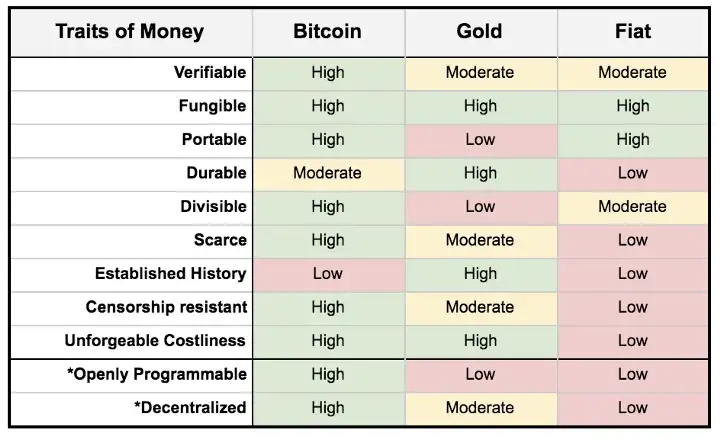
If you invest in gold, you won't be able to even gamble with it. In fact, you won't even have any gold at all. You'll have a certificate from someone claiming that someone else has your gold stashed somewhere.
Food, Electronics, web hosting, gifts, etc. you know. stuff. I'm normally a cash in person guy but sometimes I'm feeling lazy and just want to order a big box of candy and be pleasantly surprised and mildly guilty when it arrives.
> because I care about my privacy and dont want a huge list of my financial transactions available to visa/mastercard/paypal/the government, and I don't want to schlep to the gas station to buy a prepaid debit card with cash, which is the only other way to maintain a semblance of financial privacy if you want to buy things online.
If it where purely ideological I would not be buying things online at all. I like buying stuff online because its convenient, and Cryptocurrency is the most practical way to buy stuff online while still protecting my privacy to some extent. But cryptocurrency does not protect my privacy completely, if I was a purist I would not buy things online at all.
Privacy is a lot like other civil liberties, it feels ideological and airy-fairy until you need it and don't have it.
Take for example web hosting. I could have paid for the website that we used to lambast the Minneapolis police department and argue that they should not have access to the toys they want using a credit card, but then the Minneapolis police could send a sternly worded letter to the webhost and learn where I live. Which is a reasonable consern if you know anything at all about the Minneapois police department. So I pay for webshosting with cryptocurrency.
That's a real clear cut example of why financial privacy matters, but that same concern extends to pretty much every thing you do online. Cardinal Richelieu has the right of it when he said "If you give me six lines written by the hand of the most honest of men, I will find something in them which will hang him", and recall that The US government kills people based on metadata. Its easy to dismiss me buying a box of candy as not important enough to worry about, but its the entire history of every financial transaction you make that paints a very accurate and very useful picture of who you are what you get up to that is of great interest to people who can do you real harm.
Isn't something like wise.com a much better option for that? You have to trust only a single company instead of multiple potentially sketchy exchanges, and you are not exposed to crypto currency fluctuations.
As someone who uses Wise out of necesity: no, it's not better. Wise can freeze my account whenever they want. They can go out of business any day. Fees can change over time. Transfers can take a long time (ex. wire transfers can take several working days). Crypto is a far better solution in my experience.
Transferring crypto across borders without exchanging to/from local currencies or USD is of course trivial. But it's also useless, since most people can't pay their rent with crypto.
To elaborate on the sibling comment, my understanding of Wise's mechanism from having used it is something along the lines of:
- they establish local accounts everywhere
- a transfer is you send money locally to their account, and then they send money from another local account to your destination
- they take some (small) mark-up over the actual rates
- they aggregate the many smallish transactions to exchange with optimal rates and fees for themselves, and probably do a bunch of stuff around mitigating risk of having too much float in a particular currency
It's a model that impressed me when I used it, relatively simple conceptually but solved a big pain point. Not sure that crypto adds much other than offloading risk (of exchange rate fluctuations) onto the person doing the transfer - I quite like that wise essentially bears that risk
Oh yes sure. The current system could also work without all the current issues... But who of the parties that control or profit from it now would want a change? Why give up control? Why renounce fees?
To change it, at least one competing system is required to put the pressure the current system. It will not change from the inside.
That is the best argument so far. The money system is a monopoly and competition fosters innovation. The problem is that cryptocurrencies are bad competitors.
There you go. For near instant, low fee, global cross-border payments the technology works for people in countries like Argentina, Nigeria, etc, and especially with stablecoins like USDC and that works worldwide. All the recipient needs is an internet connection and a wallet address or resolved wallet name like abcxyz.eth, or testing123.sol, for example.
You just listed a bunch of things with well-established standard solutions that do not need crypto in any shape, way, or form.
Voting is already trustworthy in most countries and organisations.
Governance has been a thing for literally millennia without crypto.
Currencies... I mean sheesh, do I need to list every real-world, huge-scale, widely used example of how all of this is already happening and has been since like the dawn of history!?
Speaking of ramps, what about crypto-to-fiat offramp?
My brief experience with crypto involved the couple hundred bucks in Stellar/Lumen/whatever-its-called that the peddlers of that crypto coin gave for free to established Keybase users a while ago. I spent many hours trying to figure out how to convert them into real money without giving my government ID to some sketchy crypto companies, to no avail.
Yes, I know, KYC. But still, what struck me as interesting is, there is tons of first and third-party guides and articles on everything you can do with those Stellar/Lumen coins, except the one thing that I'd think most unwilling recipients are interested in: how to cash it out and forget about it. It's like this part of the crypto space (and I suspect most of the entire ecosystem, really) is heavily biased towards ingesting money. It feels like videogame virtual money you can buy, but not sell.
If you expect to be able to buy fiat currencies without going through KYC protocols you're not going to get much satisfaction. Something I've observed about the US is it is often a financial island with the rest of the world refusing to take US clients because of the burden of KYC. Those laws aren't some sort of minor afterthought.
I somehow converted the lumens to bitcoin and sent the bitcoin to my wallet in a local exchange and deposited it from there. I kind of trust that exchange as they have "serious" people on the owner side.
This might have been a viable product in 2019. Today. no.
Usually, you can't buy money with a credit card. That's a personal loan, and has higher rates. None of the major US banks allow buying crypto with a credit card.[1]
Debit cards, yes.
After completing detailed research in to crypto-addressable opportunities within global finance I built a POC for this in parallel to the exchange POC at Kraken in 2011. It was canned for legal reasons, and a decision made to focus on exchange. Coinbase started the following year, with deeper investor pockets and a generally more aggressive "beg for forgiveness" legal strategy. The rest is history.
This is great news. It's great that Stripe is willing to support decentralization, especially in the current environment. Fiat-to-crypto on-boarding has been a major pain point due to regulations. It has deprived an entire generation of opportunities to launch crypto-based businesses outside of the corporate and private equity sphere.
I can't because of expensive regulations that mandate that you have multiple people educated in the old system. You need a banking license even if you don't want to do traditional banking with its traditional risks at all. You will hire people who know how to do traditional banking but not your innovative banking. I don't even mean cryptocurrencies specifically.
There are plenty of different ways to implement money systems but the law only knows a specific one and it is the type that makes a lot of people unhappy and therefore it needs an ever growing list of regulations and interventions.
1. Complying with regulations and dealing with banks costs too much money. All I have to invest is my time and skills as a developer.
2. Even if I built such product myself and paid all necessary costs, it wouldn't get any traffic. nobody would use it. These days, if you're a no-name company/developer without any special social connections, it will cost you a fortune to get a good rank on a search engine... The ranking algorithms are completely opaque. Social media influencers never respond to my messages, even if I offer to pay them money. Nobody ever answers any emails or messages these days. It's like talking to a wall.
> Blockchains provide developers with extraordinarily powerful capabilities...
Does anybody take statements like this seriously any more? I realise if you're spruiking a crypto product you need to have at least drunk some of the koolaid, but are we still pretending that blockchains are actually useful constructs?
You are making a foolish ignorant statement that he himself has made about cryptocurrency.
Very few technologies are all good or all bad as you desire to paint this one to be. The world exists in the gray area in between. It’s a tool that has the potential for good and evil, like cash, or nuclear power, or encryption, or the internet.
Anyway, this is a digression and something I find infuriating about cryptocurrency stories on HN. Scroll down and people pop in and want to relitigate whether cryptocurrency should even exist like they are the first person that ever had this idea on HN.
This is a story about how Stripe is implementing fiat to crypto on-ramps. It’s not a story about “should cryptocurrency exist?” or “is cryptocurrency a scam?” But that’s all this conversation will devolve into.
This is great, one of the annoying bits of doing anything in Crypto has been buying Crypto in the first place, this certainly makes the whole process easier. And since Stripe is handling the KYC portion it reduces the complexity tremendously on anyone building and Stripe is a trusted party so great on all accounts.
Now ... if there was just a killer app that was actually useful ;)
>What would someone use this for, when fiat works everywhere?
For the same reason some people line to use linux when windows works everywhere. Actual technical use cases, ideology, and 'tinker-friendliness'
1) there are some use cases where it is better (typically when you want to do something that the state doesn't want you to do)
2) there are ideological reasons to prefer decentralized ownership of the financial system rather than assuming the state can be responsible with the dials and levers of that system
3) There are neat properties of crypto that are fun for tinkerers - money is programmable and you can do neat tinker-toy things with it like micropayments, fintech like collateralize loans and decentralized derivatives trading, dumb things and experiments like the old peepeth, etc.
I think eventually if adoption is wide enough there will be society-altering implications inherent to crypto but for now I think it's those 3 things.
Core developers of the Bitcoin ecosystem are also Linux hackers. Rusty Russel, C-lightning main developer was also the creator of iptables and a good part of the Linux TCP stack.
Technical minded people showing hostility toward Bitcoin because of some obvious scammers is as unfathomable to me as showing hostility toward TCP/IP because of malwares.
TCP/IP works quite beautifully for something designed decades ago, and actually solves real problems, though (like delivering your message to my t̶e̶l̶e̶t̶y̶p̶e halfway across the globe). "Crypto" seems to be quite good at worsening air pollution in my country (which is already very bad) and not much else.
Of course, whether it's gold, fiat or cryptos, we'll have scammers and gullible people who fall for ponzis, but because money can be used to scam doesn't mean it's a scam itself.
Although I bet there are a lot more either useless or scammy projects in crypto than in gold (fiat must have the most scams since it's the most popular), people writing off the entire industry as a scam is disingenuous, myopic, and so often delivered with obvious jealousy that they had the chance to buy up some space cash when it started but said it was stupid so now they will stick to that argument.
I had to donate to Wikileaks years ago via a very expensive wire transfer since the credit card companies bowed down to the USA and cut them off. If I had BTC, I would have used that for almost free.
I feel like it's somewhat poetic and a powerful indicator of something I can't quite put my finger on that this thing we call the internet is now old enough that some of us are doing old-man-shakes-angry-fist-at-cloud at newer parts of it. The more things change the more we stay the same.
I hear this a lot. And I know it’s true. But it seems like a bad use of crypto.
I prefer to do crime in cash. Cash doesn’t have a permanent public ledger associated with it. Even if that ledger is “zero-knowledge” - I’m betting my freedom on bullet proof math staying bullet proof for the statute of limitations.
I understand that “at scale” cash may be a higher risk than crypto. But I’m not “at scale.” Local, last-mile, cash transactions are preferable in nearly every way.
Except that you are now committing your crime in a single jurisdiction and performing all elements of the crime at the same time. It makes it much more convenient for law enforcement to catch and prosecute you.
And what's worse they have incentive to get you to roll on your dealer. So they're more likely to hammer you with charges to force you to take a deal to testify.
Compare that with my situation. You need to prove that I received the package, associate that shipment to an order, that order to a payment, and that payment to me. It's a multi-jurisdictional effort that would require subpoenas and some sloppiness by my dealer.
And to what end? All I know is that I sent bitcoin to an address and drugs showed up some time later. I have no idea who I paid, where they got the drugs, who mailed the package or anything useful at all.
If I were to put my game theory hat on, I’d take it one step further and say “crypto is good for crime” is a meme likely promoted by gov institutions.
They get a criminal financial system committed to a permanent public ledger. Between deanonymization techniques and zero-days, its likely they view chains as an asset. They can use them to see how money is moving through criminal organizations. Best of all, it’s likely they never have to reveal their hand (they are using chains for investigations) since they can use parallel construction once they know where to look.
All the other comments here seem to be speaking strictly of illegal drugs that otherwise can't be obtained. There is also a market for things like semaglutide, HGH, any sort of anabolic steroid, ED drugs, certain types of stimulants and asthma meds, that are fairly trivial for any American to get a prescription for from an online clinic in the next half hour if they want, but they'll be charged extortionary prices. You can also buy these same things for 1/100th the price from well-established, well-known black market labs that will reimburse you for third-party blind purity testing, and nobody is ever going to arrest you for it, public ledger or not.
Or take your chances handing over cash to some dude in an alley.
The instructions above can get you pretty far. But before trying this, make sure that the crypto you are using supports zero-knowledge proof or zk-proof. This way, you make it harder for law enforcements to link all these things to your identity.
I think it would be neat if I could pay 1 penny to read a single HN-linked NYT or WSJ article. But the entrenched payment processors refuse to give up their 5%+25cent cut or whatever.
The fees are closer to 3% or a bit under these days. And that's for a very robust and mature infrastructure, not just on the merchant side, but the buyer side. Credit cards do a lot more than just send payments, you get all the benefits of things like dispute resolution, rewards points and the bug/feature of spending money you don't have in hand. If you go to a fully-baked crypto payment provider like Coinbase, they still charge 1% for a far less sophisticated product. The cost of all the things that crypto doesn't do get shifted to consumers and merchants indirectly.
Sending any amount of ETH it costs between $0.01 (on the Loopring network) and $0.46 on the Ethereum mainnet (with the most popular layer 2 network, Arbitrum, costing $0.02).
So not quite there to send 1c micropayments, especially since sending USDC would instead cost something like 2x-3x more, but not inconceivable that it might get there on newer layer 2 networks which do more aggressive batching (using proof techniques called STARKs and SNARKs).
There are some other networks, such as Solana where transactions are effectively free (though even very small fractions of a cent add up for an algorithm): https://solanabeach.io/transactions
So the defense to crypto being expensive to transact in is to...use another network on top of the crypto instead of the crypto I actually want to use.
THIS IS WHY CRYPTO DID NOT TAKE OFF. It's too complicated and expensive to use for all of the supposed use case; it's objectively worse than comparable fiat options.
I send USDC on eth pretty frequently and for larger amounts find it more convenient than Venmo or Zelle. For smaller amounts it would only make sense if other people are already using L2s, which might happen through website integrations (or not).
Don't forget to include the conversion fees. In the example shown in the blog post, it looks like using ETH to pay that $10 bill costs $1.63 vs. the $0.59 it would cost to use a credit card for the same transaction.
I guess that people in US and other big countries with strong currencies don't really understand that there are smaller fiat currencies and these are actually used. I wonder how often you have to convert your USD even when traveling, last time I was visiting Africa I remember most just accepted USD or euros directly even though the countries had their own local currencies.
I'm tired of pointing this and getting downvoted into oblivion. Most negative comments come from privileged people living in Western Europe or the western US. You can even guess which is which from the timestamp.
In the end it is a soft family-friendly version of "stop being poor".
GP's comment is about Stripe's service, not cryptocurrency in general. Unless if Stripe really wants to set their money on fire, I doubt that they're going onramping any hyperinflating currency.
If you're in a country with a weak currency, what you really want isn't crypto but rather a stable fiat, mainly the USD. Cryptocurrency only really helps the relatively privileged people in these countries to bypass currency controls.
Unclear if this is in production or if they are just seeing if it’s viable to build, but it would be awesome if this works! I signed up for the release.
It kind of seems like this product will be dead on arrival. Why did y'all go through with a launch instead of making the tough, but probably correct, decision to just kill it?
This is crap. Countries not supported? KYC? Registration? How is this supporting decentralization? This seems like an overly complex payment flow just to get us to where we started from.
This is just Stripe trying to get on the NFT bandwagon (too late by the way). They'll probably close this service in 2 years.
It would be interesting to know how Stripe sets exchange rates. They act as an exchange for many traditional currencies and now for cryptocurrencies, in both directions.
To some extent they should be able to do this internally, when cash flows balance out.
The only such onramp i could trust would be localbitcoins or sth. Anything that involves online seems to be hacked and is spied by 100 different agencies. A bit too much when all you want to buy is vitamins.
Most exchange already provide crypto-to-fiat offramp.
For example you can send cash from your Coinbase account to PayPal instantly with no charge. You can also do your bank, but obviously that will take a few days.
I only follow this topic casually but the impression I get is that the existing cryptocurrency offramps are not dependable -- they're either nonfunctional under heavy load or intentionally shut down at the drop of a hat; there isn't an entity like the FDIC to step in to gracefully shut down failing institutions, and let customers get their money out ASAP.
What would be once-per-decade anomalous events with real money seem like an everyday failure with cryptocurrency exchanges.
I am both fascinated and confused by crypto currencies.
The idea of a free-as-in-freedom, flexible, secure, and more democratic and independent payment system seems quite attractive.
At the same time I seem to see mainly examples of high-to-extreme volatility, fraud, technical and regulatory exclusion and suppression, and a total lack of real-world practicality.
I am quite sure my view is skewed.
If you have used crypto currencies in real life, ideally for more than speculative investment, would you be willing to share (parts of) the experience? I'd be very curious to learn more about this part of the puzzle of crypto.
How did you acquire crypto?
What did you use it for?
How did you feel about the transaction?
Would you do it again?
Or anything else you'd like to share for that matter.
I had one customer ever want to pay for some hobbyist electronics kit using BTC. He worked for...a startup doing cryptocurrency processing :P
Transaction went fine, I cashed out through Coinbase, didn't sit on it too long. It was not inconvenient. This was before BTC hashing efforts were consuming nation-state levels of electricity. I'd probably decline nowadays based on that alone.
> If you have used crypto currencies in real life, ideally for more than speculative investment, would you be willing to share (parts of) the experience? I'd be very curious to learn more about this part of the puzzle of crypto.
> How did you acquire crypto? What did you use it for? How did you feel about the transaction? Would you do it again?
i got some Bitcoin back in 2012-2013 when people would operate faucets. i realized most of those faucets worked by displaying ads and just giving users a cut of the ad revenue. i spun up my own faucet on the same principle and made a bit of $BTC that way. since the ads only pay for human impressions, i gated the faucet behind a captcha, but i got clever and wired that to an API where the captchas i showed my visitors were actually sourced from 3rd parties who wanted their own submitted captchas to be solved by a human and were willing to pay $ for that.
i killed the whole thing a month later once i properly confronted the fact that i was enabling bulk spammers by doing this.
since then, i’ve used crypto to purchase VPNs, shared data replication (i.e. i want to backup 1 TB of data offsite, and also i have 2 TB of free HDD capacity: i’ll back up your data if you & a someone else backup my data), and the occasional donation to charity or “content creators”. i used Sia/Siacoin for the storage bit, but the UX was a little weak and i’ve just gone back to Backblaze in the meantime — will revisit the area at some future point. as for the donations bit: it’s nice to be able to donate to a project anonymously so that it doesn’t impact my relationship with the devs/artist/etc. even “independent” media outlets are in a weird place where the desire to keep advertisers causes a bit of self-censorship, but the authors don’t want to paywall their work because that limits their audience; sponsorship (Patreon style) plays a role here, and enough people have been bitten by Paypal/Patreon/others that things like Bitcoin have a small foothold.
i’ve also used cryptocurrencies to purchase medications before getting an official diagnosis, and then take these findings to my GP or a specialist and get proper prescriptions for whatever treatment worked best. it’s generally faster and a bit more intuitive than working through the official healthcare system from start to finish, and people have so far been surprisingly receptive when i list my symptoms and then say “by the way i’ve tried medications X/Y/Z and had the following experiences with them: …”. make of that what you will.
Have you used fiat to buy crypto as well, or do you still use the original crypto from when you started?
I can see how in theory crypto could be interesting in the creator space as touched on by you. Do you think Stripe's implementation could facilitate this?
As to medication: sorry to hear you had to go that route, but it totally makes sense to me. Glad to hear it's been working out for you. Yay for crypto in this case!
> Have you used fiat to buy crypto as well, or do you still use the original crypto from when you started?
oh, yeah i’ve used exchanges before. even in that bitcoin-powered “business” i described, it wasn’t closed: a bitcoin faucet drains BTC, while ads (at the time?) pay in $USD, so i had weekly USD -> BTC exchanges on a centralized exchange (i forget the name of the exchange).
sadly, i didn’t keep any of that Bitcoin. i was away from the space during the major bullruns — came back to it only in the last few years once i entered the workforce and wanted a place to store savings. i couldn’t make sense of the banking and investment systems (Fidelity, Vanguard): what happens if they lose customer balances due to datacenter fire/hacks/etc? what controls do they have in place to prevent that? at the time i just stashed my $ in BTC because it was the only place where i felt i understood the security model.
yeah, onramps help. several of the commercial transactions i’ve made with BTC have been through bitpay’s embeddable web widget. Stripe’s thing seems like the next evolution of that. it likely won’t alone cure the issue of creators who get kicked from payment platforms today (Stripe could kick them off just as well as Paypal/Patreon/et al), but it may pave the way toward future iterations that better solve that — just by getting more users familiar with cryptocurrency transaction flows. we’ll see :-) do you have any predictions?
Thank you for elaborating. What you describe ads balance to my impression of the crypto world, and like that.
> at the time i just stashed my $ in BTC because it was the only place where i felt i understood the security model.
Makes perfect sense to me. It was something you could wrap your head around more easily.
I also like how you frame onramps, and how you talk about an iterative process.
Curious to see where it all will go.
As to my predictions, I am afraid I am a little pessimistic here.
I obviously know very little about crypto, so I cannot take those unknows into account.
What I do expect in a way is anything that threatens established power, be it monetary or political, to be treated as such: a threat. The more unregulated crypto is perceived as such, the more blowback I would expect. The more it gets regulated, the less useful in solving actual problems it might become, since it might simply become another expression of what now are our regulated currencies.
These ideas are all technological in nature and avoid thinking about what payment systems are: they're social constructs, not technological ones.
The problem with crypto-as-payment network is that their central appeal is that they bypass all of the regulatory frameworks that protect every day people from money laundering and fraud; bypass sanctions, etc.
As soon as they're subjected to the same regulation and oversight that other payment networks and money transmitters are... there's no point. As a network technology it's slow, inefficient, difficult to develop on and extend. And any organization set up to follow regulations that exist today would have to have reserves, charters, submit themselves to regular inspections, etc and... be exactly what we already have.
Some people think by-passing international wire rails (SWIFT etc) is the big win: I can send money to friends/family in the global south without the fees/sanctions associated with such transfers in the regulated system. I would like to see that become a better experience for people in general but I don't think crypto and bypassing the state is the answer here. It's way more risky for a lot of reasons.
(a) Shouldn't the USD then be comparatively volatile relative to goods and services as well?
(b) With the USD (in this case) the de-facto currency for practically all end use cases compared to crypto (ppl need to cash out eventually for practically everything), doesn't this mean that for all practical purposes it's the crypto that's volatile, since it determines the eventual real-life value in USD?
This is beyond exhausting to see on HN on every single thread related to cryptocurrency and unfortunately your comment is the straw the broke the camel's back.
The heart of HN is a community which celebrates technical curiosity and exploration.
Honestly, cut your shit out. I've grown completely tired of this kind of attitude, it goes against literally everything that drove us towards technical fields to begin with. To see this kind of dismissive, hostile, and vitriolic behavior towards any technical space is not what we as a community should ever have to come to accept or tolerate.
> your comment is the straw the broke the camel's back
Have another. The entire crypto "space" is bullshit. Cut it out.
> To see this kind of dismissive, hostile, and vitriolic behavior towards any technical space
It has repeatedly shown that it is doing no good for anyone. I liken it to homeopathy and MLMs. Such is my contempt and dissatisfaction. Such is the ill that they bring to many to fill the pockets of few. Would you like to see curiousity and celebration of those fields? Open-mindedness is one thing, but don't be so open-minded that your brain falls out.
PSA: Remember to cut this crypto shit out already!
You don't get to claim someone else is on a high horse while simultaneously playing rhetoric police. Not to mention, metadiscussion is always off-topic.
The topic being crypto, which is bullshit that needs to be stopped.
KYC is a legal requirement. If you want cryptocurrency to be adopted, it needs to be legal to use. Even if it becomes cost competitive, most businesses aren't going to touch something which exposes them to risk of getting involved in a money laundering case.
With fiat money, you can legally retrieve anonymous cash from an ATM if you choose so, without suspicion. Or likewise, you can reveal your identity for a transaction when appropriate. This should be the same with crypto.
Let's see it this way: surveillance is needed and those who seek privacy may indeed conceal illegal activities. But I think we can agree not everyone is a criminal and if I have a right to privacy with cash, I should have the same right with cryptocurrencies.
Paper cash is "analog" and local, crypto is digital and global. It's the equivalent of buying DVD copies off someone at a market stall vs a torrent site.
Except with crypto you have the government after you directly for tax avoidance, money laundering and the prospect of $GovIssuedCurrency being sidelined. With torrents it's the MPAA sending lawyers after you.
My feeling is if you can't do it anonymously with cash the government probably has a reason to be interested. What should happen is all businesses must be forced to accept cash transactions, I don't like then trend towards cash-free shops.
Of course. I used to like Monero (XMR) despite its shortcomings, but Lightning is now more promising. It essentially solves all the flows in Bitcoin: scalability, fungability and privacy.
KYC and "regulations" didn't do shit to prevent a fraud from laundering customer funds between business entities to gamble and try to save his failed hedge fund. That crime was pretty much crypto only in the sense it involved an exchange and they overleveraged themselves, but the actual crime was just straight fraud.
Yeah, they were technically a Bahamas entity and fall under the jurisdiction of that country, technically, but likely under US jurisdiction as well in order to operate in the country. There's a whole really confusing business entity diagram I saw floating around somewhere, but can't find it offhand. But the way they were structured was obviously for tax havens and to blur their financial ties between entities. I'll be honest in that it goes above my head as I'm not deep into finance and regulations, however seeing statements about the level of fraud being unprecedented by the overseer of the Enron bankruptcy (who's overseeing FTX bankruptcy as well) is not very reassuring.
And yes, they did require full human-verified KYC to access any exchange functionality. Actually that was a downside, because the day they filed Chapter 11, their site was compromised and who knows who potentially accessed the PII from all their customers in that mess.
But yeah, SBF was very much a proponent of increased regulations and worked closely with US politicians and the SEC. They were "legit" to public view, but behind the scenes was unprecedented financial incompetence and fraud. And to clarify, they definitely had a business presence in the US with their US site and that would fall under US jurisdiction. I thought of applying there because it seemed like a cool place to work but they were only hiring for their Chicago office at the time. Glad I dodged that bullet in retrospect
You're reading into things I didn't say. I don't claim that KYC will protect people--I claim that the regulations that do protect people go hand in hand with KYC.
Crypto as the libertarian dream of government-free "money" will never go beyond libertarians. Crypto as a broader-scale augment to existing financial systems? Who know? But that won't happen without KYC and regulation.
Know who seems so far unaffected by this? Coinbase. The one exchange who has been operating entirely within US jurisdiction and laws; trying to be as bank-like as possible, following all the rules.
Binance has been doing better than Coinbase by a large margin, fwiw. Their US presence is probably not as strong as Coinbase, but by and large they are the #1 worldwide exchange. US regulations are not necessary and really are just a pain in the ass because everything the US government touches becomes inefficient beyond belief, it simply relies on the owners of the exchange not being incompetent & fraudulent.
Personal responsibility to understand how things work? Unwelcome to most folks, but the only thing that works.
If your institution is keeping their internal operations hidden (no provable compliance), then “regulation” is at best a delay of the inevitable corruption.
Vast majority of the complaints about crypto fall into two categories:
-lawless: e.g., ponzi scheme, rug pulls, etc.
-useless: "this is just a database"
For crypto to be useful, both of these challenges need to be addressed; well-designed regulation certainly will help the former, and also its perception.
That doesn't work when the guy running the operation is being glad-handed by politicians behind the scenes and given a cake walk instead of a perp walk.
Assuming you're speaking of corruption, there is no system of custody that inherently prevents fraud unless it's self-custody. Any middleman, anywhere, as a matter of principle cannot be 100% trusted, ever. We use laws and regulations to give us the veneer of trust, but in reality, those laws and regulations are only ever one morally corrupt individual away from being circumvented. Hence why Bitcoin and self-custody are such important ideas and how this problem ultimately gets solved. The solution being: to financially disincentivize corruption to such an extent that your only option is violence which necessitates financial corruption to exist on a meaningful scale.
There's resistance to that idea because people hate to take responsibility for their actions and would rather defer/delegate it to someone else. It's the same exact problem as obesity, credit card debit, etc. "Well it couldn't possibly be my fault that I'm fat and poor, it's the evil greedy corporations!" Ironically, and at best, it's often the oroborous of government enabling the potential for malfeasance that's coming back to bite people (see: French regulation around nuclear reactor temperatures near wildlife forcing an energy crisis [1]).
If the system (whatever it is) enables people to be lazy or careless, they will be. And of course, they have to deal with the consequences of that behavior, whether they are willing to mentally/emotionally accept it or not.
Might as well add fiat-to-pork-belly-futures, when there's no real world use for crypto, its just a tradable commodity without the real world application of commodity goods.


Merchants seamlessly convert crypto back to USD and cash it out.
So what is the point of crypto again other than giving Stripe (and similar centralized providers) a needless cut?