Should be be worried that the author of Accelerando complains about things going too fast?
Future is complex, and not only "good" developments happens and start changing everything faster than ever before, bad ones does too. And we aren't rational enough to avoid the bad ones.
Anyway, I'm more worried about the consequences of climate change that are not the slow rise of the global sea level than about COVID. That is a general area where things are happening faster than predicted, and where we act slower than predicted.
It's amazing to come to the comments and find the author himself here. Thanks for writing Accelerando, I enjoyed the book. It really made me think about the future differently.
I'm convinced that it happens proportionally to information transfer. What once took 10 years to slowly detect now takes about 1 year to realize you don't want the new [thing] because you're feeling a sense of deja vu.
In 15 years, it'll be a 3-month endeavor unless we see the human limits of perceptual processing hit a hard wall. I liken it to how memory used to be expensive and engineers cheap, and it's now the other way around.
Through your writings, you helped create a new age religion of people who worship non-linear technological progress. (Though the transhumanism movement seems to be less active as of late)
Its going to be a wild ride! Hopefully it doesn't result in anything too crazy going on, I'd hate to involuntarily grow a new limb.
Related, your books, and others in the genre, helped bring about my own acceptance of people's differences. I realized that if I had no objection to a future where people modified their own DNA, then it followed that I should have no objection to people dying their hair, getting crazy tattoos, or making any alterations to their body that they so choose. Transhumanist literature was the final stepping stone that let me step back from the preconceived notions of ethics and morals that society had placed upon me and do a thorough analyze and decide what I wanted to keep versus discard.
And following up from Glasshouse with Implied Spaces by Walter Jon Williams where the exploration of what could have been without the Vile Offspring and computers were harnessed without a singularity... but "tools" such as Curious Yellow are a part of the nightmare scenarios in the possibilities of war.
Wow! I just stumbled across your novels a month ago (recommendation by my library) and am currently reading my 4th novel of yours. Small world! Thanks for chiming in.
> Should be be worried that the author of Accelerando complains about things going too fast?
I think Accelerando itself is precisely complaining that things are going too fast. In the specific scenario in the novel, the incomprehensibly fast automation of capitalism is going to eat us all.
IIRC, in Accelerando the ability by meat people to even vaguely understand Economics 2.0 required something like a literal bolt-on addition to the human cognition system.
Nine times out of ten, when something new seems too complex to understand, it's not. It's just been obfuscated to make it seem complicated to sell you something.
Most genuinely new things haven't had time to get too complicated for one person to get a functional understanding of the whole situation. You could talk to web servers in telnet and make the most complex web page anyone had ever made in Notepad long before starting a new web thing from a guide required a half gigabyte download.
Cryptocurrency is a small step forward with some potential to make online transactions easier. That's it. That's cryptocurrencies. Anyone making it more complicated is trying to fleece you. The most complicated thing is smart contracts, and what they are and what they do is right there in the name.
> Nine times out of ten, when something new seems too complex to understand, it's not. It's just been obfuscated to make it seem complicated to sell you something.
Either that, or if it actually is as complicated as it seems... Then it's usually too complicated to work.[1]
(Which is not to say that uncomplicated stuff can't also, sometimes, be bullshit. Like, IMO, crypto-"currencies".)
___
[1]: At least too complicated to work well, and/or in the long run.
I am definitely not worried about the consequences of climate change. I am ready to deal with it.
What I am worried about are politicians forcing us to do things justified by climate change.
Conversely, I'm more worried about people with your point of view than I am about climate change. Since this kind of "I'm scared of representative government telling me what to do" stance means that even if we're able to collectively decide to take meaningful action on improving the state of the planet, there will always be a group who declares that they won't help.
> "Looking further afield: it seems likely that the end of internal combustion engines will be in sight. Some countries are already scheduling a ban on IC engines to come in after 2030—electric cars are now a maturing technology with clear advantages in every respect except recharge time. Once those IC cars are no longer manufactured, we can expect a very rapid ramp-down of extraction and distribution industries for petrol and diesel fuels, leading to a complete phase-out possibly as early as 2040."
At this point the proposed bans are on the sale of new vehicles that run on fossil fuels. As far as I know, no one is planning to outright ban ICE vehicles yet. Headline writers consistently get this wrong, because making the policy sound more extreme than it is attracts ad views.
> "As about half of global shipping is engaged in the transport of petrochemicals or coal at this point, this is goin to have impacts far beyond the obvious."
Huh, that's a lot. If that's correct, it's a lot more than I would have guessed.
From the comments on Charlie's site, and not by me:
Wyvernsridge | January 9, 2022 19:06 | Reply
8:
I love these kinds of posts! I would, however, caution about thinking that the end of ICE car manufacturing will be dictated solely by government diktat. It will most likely come earlier and more chaotically because of manufacturers being unable to source parts and components to continue making those cars.
The auto industry is basically a pyramid where OEMs [ie the car companies] depend on module/system [Tier1] suppliers as well as component suppliers [Tier 2] and Parts suppliers [Tier 3]. Those relationships are built on contracts that span out to five years and beyond. Today, contracts are being negotiated for 2025-2030. Those contracts, if happening at all, are being done for much lower quantities of units. After all, an EV does not need a cast-aluminium gearbox assembly. The manufacturers within those tiers are highly competitive among themselves and they know they need to find alternative to manufacture and remain viable well in advance of 2030. For OEMs this means trouble finding components, and paying much higher prices for those than they used to [ie the suppliers are costing in the risks]. This means that ICE car prices will skyrocket at the same time that EV prices go mainstream.
I don't think it's unlikely that ICEs will be phased out as quickly as the optimists are suggesting. Once there's critical momentum things move quickly, so +1 from me.
However, all that new electricity demand needs to come from somewhere. Drawing power from the grid at night works great today, but that's because of a coincidental uneven energy demand, which I doubt will last for too long. Once EVs are truly mainstream, it will (1) saturate the grid at all times of day and (2) make the grid more critical than it already is (meaning mitigations like rolling blackouts are gonna be even more infeasible). Sprinkle some demand surges from A/C and heaters from extreme weather events on top of this, and while we're add it let's decommision nuclear prematurely for political points (see e.g. Germany and Sweden).
Anyway, what I mean to say is that electricity supply will be a real problem (especially in the US due to car centrism) and short sighted politicians will need to provide immediate duct-tape fixes. Fossil fuels are sinfully well suited for fast energy injections, and I'm afraid that will often be the only option.
In other words, I worry little about the ICE-EV transition, but that doesn't mean anything for the fossil-renewables transition in general. I wouldn't be surprised if tomorrow's electricity will be dirtier than today's.
Worth remembering that one reason electric cars are cheaper to run is that they're more efficient. More of the energy added to the car translates into moving you somewhere and less is converted into waste heat etc.
As a result 1MJ of petrol consumption replaced with electricity when somebody replaces their car with an EV is not 1MJ more electricity to deliver but perhaps 600kJ. This can mean guesses of the necessary infrastructure investment to deliver a fit-for-purpose supply network are significant over-estimates.
Cars are also an excellent target for "demand side control" in electrical grids. You'd be very angry if your refrigerator shuts down temporarily when the grid load is high, and pretty unhappy if your lights or TV shut down, but how about the tumble dryer? Most days you wouldn't care, and if you got paid for the option you might jump at the chance. However charging your car overnight who cares whether it charges from 1830 (when you arrive home) to 0340 (full) or from 2230 (as people go to bed and the network is less strained) to 0740 (just before you get in the car to drive to work) ?
That's true for gas fired plants so I expect it would be the case for light liquid fuelled ones. You wouldn't burn petrol in them, because that fuel is very specific to piston engines (turbines don't need toxic anti-knock additives, for example).
As far as grid stability though, in more advanced countries it's relatively easy to build out more grid capacity, just expensive. Only in politically troubled countries like Australia and the USA does the "but how do we create an effective market for building the grid" dominate that discussion, and result in a poorly functioning grid but also (obviously) a badly broken market in providing a grid. Back when I was exposed to economics electricity grids were a cliche example of things where markets are inappropriate and inherently unworkable - they're a natural monopoly. Even the most die-hard capitalist isn't going to suggest two or three independent grids supplying every building... well, maybe in Texas :)
I'm in Australia, and the big advantage we have over much of the USA is being closer to the equator... only about half our current houses have solar PV on them, and less than a third of commercial buildings. We could get 20% more electricity just by fixing that, and it would be conveniently close to demand as well.
In that case, you could just skip the grid and put the turbine in the car.[1]
Yes, the vehicle is heavier (=less efficient) when you carry the range extender around with you, but that's compensated for by not needing as heavy a battery. Eliminates dependence on the grid; replaces it with dependence on the current refuelling infrastructure. Which latter, at the moment and in most places, certainly is better than the currently available EV charging infrastructure. Crossover point where pure EVs become more efficient TBD by how fast fuel infra is reduced and how fast charging infra is improved... With an additional confounding factor introduced by GP's hypothesized grid instability.
ICE cars are still needed because battery tech is not good enough.
There are plenty of studies showing that an hybrid car is much better for the environment on the long term than the current state of lithium battery electric cars. Long range EV are a pest. Lithium mining is way worse for the environment than people believe, and there is the whole other issues related to mining in general.
Changing every car to EVs is missing the point. We need much better transport for both inter-city transportation, and for intra-continental goods transportation.
EVs are just going to change the location of the pollution.
The metals in the batteries can be recycled into better batteries for increasingly efficient cars. I see it becoming like steel where the vast majority is recycled. Unlike plastic, it's just metals, so they can be remade endlessly
There was a post here just yesterday, of a piece by Bill McKibben on this very topic. 40%. Seems about right to me.[1]
> > At this point the proposed bans are on the sale of new vehicles that run on fossil fuels [...] leading to a complete phase-out ...
> ... making the policy sound more extreme than it is
And the reduction in fossil fuels, too. Gasoline is somewhere between 30% and 40% of total oil consumption (if I am interpreting pages on the IEA's website correctly). There will be a ramp down, perhaps, but not a complete phase-out.
The ramp-down could happen slowly, then all at once, though.
On the one hand, ICE vehicles will be around for many decades after the bans come into force. On the other, most vehicle miles travelled are travelled by newer vehicles (say up to ten or twelve years old). I think there could be a tipping point after a while, in which the price of gasoline suddenly rises sharply because it's uneconomic to refine the small quantities demanded.
All the other components, not so much. There are lots of uses for which there are no good substitutes: industrial chemical feedstocks, ships, roadmaking, off-road construction and agriculture, trains, backup generators, military vehicles, and many more.
Diesel, kerosene (jet fuel), naptha, bitumen, etc., will be with use for a long time to come. Let's hope someone comes up with a cheap way of synthesizing them from atmospheric CO2.
While gasoline demand may bounce up and down, it is important to remember that no one is pumping petrol out of the ground. It is a component of crude oil and so some fraction of the crude oil demand is being pushed forward by ICE users. If the push stops then demand for crude will drop until some other fractional component user picks up the slack. What will be interesting to see is which fraction will end up hitting a floor first and setting the price -- maybe kerosene (jet fuel) but given the attention upon that fraction recently in terms of global warming I do not see it expanding much, so cutting petrol demand 30%+ could really push crude production down an almost equal percentage.
Cars don’t last as long as you’d think, on average. There will also be a knee in the curve where the ICE fleet drops below critical mass and gas stations start shutting down - and the harder it becomes to find a station, the faster people will switch.
I think EVs will quickly overtake ICE vehicles once they're price competitive and battery manufacturing scales up to the levels needed, but that's a separate issue from government bans.
My point is that several governments now have policies in place that say they're going to ban the sale of new ICE vehicles after a certain date. But they aren't going to disallow the use of ICE vehicles in their country or on their roads, which is what it would mean if they were literally going to ban ICE vehicles.
I've seen a number of articles with headlines like "X country is banning ICE vehicles after 20YZ" but then the article contents specify that it's a ban on the sale of new vehicles, which isn't the same thing. This is unhelpful sensationalism that is likely to convince a lot of conservative people that government agents are going to show up at their front door on a certain date with a tow truck to take away their Ford F150 or whatever, and that's just not the case. So, whenever I see anything that uncritically repeats that idea I find it necessary to post a comment saying that "banning ICE vehicles" isn't the same thing as "banning the sale of new ICE vehicle" in hopes that fewer people are confused and maybe more people will demand clear and accurate communication on this issue.
In the long run, bans on the sale of new vehicles will mean that existing ICE vehicles will wear out unless people want to make the extra effort to keep them running, which for most of them it's just not worth it. So, this achieves the needed policy objectives without antagonizing existing ICE vehicle owners. In other words, it's actually a much more reasonable and moderate position than what the word "ban" implies.
It sounds as if you're disregarding early effects of the bans and overvaluing late ones.
For example, if someplace bans new ICE car sales from 2032, ten years from now, what does that do for the value of car-related businesses in 2027, five years from now? If you own a petrol station in a city and are offered a lowish price from a property developer, do you close the business? Or do you assume that you can sell at a higher price in 2037?
Or if you're looking for a new car in 2027, five years before the ban takes effect, do you think you'll be able to sell your car at a nice price in 2037? As of 2027 there's no ban on selling used cars, but do you trust that to remain?
> I think EVs will quickly overtake ICE vehicles once they're price competitive and battery manufacturing scales up to the levels needed, but that's a separate issue from government bans.
Not entirely. Government bans provide additional incentive for manufacturers to switch to EVs, which hastens price competitiveness through economy-of-scale effects.
I agree, there won't be any "bans" for ICEs per se.
But there WILL be higher congestion charges and maybe even localised bans for ICEs in city centres. No one wants a smoking diesel truck idling under their window if they have the option to replace it with a quiet EV.
Disagree. Jurisdictions that (though mostly happenstance of economics and demographic distribution) wind up with most ICE users being economically marginalized or a political minority will enact bans. It's a great way to win political brownie points so it'll be done.
The total cost of ownership for an EV is still pathetic in a certain sense if I need to allot even 10 extra minutes waiting for a charge somewhere on a weekly basis. Especially a small business owner like Joe Plumber -- that's around 10k in lost job time over the life of the vehicle. If I'm well-off with thousands of watts wired to my garage then great but that's not so many people especially in denser cities as well as plenty of business fleets.
It's like the reverse of switching from coal to natural gas heating. Coal required delivering and shoveling a bunch of dirty fuel and ash around frequently, which was a waste of time, so the switch to gas was welcomed as time-saving and much much cleaner. EVs are so much cleaner and quieter than ICE but the convenience factor is not solved yet
You sound like someone who doesn't own an EV? I plug mine into a standard outlet outside my house. It's pretty much always charged. If your plumber is driving so far they need to recharge on the way I think you have bigger problems than the ROI on the vehicle.
In most cases that I am aware of, small businesses have zero ability to deal with this. For example, the local HVAC company has 12 or so vans that are just parked in some lot with a small office. There is no garage and no infrastructure for charging. Same with my landscape person and snow removal person and so forth. They just park their vehicles in some warehouse lot.
If the lot has power, wouldn't they just install charging infrastructure? From a quick search around, it doesn't look too expensive. Unless the weather is an issue while it's charging?
I think ICE cars will see a retro use period like many nostalgic things, so while I agree the daily driver will change, it's very likely that fuel will be seen as some sort of luxury product. Right now fuel is a loss leader for most gas stations, that dynamic will definitely change as ICE vehicles become a toy or status symbol for upper middle class and wealthy people.
Actually yes. I don't recall it being a loss leader, but at the very least, gasoline has a very low margin because the gas price market is highly price-competitive. Store items have a much higher margin (as much is obvious just by looking at sticker prices). The average motorist will not purchase a lot from the store (as seen from your quip about "tictacs and slim jims"), but you also have truck drivers who are much more frequent customers of gas stations.
I don't know how it is in the US, but in France, yes, most gas stations are owned by adjacent stores and they make really little margins (actually, there are frequent sales of gasoline at cost price).
In fact, when buying gasoline in those stations, it's common to receive some voucher for the owner's store.
Other stations are owned by petrol corporations but they are in direct competition when they are near stores or they are very expensive when they are located on our highways, which are privatized(and it's a shame), so they are in some sort of closed market since you cannot leave the highway without paying.
The lifespans of cars have been elongating rapidly. The median car on the road recently passed 12 years. Especially sensible cars with medium-displacement engines making little power through a CVT, these will go a million miles with ease. The long tail of model year 2030 Honda Civics is going to be almost impossible to eradicate without controlling the supply of fossil motor fuels.
I don’t know. I think that few people would prefer to drive an old , slow, non responsive, smelly, inconvenient, and expensive to drive Honda by 2050. These cars are already unloved in Norway. A classic American muscle car or an Italian supercar yes of course, but the Honda Civic will be recycled IMHO.
Who cares about Norway though. What about India, China, Brazil etc.? Are they mainly going to scrap their old functional ICE cars and buy brand new, fresh smelling EVs?
There will be a demand for synfuels, and conversion kits, because as power generation cost continues to plummet, it will rapidly become too expensive to explore for and extract petroleum to drive any such activity.
Closer to 40% than 50% from the most recent numbers I've seen, and that's of volume shipped, not volume*distance (Australia to China / India being a relatively short route that carries quite a lot of the coal).
That wouldn't disappear entirely if you electrified everything; coal is widely used for producing steel (1kg blast-furnace steel uses 750g met-grade coal, this is ~10% of imports in China) and preparing cement (producing 1kg cement uses 500g coal).
However, mass electrification would still be a dramatic drop in shipping.
Recharge time needs to be under 10 minutes or you have a pipe dream. 5-7 minutes would be better. Too many renters, condo owners, and small businesses with fleets don't have time to deal charging.
Even on a long road trip most stops will be for peeing, a drink and maybe snacks. The times you actually need gas are few and far between (obviously, because cars are efficient these days and the tanks are quite big).
If you're going to pee and get a sandwich with a meatball (or a hamburger, a sack of carrots or whatever it is counts as a snack for you) anyway, you may as well do so while charging your car. Given that even the really cheap ones can charge to a pretty significant level (80+%) in 20 minutes or so, these activities are compatible.
So, I recently took a trip that is 7.5 hours for a gas car (my friend did the same trip in her Audi) and took me 9 hours in my electric car with ~220 mile range. It definitely made me want to think about 400+ mile range cars, which seem to only be two makers: Tesla long range and the new Mercedes EQS.
At least one of our stops (visiting Joshua Tree) was at a charger that I think is essentially a glorified 110v socket (ChargePoint in Yuca Valley). We charged there while eating breakfast and while it reduced the range anxiety some, getting to 80%+ was not on the menu.
On main highways you're right, although traveling over the holidays led to at least one wait for a charging spot. To be fair, even the gas station had a line.
> ... 400+ mile range cars, which seem to only be two makers: Tesla long range and the new Mercedes EQS.
Also the EQE, I would have thought? If not to begin with, then probably such a variant will be introduced as a follow-up. And maybe if you drive a Taycan reeeally carefully...?
Witricity claims to have an inductive charger that works even with poor alignment or on the move. I was excited because they had signed Hyundai as a customer and it was rumored to be on the Ioniq 5 or 6 but it's not listed on a product sheet anywhere so I think that got scrapped.
What's interesting about their design is that the end-to-end losses are within a couple percent of the end-to-end losses of a conductive charger (the losses move from the transformer to the induction coil).
Working class mothers with small children who live in apartments don't have time to jockey for a time or position to charge. It's a regression for them compared to gas. We're going to need a lot more infrastructure. A lot.
And lots of other places. About 1 billion people live along coastlines at 20 meters or less above sea level, and 200 million at 5 meters or less. I live in a wealthy country but well within the 5 meters range and am already having to think about whether it wouldn't be more prudent to sell my house today, now that it's still worth something, and emigrate to somewhere with a more future-proof elevation.
Worst case if Greenland's ice sheet melts, that adds 7 meters to sea level, and Antarctica's another 60 meters. I won't see that in my lifetime but my children might.
Ice is less dense than water... but only just. If an ice sheet collapses into the sea, it doesn't need to melt. The ice will displace seawater perfectly effectively just by floating. Most of the West Antarctic Ice Sheet sits on rock that is well under sea level – in places, a kilometre under sea level. It doesn't need to melt: it just needs for the seawater to get underneath it, allowing it to slide off into the sea and break up. Seawater is, obviously, salty and warmer than ice.
The resultant sea-level rise will only take on the order of 12 days to stabilise world wide.
I looked at the figures for this and it was a factor in my decision to sell my house on the outskirts of London and move to Czechia, which is above the level of any possible sea-level rise. Its lowest points are ~120m above mean sea level.
I couldn't afford Austria or Switzerland, and most of the other high-and-dry countries don't have the employment prospects (or beer as good) as the Czech Republic.
the immediate personal need to not live in a flooded zone is one thing to consider
another thing to think about is the global geopolitical/civil war/economic possible disruptions and consequences of something like potentially half to 3/4 of bangladesh's population becoming international refugees. imagine what happened with syrians around 2012-2015 and people trying to get into europe multiplied by a factor of 50.
and in a theoretical scenario like that happening with bangladesh, simultaneously other groups of aggregate hundreds of millions of low-income coastal residents from around the world also trying to move to safety at the same time.
Global Warming is absolutely a slow motion comet strike. We don't believe the science, because we don't WANT to believe it. Those of us that DO believe it feel like robots, speaking to the rest of mankind in ones and zeros. And it's still 10-20 years away, we all think. We will just move north (or south). We will just move inland or uphill. We can science our way out of this shit. Not true. None of that is true. When food prices start to skyrocket, and refugees swarm in from lowland countries and every direction including our own country, where will we go? This should absolutely be seen as a slow motion meteor strike, a world-buster event that happens right in front of our eyes before we can truly react. But we must take action. The danger of methane release, particularly methane hydrates, is beyond scary. That, and the raising of sea levels by 2-7 meters, and other unknowns such as the halting of the gulf stream, species die-off, ocean acidification, coral reefs and god knows what else. As a society, we must intelligently react to these dangers as we've done in the past with threats like the ozone layer. We must plan as if a comet was going to hit the planet, starting now.
> We can science our way out of this shit. Not true.
Why not? We have a lot of promising developments both in cheap energy production and in reducing the cost to vacuumed green house gases out of the atmosphere. I can easily see a world where we change almost nothing about life and still achieve net negative carbon by just ripping it out of the air.
Honestly we even have the technology to do it now just limited will if things ever get real bad that would change very quickly.
> Honestly we even have the technology to do it now just limited will if things ever get real bad that would change very quickly.
COVID tells me that’s highly unlikely. We literally have a movement rejecting known-to-save-lives technology for non-scientific reasons. If things get real bad people will dig deeper to try to protect their own lifestyle right now, even if that means screwing things up 10 years from now.
And enough of those people have enough wealth and power to effectively counter even movements supported by the majority of humanity.
> COVID tells me that’s highly unlikely. We literally have a movement rejecting known-to-save-lives technology for non-scientific reasons.
COVID is different because you need a massive majority, 80%+, to follow certain guidelines (vaccine, masks, etc). For carbon it just needs to happen, anyone can do it. If the tech gets cheap enough Bill Gates will just setup shop in the desert and start sucking.
Decarbonizing is happening, at least to electricity generation and transportation. There is a group insisting on denying this, but it's just your usual form of denialism.
There is reasonable freedom to debate the last 10% of emissions. Those are not being replaced right in front of our eyes. There is also room to claim that decarbonization is not enough. But then you'll have to claim that stopping things as they are is either catastrophic or won't stop the consequences from changing. That's not unthinkable, but not a reasonable default assumption either.
I imagine you are talking about that last one assumption. If so, starting from it is kind of an extreme position. Anyway, it's not clear what kind of cost you are classifying as insurmountable and why governments that are used to spend real amounts of money on all kinds of projects just can't spend on those.
What I want to say is: atmospheric carbon capture is not the deus ex machina that one might be tempted to believe it is after seeing news of startups like Climeworks doing it.
I responded to a comment implying that if there is a philantropist like Bill Gates camping out in the desert sucking CO2 out of the air, we won’t need a massive collective effort.
Maybe this will be a somewhat effective solution one day for areas where fuel energy density is important (e.g. flight), but that’s about it. Carbon neutrality will still need a distributed effort as point source capture is massively more economical where feasible.
>I can easily see a world where we change almost nothing about life and still
This is delusional thinking. There is no future where humanity will be able to continue the way it has and still have a non hostile planet to call home.
The math does not add up for carbon capture tech.
There isn't some scientific silver bullet there that will increase the capture yield.
Building the infrastructure will also emit. Powering the installations will take a lot of energy. There would need to be enormous amounts of these capturing station built around the world for them to make any significant dent in what is already in the atmosphere.
The resources and effort required is so wast, and for so little gain, that we should rather use the alternatives that would give us much more for less.
Subsidize farmers to switch from cattle rearing to forestry for instance. Turn swaths of reclaimed land back to its original wilderness.
even if we completely stopped emitting carbon immediately (impossible), the damage done might mean that we're still going to see a large percentage of greenland slide into the sea in the next 20-50 years.
Most likely outcome seems like the COVID vaccines. The damage is already severe. And while it can (drastically) reduce damage in the future, it will be there.
Someone had a theory that covid won't be the apocalyptic plague. Instead we'll be hit with another deadlier one that ends up poorly controlled with all the covid fatigue. Something like MERS or Ebola, that the old world managed to control.
I expect this to be the case of climate change. Gov has burned their political capital trying to control covid that there's none left to handle climate change.
First time I read a comment on the Internet about so well how bad things are, how even worse they are going to be and how nothing is actually done to avoid it. Thank you.
And if I may add, before COVID I was also concerned about antibiotic resistance, mainly because of how we produce a big part of our food (meat). But after two years of COVID, and given how we dealt with it so far, I think it's an even more worrying threat than I thought. Combined with air, water and soil pollution, there's too many fires to look after.
> As a society, we must intelligently react to these dangers as we've done in the past with threats like the ozone layer. We must plan as if a comet was going to hit the planet, starting now.
Have you seen the movie Don’t Look Up? It’s not gonna happen.
Much of the tropics will become literally uninhabitable: being outside, in the shade, not moving, you die of heat stroke. Not every day, but in several days of the year, which is entirely enough. Before that, of course, the crops fail.
The effect of massive refugee influx has been seen to drive a rise of fascism in democratic nations.
I wonder where the global cultural position will be when the time comes. Will we of the West choose economic ruin and cultural dilution by mass importation of unskilled bodies or choose to watch 150 million people kill each other while starving to death? Right now the stakes are much lower and our nations would still rather watch refugees die.
Yes, motivated people will try all kinds of things, but that's not guarantee for success. And usually we're talking about problems at a completely different scale, how we deal with one like this we do not know but if the pandemic is any indication then you have a nice sample of what a response could look like and how effective it will be.
The big mistake is that we try to solve global problems with local control.
Plenty of people already currently die from poverty, disease, lack of sanitation, poor nutrition, and conflicts. So maybe the number of these preventable deaths stays about constant as poverty improves but climate worsens?
No. If you start forcibly moving people in those numbers out from some of the real estate that we've invested 100's of years of hard work and income into then that number will not stay about constant. These are the most productive parts of our planet that we're talking about.
Imagine if all those desperate engineers in Bangladesh decided that rather than nuclear weapons to match India and Pakistan, they wanted them to build an Orion ship. A really, really big one. Think lofting 100M Bangladeshis into space. And moving to Mars.
That would create a whole different sort of climate change.
Friend of mine works at IEA, specifically on water projects. Over drinks he told me his biggest worry is the Himalayas basin destabilizing. Water from those glaciers supply something like 2bn+ people.
> Worst case if Greenland's ice sheet melts, that adds 7 meters to sea level, and Antarctica's another 60 meters. I won't see that in my lifetime but my children might.
How likely is this worst case?
IPCC in 2021 [1] projected a 0.5 m to 2.0 m sea level rise by 2100 (see Figure SPM.8) and NOAA in 2020 [2] suggested a worst case of 2.5 m sea level rise by 2100. It appears that neither are considering the possibility of an entire ice sheet melting?
I love the irony in SFBA of major tech companies building their new HQs right on the water's edge. They'll be the first to acknowledge anthropogenic climate change, yet I've never been able to get a satisfactory justification for their realestate decisions.
They expect to be able to move (or out of business) by the time that it becomes an issue. If it's just an office building in the downtown, the tech company doesn't own the building anyway, they've just signed a reasonably long lease.
Maybe because Silicon Valley is the ultimate location for maximizing race and class exclusion. It is a de-facto exclusionary zone with minimal accessibility for Black workers and Black families, often by designs, covenants, zoning, and hostility going back 100 years. In order for those entities to opportunity hoard for their own children they need a class exclusive, car-dependent community with low access for 'others.'
Edit: not accusing any particular person, ceo, or entity of malice.
We are piling on tech companies that purport to care about climate and diversity and other such things while locating their HQ in Silicon Valley, which is obviously not the optimal strategy if those are really priorities. I refer to the [once legal] housing deeds that literally excluded sales to Blacks, developers who did not sell to Blacks as a way of marketing to whites, extreme zoning designed to limit working class residents, allowed discrimination against Blacks at Stanford, overt racism against Blacks by noted founder of Silicon Valley, and so on.
Race was definitely a bit of a side tangent, but you're absolutely correct. Let me share an interesting anecdote...
I live in a small community on the SFBA peninsula. Our property's original CC&R's (Covenants, Conditions & Restrictions) from 1929 specifically state: "Said property shall not at any time be occupied by any person or persons of the African, Mongolian or other Asiatic race, except as a domestic servant."
A few observations: (1) Obviously, these are no longer legal or enforceable; (2) my wife & daughter both fall into these restricted groups; they laughed when they saw them, but it was a pretty stark reminder of past incidents of discrimination; (3) This community and many others like it command a 30% dollar premium (good schools & city amenities) compared to neighboring communities without those legacy CC&Rs. Crazy how these differences propagate through time.
Bay Area definitely has its share of warts, though it doesn't hold a candle to some of the stuff we witnessed in the rural South.
Wow, I really appreciate that anecdote. There are historians of the Bay Area who research those sorts of things.
From what I gather, many do consider that the WWII concentration camps for American citizens of Japanese ancestry was a racial terror on Bay Area residents comparable to what happened in the 20th century South.
Anyway, after covenants ended, for several decades developers and real estate folk found it legally, politically, and financially expedient not to sell to certain minorities. Want that subdivision project to go smoothly and sell quickly? Apparently in many cases it was optimal to subtly or not so subtly advertise exclusionary sales policies.
So you see, there were not as many Black Steve Jobs or Mike Markkula as their could have been -- because certainly as late as 1960, a Black teacher or firefighter or qualified professional would have found it relatively difficult to relocate to Mountain View or San Jose as Steve Jobs' own parents did. And this robbed minorities out of participating in the economic engine.
This was not special to Santa Clara county, as it was common practice all across the nation.
But because SV has such poor commuting conditions for any relatively proportionate critical mass of Black Americans, particularly those who are descendants of slaves, the exclusionary effect is quite extreme and one really can't purport to care about diversity by locating there.
By comparison, an economic engine like Wall Street is a modest subway fare away from literally some of the poorest census tracts in the nation that are located in the Bronx. Which at least in theory allows a poor kid to work up from the mail room, and does not by geography alone minimize opportunities for poor minorities.
That's the point, isn't it: all those things aren't exactly equal. You likely don't even really have to worry about selling your house now...worst case you loose equity and move someplace else. Personally traumatic & unpleasant, but not exactly the end of the world. Here in the US, I expect people in Miami and Boston and NYC to be partying right up until the point the water laps up against their front door, and then there will be a government program to move you to higher ground.
If you're in Bangladesh, where can you go, other than another country. And people will fight for that. They'll fight wars. With neighbors that have nuclear weapons. That will not end well for any of us.
There's also the option of migration within the country. If we take an elevation map of Bangladesh and compare it to a climate map, there are areas that are higher and still have good climates for crops.
People aren't going to migrate unless there is infrastructure and job opportunities there, so if we want to help these people we should be helping these countries to build new cities that are outside the risk of flood zones. We could even take the opportunity to provide more western standards of living - Dhaka only treats around 1/4 of its waste water - and build more environmentally friendly buildings - Dhaka is within a climate where houses could be heated passively.
People will leave anyplace they cannot live in anymore, no matter what the situation is wherever they are obliged to go.
It is easy to say people can move someplace else in their own country, but other people already live in those places you suggest they move to.
People obliged to move out with just what they can carry are generally not equipped to build new cities. People already in places they hope to move to are generally ill-disposed to building them a place to live for free.
It's not (necessarily) about sea-level rise drowning us out.
It's about proximity to the sea-level being an indicator of severe damage done to property and infrastructure done by sea-level-rise and other climate-change factors like increased storm severity and frequency, increased dilapidation speed from salt and extreme temperature changes, etc. Not to mention the increased cost of living due to the above even if damage to life and property is minimal.
As long as half your buyers are convinced it isn't going to happen, probably not that hard. Real estate in flood and wildfire zones is still valued very highly today.
Regarding spacex in this, my starlink terminal recently hit a milestone of 0.00% ICMP loss to terrestrial ISP things in the pacific northwest. Averaged over 5, 6 hour periods. 20 icmp pings every 60s, basically a default smokeping install set to once a minute.
Previously it was running somewhere around 0.15% to 0.60% which was still totally usable... if you put a similar test setup on a noisy/oversubscribed coaxial cablemodem DOCSIS3 segment in a randomly chosen house in a suburb somewhere, you might also see an average of 0.50% loss in many cities.
For anyone who has seen packet loss, jitter and transfer quotas on deeply oversubscribed consumer geostationary services, this is amazing.
The next big thing will be to see if they can really get satellite-to-satellite laser links working so that starlink service area and coverage is not limited by having multiple moving LEO satellites in line of sight of both the CPE and a regional spacex earth station at the same time. for instance if people wanted to put a working starlink terminal somewhere really difficult to reach like socotra, yemen.
I'll go as far as to say that Starlink is now so good i honestly believe it's going to change the other industries and not just its own.
As an example I've been looking at properties outside of suburbia since testing a friends Starlink terminal. I know i can get proper broadband on par with cable anywhere. It's changed my personal long term future plans. I think it's going to change a lot of things.
This shift is already happening, look at property values over the last 1-2 years.
My guess is that enough rich people moving into the middle of nowhere will cause the government to pay for terrestrial solutions ("incentivize") within the next 10 or so years.
If enough rich people move to rural counties and get involved in politics, they can create public utility districts to build open access dark fiber which 3rd party ISPs can ride on.
You're only competing with your neighbors, since different regions connect to different ground stations. If you live in a rural location it's unlikely the user density will ever be high enough to cause a problem.
If you live in a dense metro area it will probably fill up very quickly - but then again Starlink is not really designed for those locations, which probably already have good connectivity.
I pay like $94/month for DSL in a rural area. That includes a (mandatory) land line, and I'm "guaranteed" 10/1 Mbps--which I don't get.
The only other options, until Starlink launches in my area, are traditional satellites. My neighbor previously had one of those, and he had an 8GB cap per MONTH. Plus the ping time averaged like 600ms.
I'm not even mad about the price of $94. Internet is way, way worth it. The quality of the connection sucks, though. I would pay $200 for Starlink once it's reliable. I'm not actually sure what my limit is, but it's pretty high, because rural internet is painful
the economics of consumer grade oversubscribed geostationary are terrible - it costs something like $200 million to build and launch a 5500 kg satellite into geo orbit, it'll almost certainly die in 15 years (Standard lifespan), and its aggregate capacity is TINY
actual dedicated 1:1 geostationary network capacity costs at a minimum $1600 per Mbps per month each direction (eg: 2 Mbps down x 0.5 Mbps up circuit would easily be $3500/mo)
In Australia, it's $140 / month, plus the capex of $700 for the dish, which obviously won't work on any other provider. I suspect resale on that device, if the carrier allows it, would be reasonable, but I don't expect I'd be moving away from this service.
People are comparing (sub)urban US multi-carrier options, or heavily populated countries (like Italy), that have much cheaper pricing. It's not surprising that terrestrial services there are better spec'd and cheaper.
For me (in AU) it's compelling because I otherwise have an option of a 3G yagi / booster (nearest tower is 15km away, service is awful normally, but unusable in storms, frequently highly contended, etc), dial-up (there's very few places that still offer such a service, and just the landline connection fee is $40 / month to start with), or geo-stationary satellite (what I've just moved away from after 2+ years, which has > 600ms RTT to the nearest capital city, and a max downstream of 25Mbps, which is also frequently highly contended during peak times.
The 100W / hour usage is frustrating, and claims of electricity being 'just 10c / kWh' are quaint, I guess coming from well serviced parts of EU / US? Here most people are up for 30c (AUD) / kWh, and if on ToU that can go up to 60c during peak (2pm through 8pm). I've got solar, so on average I'm powering this 'for free' 25% of the time.
I would guess there is less interference between a ground station and a satellite than between two ground stations. Two main reasons:
1) The storm would have to be right on top of the ground station to be in the line of sight when talking to a satellite. For the 3g case, the storm could be anywhere along the 15km between the two ground stations.
2) Storms typically cover a larger area horizontally than they do vertically, so for most angles, communicating with a satellite should go through less of the cloud than horizontal 3g communication. I'm sure there could be storms where this is not true (eg a tall thunderstorm directly above the ground station), but my guess is that such storms are more rare.
Storms, and just heavy rain, consistently send our satellite internet offline. This is Australian “sky muster plus” pointing at a geosynchronous satellite at a higher orbit than starlink.
To augment the other two responses here with some anecdata -- yes, storms would knock off my geostationary satellite connection in ways I didn't fully understand (it might just have been a huge bump in attempted utilisation for all I could tell at the consumer level).
Starlink during storms, and we've have a half dozen big ones since I got this service 4 months ago, seems to do more re-acquires during those events (several seconds of drop-outs) but I'm not seeing significantly lengthy outages.
The dish is still sitting on some concrete blocks on the ground, so it may simply be that it's wobbling more during the wilder winds.
rough calculation in US dollars, if a starlink terminal is 100W constant load and electricity costs $0.30 per kWh, it would be about a $22.32 extra on the monthly electrical bill.
in your case about $16.74 if you subtract 25% for the estimate of benefit from your solar (grid tied?) kWh going back to the grid
For the average Australian user, it means you add ~ $200-350 / year to your effective ISP cost. Not end of world for most, but certainly not trivial for all, either.
The regrettable history of Australian internet provisioning (specifically our national broadband network) and electricity pricing (specifically the rorts and corruption, and higher-than-rest-of-world pricing) are described much more eloquently by others.
I get 1gbps for ~$100/mo in the bay area, but if I lived a few miles further from the city I’d get 10mbps DSL over wet string regardless of how much I’m willing to pay.
In Italy an average Gbps fiber connection costs about 25€ (about 28$) per month which is insanely cheap compared to other countries.
This also means that, at least for us, 99$ (88€) per month for such a thing is a lot more at the end of the year (+756€). I hope they’ll eventually adjust that price for different markets because at the moment it’s not even competitive in my area.
it's not meant to be competitive in areas that have existing reliable and competitively priced terrestrial wire line infrastructure (fiber, docsis3 or docsis3.1 on coax cable, short reach VDSL2 or g.fast on old copper phone lines, short reach WISPs capable of 150Mbps+). it's for areas that have none of the previously mentioned last mile access technologies available to each house.
That's not terrible. I pay something like $140/mo for 1gbps (in reality I've never seen speeds >300mbps) with no data cap. $100 for ~100mbps with no data cap is reasonable to me.
How? In the fine print for most of these contracts it says something like “up to 1Gb, actual rates may vary based on network load” or something similar.
Call them up, say you are not getting the speeds, then when the tech shows up, simply don't let him leave until you can verify a speed test at that rate.
If you get a good tech they will help you, you may get a dud, in which case you simply have to call them up and work the system again.
It's totally doable, I've done it dozens of times at every dwelling I've inhabited. I'm currently on their 1GB plan, and I do get 1.4Gbps down (they recently upped their provisioning rate, and with a newer modem with 1 2GB link on it, with a suitable router [I run the UDM Pro] it works).
In Germany, regular prices scratch 30 cents/kWh, so you're looking at another 25€ a month just to run the dish.
A regular unlimited Gigabit Uplink runs 40€-80€ a month, with hardware included and a power usage in the range of 10W.
But, unfortunately, anywhere you have a Garden large enough to host starlink, you probably won't have anything near that speed available, so it's still pretty competitive.
Question: How is starlink going to be a game changer in ways publicly funded infrastructure (either traditional cables or cables + 5G towers) aren’t?
Your anecdote doesn’t really cover “game changer” since land outside of suburbia is pretty either scarce, big and expensive, underdeveloped, etc. and not many people want to live there (and I doubt fast broadband is the only thing holding people back).
I honestly don’t think starlink is useful for that many people. Personally I would categorize it as a quality of life improvement for a small group of wealthy individuals (and maybe even smaller number of industrial workers which work onsite in remote locations). I have a hard time seeing it doing anything more.
Our experience differs from your view. We recently moved from the Bay Area to the Sierra Foothills, near Sonora. There is plenty of land with homes already in place, as well as land suitable for new construction. Land is available in sizes from 10,000 sq. ft. lots to 1,200 acres and everywhere in between. Electricity, propane, and water are commonly available. As a rule of thumb, prices are ~0.25xthe Bay Area.
Although Comcast is a thing in town, most of the otherwise eminently suitable locations have no cable access. The choices are old-style satellite or Starlink.
We have met an increasing number of people who have left the Bay Area and moved to our area. Nearly all of these are remote tech workers. They have generally held their noses and signed up for geosynchronous satellite while waiting for their Starlink service. Those who have transitioned to Starlink are very happy they made the move when they did.
I think Starlink will prove useful to so many people that it will increase pricing for rural real estate.
Starlink is incredibly useful for areas that didn't have traditional Internet. It's not perfect but it makes working in rural areas possible where it wasn't before.
It's not even rural. It's less than 3 hours from 3 major cities (and within an hour of a minor one), in a popular weekend vacation spot, and yeah, it's pretty mountainous but it's also got plenty of infrastructure already.
It is amazing how our traditional telcos have failed us. Buildout of broadband was fully-funded by the government in the 90s, and it flopped; They took the money and never built anything. These communities still do not have access to reliable broadband as it was defined then.
> ...increasing number of people who have left the Bay Area and moved to our area. Nearly all of these are remote tech workers.
spot on:
>> a quality of life improvement for a small group of wealthy individuals
Only question is, will the money from this small group of wealthy individuals be sufficient to pay for the full system? We'll see in about 4 years the latest, when satellites will start falling down, and will have to be replaced by new ones...
Money from a small group of wealthy individuals might be sufficient to pay for this system and perhaps few competitors. However it is quite a long shot at calling that a game changer. Quite the contrary this might be a game stopper for a larger number of poorer folks in rural communities that have been asking for traditional broadband for decades and now have to battle the “Technology will solve it” issue their local politicians will inevitably bring up now.
there are a number of rural areas in the USA that politically show very low likelihood of getting something like a proper last mile broadband service built by wireline infrastructure any time soon (fiber and GPON or active ethernet). some rural counties in eastern WA are the exception.
Under-served rural areas in the USA tend to be pretty poor, and as is starlink (or starlink-like) internet is pretty expensive both for the service fee and hardware requirements. Perhaps the price will come down as operators proliferate and this will be affordable for these communities. But I still fail to see how this is a game changer.
Serving these communities with traditional infrastructure and maybe a 5G tower is very possible today, and frankly not that expensive for a country like USA. I think you undercount the political feasibility a bit. Politicians in the USA make a huge buzz about serving rural communities, infrastructure is a political buzzword at the moment. A good politician could easily capitalize on rural broadband. They don’t even have to be that well intentioned since they could take some lobby money from the telecom companies and bid out the infrastructure build out with conveniently specific requirements for contractors their family just so happens to own stock in.
You seem to have very strict definition of rural that doesn't map to how the FCC or Census Bureau define the term. I live in an area that is very clearly 'rural', most of it has been built on in the past 30-40 years and the average home price within a few miles of me is ~$400k. I live by engineers, doctors, architects, technologists and none of us have had anything but 10M DSL and Hughes satellite options for Internet in the past 15 years.
Yes everything you've said about the possibilities is technically true, but it hasn't happened and there is no evidence it will happen. The RDOF has awarded another provider funding to bring fiber to within a few miles of my place but not directly to me.
Meanwhile I've been on Starlink since last February. I just checked and I'm getting 110M/12M with a 28ms ping time, which is 10x what I was getting for effectively the same price. Not only that, if I want to go on the road I can pack that little dish and take that bandwidth with me just about anywhere in the US. If I was broke I could pool funds with a few neighbors and we could split the cost.
With that available now, why would anyone spend millions of dollars to drop in a 5G tower to pick up another 50-100 customers?
Now my notion of under-served rural America might be biased. I have traveled quite a bit around rural America and by far the most people in under-served communities were on the poorer side. Now I did definitely see affluent communities with minimal infrastructure (particularly in California), but that was very much the exception (even in California).
> With that available now, why would anyone spend millions of dollars to drop in a 5G tower to pick up another 50-100 customers?
Your county would—and should—spend a few million dollars with some extra funding from your state and local telecom companies to drop a few 5G towers to pick up a few thousand more customers and voter happiness for sure. Your county counsel can call it something like Rural Broadband initiative and have a plan to bring a broadband connection to 30-70% of under-served rural households in the county before 2030. A good politician should be able to sell it even to city folks as serving the community.
that's true in terms of average income, but $110/mo USD for starlink is about the same as a 20GB quota per month consumer geostationary service that is absolutely a terrible and miserable experience (viasat/wildblue/hughesnet etc). Or at most, $10-20 more per month.
> Under-served rural areas in the USA tend to be pretty poor, and as is starlink (or starlink-like) internet is pretty expensive both for the service fee and hardware requirements.
It's a utility. If it costs twice as much as elsewhere you still need to pay it, until it starts getting really difficult.
People spend money on things that aren’t “game changers” all the time. A business can certainly exist while only offering a quality of life improvements to a small minority.
My brother just rebuilt a house up in Maine. Previously the house had 1Mbps (with a tailwind) DSL. They wouldn't even reinstall it and houses further down the road couldn't get it at all.
You could get a Verizon hotspot (and ration data). But Starlink is pretty good. Video streaming does stutter a bit--you're better off downloading. I could actually work up there which I couldn't really with the old DSL.
There's not enough satellites to be useful yet, terrestrial astronomy is still possible. They'd need to have ten times the current number to stop it, and that's not due to happen for a few years.
I reckon if they put their mind to it they could cause enough pollution to make cellphones unusable, maybe even open-air wifi. They're smart, I'm sure they have the technology, they could make the whole EM spectrum so dirty the whole sky would glow.
That's awesome! On Starlink in Mendocino county (CA) (in the woods), I'm still dropping out for a few seconds every couple of minutes. Fine for calls, Netflix, and browsing, but most video games will boot me whenever they happen. Some streaming services seem to buffer far less than others. Disney+ seems to stop playing the moment it can't phone home.
Admittedly, most of my trouble is probably caused by the 70 meter coastal redwood on the western horizon. The network isn't quite dense enough yet that I can get a satellite visible at all times amongst the trees. It's just a bit sad, as the Starlink app reports like 95% clear sky. You really do need 100%.
We were seeing drops of a few minutes each day, but as of December we've gone days without even the slightest interruption. We had to really work to get Dishy to not have any obstructions, but since then it's been great:
We also have Ukiah Wireless, point to point microwave, as a backup. I use it for my work uplink as it has more stable upload bandwidth than Starlink. And when we had those really bad storms over the last few weeks, Starlink definitely struggled more than microwave.
I agree on the trees. Mine is also at a considerably further northern latitude so the simultaneous density of overhead satellites at any point in time is quite a lot more.
for people with trees they cannot cut down I see a lot more 40' aluminum light duty towers with foundation kits getting sold in the future. Much like people used to put up in very rural areas with yagi antennas on them to receive OTA TV a logn time ago.
there was a 1-hour full outage at 0200 immediately preceding it. without inside info into what they're doing, I believe it's a combination of new cpe terminal firmware, satellite firmware/software loads, and more of the recently launched satellites being put into use at their intended orbits, so there's greater simultaneous satellite coverage over my area now.
What's your next hop time? Mine is about 20ms at home (FTTC - Fibre to the Cabinet) Satellite links are quite phenomenal to be honest (when they work).
The metrics to worry about are latency and loss and throughput. Jitter is really a SIPnRTP thing. Don't use ICMP to test for "quality" - it isn't even the same protocol that you worry about (TCP/UDP), it is what it is - ICMP (use it wisely).
the absolute minimum rtt ping i've seen to downtown seattle is 15.8ms but it's more typically like 25ms. That's keeping in mind the rtt for a ping is four one-way trips through space plus latency from the earth station in a far eastern suburb of seattle to downtown and back, by fiber.
jitter is really quite consistent at 23-28ms
I agree on the icmp, for me, icmp loss is really more like a cheap/easy early warning sign that something is wrong. if a properly implemented last mile connection has no icmp loss it's also unlikely anything else is wrong. if there is a few % icmp loss, very likely normal tcp and udp things will also behave badly.
Last time I checked, there were dozens of commercial satellite ISPs ramping up their launches. Do these companies have a plan to deal with potential collisions and the potential space debris that would cause?
"Space is big. Really big. You just won't believe how vastly hugely mind-bogglingly big it is. I mean, you may think it's a long way down the road to the chemist, but that's just peanuts to space."
Useful low orbital shells around the Earth are an awful lot smaller. They're still big, like the sky is big, but airplanes do manage to, at least somewhat regularly, collide with each other "in the middle of nowhere" (most midairs are around airports, since there are a lot of airplanes heading in and out of them).
Aircraft debris, however, falls out of the sky in short order. Orbital debris doesn't.
The probability of an initial collision is fairly low, but once you have a few, or someone decides to show off their new ASAT weaponry (which is functionally a satellite collision, just one of them only having been in space for a short while), you now have flak that won't go away, moving in all directions at orbital velocity. That, then, has the potential to start causing all sorts of problems, and once that's taken out a few more satellites with orbital-energy impacts, you start having a real problem.
Will it happen? Those invested in littering certain useful orbital shells with satellites claim not. We'll see.
I've heard SpaceX claims to deal with it by putting their satellites in an orbit that requires periodic boosting to stay put -- if they don't, satellites decay and de-orbit after a few years.
The plan is, I think, to regularly retire (de-orbit) and replace these satellites so they can continuously improve the design, and as a nice side-effect any collisions or otherwise misbehaving objects will at least stop being a problem after a known maximum span of time.
And the birthday problem applies; the probability of a collision goes up quadratically. If you have N objects, you've got N^2/2 pairs that could collide.
Low earth orbit (where Starlink and the ISS are) actually has a fair amount of atmospheric drag. Random google searching suggests an inert Starlink satellite (or fragments of one) would come down in 5-10 years.
Now, how many other satellites are likely to get hit in "5-10 years" of flak flying around at orbital velocities? It's nice if your goal is to say "Well, it probably won't render space useless forever..." - but that assumes one collision, and no ongoing collisions. If it's "5-10 years per collision," and each new one resets the 5-10 years timeframe, well, there's a lot of stuff up there that can make a mess.
Unfortunately, the low orbital shells are also "everywhere." It's not like geosync orbits where if you Kessler them, well... not going to have geosync stuff anymore, but you can still use other orbits. If you Kessler LEO shells, you pretty much have a high risk of anything you try to send to space getting blasted on the way up. It doesn't take much of a bit of debris, at orbital speeds, to trash your booster and make you have a bad day. I guarantee a bolt at 17,000 mph will do some damage (typical LEO velocities) - that's about ~22x the speed of sound in the atmosphere, depending on altitude.
If there are tens of thousands of things up there and you start things colliding and blowing up, you've basically put a defensive shell around the earth for a century, if not longer, by the time all the satellites get fragged and the debris eventually comes down.
> If it's "5-10 years per collision," and each new one resets the 5-10 years timeframe
It's not.
The concern is that unwanted collisions will become common enough that satellites break down or are completely destroyed within months. There will never be enough debris that we can't fly through LEO.
> There will never be enough debris that we can't fly through LEO.
Flying through and flying through safely are very different things. With tens of thousands of objects in and below LEO and (presumably) increasing flights to orbit, it's only a matter of time until a rocket gets taken down. It doesn't require a particularly large piece for an involuntary update to your deorbiting plans.
Therein lies the birthday paradox: the frequency of collisions among n bodies grows quadratically; but the probability of a one-time passerby being involved in those collisions only grows linearly.
Yes, space is big. Lower earth orbit is still very big. However if you have dozens of operators, each with thousands of satiates making multiple round the world trips. The chances of a specific satellite colliding perhaps is tiny (given how big space is). However the chances of one of the thousands colliding with any of the other thousands over any of their orbital periods increases exponentially as the number of satellites increases.
> There are currently over 1,600 Starlink satellites in orbit, and that number will continue to grow; SpaceX has filed paperwork for up to 42,000 satellites for the constellation.
They're aware of the risk of collisions, but toss in a few more vendors trying for the same size, and you can have potentially hundreds of thousands of satellites in the shells. They're big, but they're not that big.
What worries me personally is that they are aware and simply don’t care. Our current climate catastrophe is a testament that big business can be completely aware of an impending disaster, but still ignore it while profits are showing.
There isn't just one satellite zone. Starlink satellites are about 4 times closer to earth than than they are to the geosynchronous Hughesnet satellites. The starlink satellites are close enough that even after full Gravity-style Kessler syndrome, you could just wait several years and start over from scratch.
Obviously that is something to avoid, but it's not like we're filling up a non-renewable resource in low earth orbit. It cleans itself naturally.
Note: Starlink orbits at an altitude of 340-350 miles . Hughesnet’s geosynchronous orbit has an altitude of 22,000 miles. That is over 62 times higher, not 4.
Sorry if this a stupid question, but in the event of mass collisions a la Kessler, wouldn't some percentage of the debris get stuck in higher orbits? The kinetic force of collisions at those speeds seems pretty significant.
personal opinion, space is huge, and the gap between companies issuing press release and the number of companies actually implementing hardware is huge.
oneweb is just now becoming barely usable above 55 degrees north latitude. they have a lot of launches to go before it's anything like a real network (and will not be for individual end user CPEs, a oneweb terminal is much bigger and more costly). other things like telesat LEO network remain in the land of vaporware, same as with amazon's.
So is the earth, really. Reminds me of how all humans would fit in a ball of meat in Central Park [0]. The satellites aren't much bigger than humans, so even if there was a starlink satellite for every single human, it would still barely make a dent. Let alone the fact that the surface area would be larger 2000KM up, and without oceans.
Nit, but 550km up. You can visualize the Earth as a basketball with the Starlink satellites crawling around an inch above the surface. (Now, with my local folk out of the way, the rest of you can visualize a football with the satellites 2cm over the surface.)
This reminds me of my favorite "true but hard to believe" fact.
Imagine you have a string wrapped tightly around the earth, how much more string to you need to raise the string 10cm above the ground everywhere? The answer just feels so hard to believe, but it indeed only depends on pi and 10cm.
There's not dozens for broadband internet. A lot more if you count companies intending to build low throughput non realtime m2m data networks with cubesat size things.
Announced but not implemented Leo other than SpaceX include amazon, Russia, china, telesat.
Charlie Stross is a hard science fiction author, I believe his works (like Accelerado) have been quite influential and inspiring for many hn users. I believe it could be interesting to discuss his (pessimistic) take on this year.
He is by far one of the most interesting bloggers on my RSS feeds, and I would also recommend reading the comments - in which he participates actively.
More people should block on Twitter. Blocking is far preferable, in an environment like Twitter, to pointless hostile misunderstanding. It's a bad look to dunk on someone for blocking you; just let them block and get on with your life. Pay it forward when someone pokes you on Twitter with a question you can tell is going to pull you into a time-wasting cortisol spike.
I don't think I was dunking. Griping at the most (and I've made the block vs mute point). I agree that it's time wasting and I've tried to pull out of this thread so as to not waste more time of other people.
Its a shit rubbish reality that the only moderation option is infinite, is forever. Sever ties. End it. Write someone off as garbage.
Your comment is way way too cancel culture for me. It hurts a lot having one bad exchange & having the door slammed in your face. Especially if it's some topic you feel strongly about, that you were trying to engage in.
You may be right that it's a better tact than engaging. It's a shit system though, deeply dehumanizing ways of treating each other.
Why does anyone owe you their eyes and ears? If somebody doesn’t want to read what you have to say, it’s fine that they block you. It’s fine. Stop worrying about it, it’s not “cancel culture”, it’s just human beings being overwhelmed by the number of people that piss them off.
It's pathetic beyond words that there's no other moderation systems available. To take remorseless, infinite action against someone who may be having a bad day, or who may feel strongly against something: it's a drastic drastic overreaction. But we have literally no choice; on most sites blocking/muting are the only options available to us to de-espouse incoming comments. This is a technical fault, heartlessness is built in by design.
It's remarkable how callouslness & cruelty, how "fuck these people why should i give them any slack" options like you present run roughshod over civility. It's beyond words to me that such absolutely dejectable, hostile, negative, piss-off-and-die fucking-you attitude as you present is allowed to ride so high & mighty, that we believe that tension & disagreement, that some occasional fuckery means all those fuckers can all just fuck off and die. This is never going to beget a rising up, a better society. It will lead only to tension. And it's built in, at the deepest technical layers: an increased amplification of tension & pissery.
It is cancel culture. And it's amplified enormously by technical systems which don't have options like digital juries, don't have options for justice to be enacted, which afford only digital death to the other. Fuck this times a million. This is callous bullshit we exist in, and the enormousness of people being bad online isn't some weak-kneed shit ass justification for being bastards to one another like you claim: it's part of the fucking problem, and it is cancel culture. 100%. Saying that the fucker deserved it, that there's so many fuckers about, doesn't make it less so.
We do need defense. But fucking a!!! Not like this.
This is not technology thoughtlessly trampling over human dignity; this is human nature expressing itself within a certain environment.
This is me realizing I cannot suckle off the financial teet of my parents and the state; and I actually must go out, make money, and keep my "work life" balance in-check -- because I'm a bag of meat with a reward-behavior system that needs certain things to remain functioning.
Online discussion is where I get my "fix." It's one source of stimulation that keeps me functioning at my best, and prevents me from degrading into a certain state of being that my biology considers "not good" -- one where I cannot meet the goals my entire mind and body have decided are "to be done."
I'm not some nobleman's son living in utter luxury and leisure. I do not have the resources available to live in an "ideal" world where I can spend my time worrying about the ultimate repercussions of blocking someone. I live in the "real" world, where I have to manage the repercussions of my own actions against my goals, and take into account how seriously engaging some nitwit on an online shit-flinging message board is going to affect my goals, and therefore my feelings and behaviors.
One could make an argument here that material inequality (and its great disparity between the two ends) has lead us to such a state of affairs; and that man's greatest faults are caused by his greatest sufferings: a system that breaks him down, and grinds away at this soul, preventing him from living a life predicated on ideals, and some greater cultural values.
But to disparage the tools which man made to try and adapt to the circumstances of his environment is silly.
I could choose to become a hermit, and live a life of anarchist pacifism, in order to live an exemplified life of idealism; but I don't want to.
Your characterization of my self, my views, and my soul are correct.
I am a disintegrated man -- lacking any boundary or inkling of personality. I do not have any sense of ego, or self. I do not feel anything. I am an animal; a beast that cares for nothing more than primal urges.
My caricature of "the way things are" is only bleak, fatalistic, and sad if you allow it to be. I don't consider it to be any of those things. I've watched people of all sorts go about life. I've seen the decisions they make, the things they've said, and the consequences of all their actions. My base inclinations were towards optimistic naivete.
After watching humanity, I believe it's foolish to go down that line of being. People are self-interested, and their self-interests do not stray further than "feel good, don't feel bad." Any higher cause, nobility, or substance within people is a mirage: a collection of ideas that only exist in your head, and are forced into "shape" by your mind looking for patterns.
If you strip away the doe-eyed idealism, the youthful fervor that preaches life, and all the human emotion from your words: there is nothing there. You have strung along a very pleasing-to-the-eye harangue (I do like your style. I could read it for days); but it's carried only by your emotion, and not by innate observations or intuitions that stand up on their own two feet.
I do not disagree with anything you've written. I agree with all of it -- except your sense of possibility and your still clinging to emotion.
You are someone whose temperament is full of emotion. It drives you, colors your world, and dictates how you act. It also means you're more likely to gravitate towards the things and thoughts that make you feel good (humanistic, life-affirming, etc.) and away from the the things and thoughts that make you feel bad (pathetic, unimaginative, all that is shit). This gives you much greater power for feats of will and sustained stamina. But this leaves you towards and action bias, and the world becomes painted with your emotions.
My temperament is naturally cool. I'm not driven by much, but rational understanding of the things I must do to keep my homeostasis -- my health, my soundness of mind, and so on. I do not gravitate to things, nor am I repelled from things. Things don't make me feel much, and I do not color them. They appear to me as they are: without assigned incorporeal qualities, and simply as they exist.
Knowing this, I do not suffer from cognitive dissonance, emotional disturbances, or other blockages and ailments of the mind. If something is truly fait-accompli, then I tacitly accept it.
People are driven by self-interest. They are driven by their emotions, those little daemons that have them fritter about, trying to make sense of everything. Your thoughts and feelings are no different. You are a critter, chittering on and on, trying to make sense of the world, and orient yourself. Why? Because you feel like you must -- that is your temperament; you're "holding on" to your emotions, still seeing them as some source of truth -- that they must be satisfied, else (it feels) something terrible will happen.
I have experienced different. I have found a tranquility of soul and mind, by letting go. My emotions are simply biological products of my nervous system -- nothing more. If I don't humor them, they will go away. If I humor them, I most likely drift into the realm of "spiritual violence" against others, trying to influence and touch their souls (as you have here).
The way I view the world does not make me feel anything. I accept the world as it is. I also accept that any "action" I try and take will simply be for the benefit of my emotional state (and not actually result in anything but a temporary shifting of the pressure from one area of society to another -- which will inevitably rebound).
Absolutely not. :) Thank you for your candor in your reply, this has been far more interesting than I expected. I appreciate your willingness to saddle forth & meet a lot.
I for one don't think we should be at peace. I don't think history has been at peace, I don't think stasis or peace has held much domain, and it's not a becoming position for humans or humanity. Accepting & integrating change is vital. This is my primary contention really, between our views, that I see: I'd characterize your view (primarily your previous, rather than this most recently reply) with where we are now as fait-acompli, saying that society has arrived at it's final destiny, where we will reside, and that this place of residing is representative of the final choice of the free hand. It's convenient to give up personal involvement, to accept existence as it is or as it goes, but in an active, changing universe, I think it behooves us to pay attention, to consider, to reflect, to imagine & shape & hone our personal truths & desires amid the churn of greater existence, rather than to take tranquility & passivity as a pinnacle of personal being.
I'm not as young and open as I used to be, and we're in a time that is much stickier, much more stuck & slow than the fast-moving, exciting, evolving pace I grew up in. In particular, constraints are much higher, surplus is lower, the stakes seem more serious than ever. But I still see the current world as extremely young, I still see this newly dawned information society as more happenstance than destiny, and still believe there's a lot of shifting & settling & figuring out to do.
My particular beliefs about our current stance, position, & potential are not that important, but currently are as so. I think there's a lot of routes available to us all, individually and en masse, that will lead to a more tranquil, more reasonable, more agreeable information society. And that when we do encounter strife & impetus towards "spiritual violence" (or impetus towards change), we'll better be able to see & understand a much wider set of the parallax, not feel so alone in our protests against ill/the unfit, be able to tap into & explore & comprehend views that are more intermediary & tempered. We'll have better assessment of a much larger lay of the land than we get at the moment. Our use of words & replies leads to polarization & contestation, but I tend to think a more hyperlinked, better referenced, better annotated society can hint a lot more of the nuance & character & context than the immediate, unbuffered, direct-reply existence that today's connected society can muster.
But this is just one particular perspective, one particular evolutionary path, one embodied in some of my current hopes. What's more distinct, more clear to me is that we are changing. Society is changing & evolving. Where we are is not a great destination, and where we go will be shaped & changed by many, and many of those steps will be small, humble, personal steps, that are echoes and amplified. Humanity learns, society learns, the connected society grows, taking advantage of more advanced signal processing. From this lies much hope, that we can gain much wider perspective, much more appreciation for complexity & dynamics, appreciate the openness about us, & quest forth with stronger convictions, more weakly held.
I don't personally think happiness & tranquility & letting go is a very noble or interesting objective, convenient though it may be. Your notes on "spiritual violence", or trying to "influence" indeed sound rightly a counter to much of the malady we experience now, but I still feel like your remedy is drinking the poison, accepting minddeath, giving up. You talk about touching others souls, but to me, this is primarily a belief that we can better touch our own souls, better find ourselves. And a belief that that matters. When we find our own light, when we can better identify other's light, that adds. There's a duality, for we risk great harm if we take ourselves too seriously, if we weigh ourselves on influence. I believe strongly in many of the same harms you write against. But we also live in a malleable time, & how we calibrate & steer ourselves is relevant. Where we are is not settled, and this time, more than ever, is in need of those attuning to the fainter signals, those seeking to make ripples in their own lives & broadly especially with those sympathetic others also seeking finer attunement. Humanity's great antenna needs the seekers, needs those listening for better, for wider, those with a will to mete out & share clearly their evolving views & perspectives. Real feeling, real caring, real involvement is dangerous today, because it is a hard & bigger than ever world we face. But I feel encouraged that wiser than ever, more nuanced & wider seeing than ever, more self-empowering, self-organizing, self-evident/sharing than ever humans can keep arising, that consciousness & truthseeking can keep evolving. We are not stuck upon a rock. It is self-evident to me that information society has changed massively in the past half-decade, that it is changing, and will change further; some of those signs are bad, polarized, attached, seeking influence & obsessed. But to me- in my personal paradigm- the cure is not peace, is not tranquility, is not acceptance; we are still in change and in flux, that is clear, and I believe in those who would push for clearer purchases, those who would try to build more robust & clear information networks, those who would pull in more context & history to fill in the scene, to illuminate better real perspective, real possibility, that finds real & genuine hope & possibility. I believe the change & evolution we surely face can still bring us good.
somewhere underneath all of this vulgarity, i see your point and it's quite interesting. really wonder whether the whole "block" attitude is actually detrimental. never really thought about it that way, and have always imagined it is the only way to "be" on the internet. but maybe something better exists, but nobody imaginative or powerful enough has yet uncovered it. thanks for your POV.
Some forums used to have a "block for a while" option, usually hours or days. But that dropped out of fashion for reasons I am not sure of - I suspect most users discovered that actually it was just annoying to repeatedly re-block the same people.
Stross blog has a user known as "the seagull" who creates new accounts frequently and spams vulgarity daily. She knows Stross personally and apparently he has decreed that she is allowed to do that. So a lot of his readers install plugins to suppress her comments... and have to regularly block new accounts that she creates (she has a very distinctive posting style)
> To take remorseless, infinite action against someone who may be having a bad day, or who may feel strongly against something: it's a drastic drastic overreaction. But we have literally no choice; on most sites blocking/muting are the only options available to us to de-espouse incoming comments.
Even if they were, they aren't inherently infinite or remorseless; they aren't permanent and irrevocable. (And, on some platforms, they aren't even total when in place.)
And, as most algorithms require a certain level of positive engagement to retain the baseline visibility even of something you aren't actively following, most platforms have at least one more, less extreme, negative signal—don’t positively engage with the content you don't like.
Humans never had the capacity to communicate via text with hundreds and thousands of other humans until very recently. We're just not wired to take in random thoughts from inanimate blinking lights. This is partly why social media is such a shit show, where civil discussion is next to impossible, and platforms are ripe for abuse by anyone who wishes to influence how entire segments of society think and act.
So, no, blocking accounts is not only acceptable, but the only line of defense for someone who still wishes to engage in honest discourse on those platforms.
>It's a shit system though, deeply dehumanizing ways of treating each other.
The system was already deeply dehumanizing. "Block early, block often" is simply the inevitable and, frankly, only reasonable reaction to years of dealing with psychopaths, assholes and trolls on the internet.
I only wish Hacker News came with its own killfile. Mine would be hundred of entries long by now.
>yeaahhhh sorrrryyyy, i just see basically zero attempts to build systems that do better.
Then you haven't been looking very hard. Sites have tried just about every conceivable means of moderation from user-based moderation to charging money per account or post to karma to forcing real-name accounts. It isn't a systems problem, it's a people problem - described by the Greater Internet Fuckwad Theory, and you can't just cleverly engineer away people problems.
Got any references? Any links? How many of these projects have failed because their moderation failed, because Greater Fuckwad theory took over?
This is pushing into far off frontier territory, but I see few real options about it, so I'll lay down my cards. We need social web protocols[1], as a groundwork for innovation, for trying different things, for different folk making ongoing progress towards their own success. That diversity is the only hope we have of revealing greater wider paths. It doesn't have to be these particular protocols cited, but open, interoperable social is the basis where we can start to formulate ideas of moderation & response. You've made a lot of gesticulartion that we've tried a lot, but frankly, I have a hard time pinning down any of your various "we've tried this, it's no good" naysaying shitthrowing to any particular sites, and just one site failing seems to mean a lot to you, but it means very little to me. I don't see that you have even the faintest remotest appreciation for how much exploration & possibility is open. This attitude that connectivity is all a-priori doomed to fail is shit, is weak, is cowardice. Fuck this x1000. I don't think we've started to try, your protests give me no evidence to the counter.
(editor note: why you got downvoted on your last reply is shit. downvoting is such a stupid plague. nothing you've said is bad or wrong.)
"Why don't you do it?" is not a put-down I like very much, but when you say stuff like this
>yeaahhhh sorrrryyyy, i just see basically zero attempts to build systems that do better. there's a vast lack of trying in my view. calling this all inevitable & necessary is a dry, shrivelled response that accepts the fat nothingburger of effort anyone has put in to trying anything better.
I am working very very hard but I am also very very slow, and I care about pendantic stupid layers of the stack that are not really relevant to the larger questions I want to tangle with.
There was a lot I loved about Slashdot's moderation, and it really was a step forward, but ultimately it was a failure. The end product was a giant hivemind where a narrow range of opinions (essentially: "libertarianism good, Linux good") would be automatically upvoted and everything else was quashed.
It was a step forward but I'm not really pining for it 30 years later. I agree about the lack of progress in the meantime, though.
Ultimately I'm not sure it's a solvable problem. People don't want to change their minds, and are nearly always going to seek out little "bubbles" of likeminded folks.
I agree I too am not sure this is a solve able problem. But the dominion of Big Social has aborted the freewheeling idea of the web to be able to better suss out democratically truth & idea & reason is absolute & tragic, has been at the wheel for well over a decade, and it fucking sucks and has brought us no good, no attempts. Slashdot was one of the last attempts that seemed to try. We need to loosen back up & start to try again: something we've not done, and something that has let disinformation & malignancy rule for far too long.
Hopefully I'm spectacularly wrong, but I don't think it's possible.
     the freewheeling idea of the web to be able to
     better suss out democratically truth & idea &
     reason is absolute
I think most of the 1990's-style optimism about the web was strictly an illusion, based on the fact that early netizens were more educated/intelligent than the general population, simply due to the fact that they tended to get net access through academic institutions or were highly motivated tech-savvy individuals. It sure wasn't perfect, as many of those people weren't exactly amazing, but it was better than what we see in 2021.
That, and the fact that the web's reach was much smaller, making it a much less attractive target for malicious disinformation campaigns.
Once everybody's racist, uneducated uncles started logging major minutes surfin' the web things deteriorated fast.
I'm not convinced anything can possibly be done, at least not within the scope of better internet forum design, to somehow coax a better level of discourse and truth-finding out of (pardon my frankness) lower-quality individuals who are actively having their minds poisoned by disinformation campaigns.
Honestly, the places doing this best these days are some sub-reddits, and HN itself. If you spend enough time on Reddit, you can find some absolutely lovely niche subreddits with strong, caring, and active moderation teams. Most subreddits do not fit this description; some do. HN takes a similar approach; most don't realize the level of human moderation by dang et al that goes into keeping this place from becoming a cesspool.
But, we could definitely at least do better than something like Facebook which seems actively designed to reward inflammatory posts and conflict in general.
Anyone with that many followers is likely going to disengage with low-effort replies of that nature. It adds nothing of consequence to the lengthy post it is correcting.
It's clear you should have blocked each other just from this conversation on HN. You weren't messaging him to have a conversation; you were looking for some kind of gratifying acknowledgement of your disagreement. I'm not saying you were wrong (I can't imagine spending the energy to even figure out what it is you disagree with him about); I'm saying it doesn't matter, shouldn't matter, and the block was a favor to both of you.
That you'd be wound up about it five years later speaks volumes to how unhealthy the exchange between the two of you was.
You are imputing a lot of state of mind to my initial remark.
I enjoyed reading his books as was certainly disappointed when like 2 years after my tweet I realized he had blocked me for it. I of course don't recall my state of mind when I sent the tweet, but I don't think I paid it much attention until years later when I couldn't see a tweet someone else was quoting and wondered why.
Yes, muting seems far less aggressive than blocking to me. For one thing the mutee doesn't even know it has happened. I don't quite understand why some Twitter users seems to take delight in announcing they have blocked someone.
Blocking on Twitter is such a meaningless feature. You can just log out to access the content someone who blocked you. It’s like the feature only exists to make people feel good about signaling their actions to the blocked party.
Muting fulfills all the goals those features are supposed to solve. Does blocking actually add anything sensible on top that I missed?
I guess it prevents them from participating in the replies to your tweets, so it prevents your access to the parent’s audience. A tweet is kind of like a stage, you might have a million followers, everyone who replies is also seen by your audience. Blocking is like preventing people from getting up on your stage.
It is an announcement to the world that those are the type of questions and discussions that shall not be entertained. It may seem a bit aggressive but for any public figure who manages their own Twitter account it is not a bad idea when you get the same tweets thrown at you all day.
I say: don’t bother trying to talk to minor celebrities on Twitter. If you want discussions, HN (and other well-moderated forums) are the place to go. Twitter is just the Internet version of that scrolling celebrity soundbite bar on cable TV.
Is there a deeper meaning to take from this? Some people block anyone negative on Twitter. He's free to use the platform as he pleases, I see no reason why someone should feel obligated to have or present an externally valid reason for blocking others.
because free expression is increasingly confused with a "right to be in your face" by a certain segment of the population. People confuse the right to speak with the others having the obligation to host or listen to them.
Personally, strongly curating something like Twitter with all the tools they give you is pretty much the only way to keep somewhat high quality of conversation.
And hardly surprisingly, the “I have an inalienable right to get in your face” crowd are also very much in the overlap of the Venn diagram with the “dog pile this guy, he has different opinions to us” crowd.
There are tools that are even more powerful than Twitters kinda lame (we’ll give you just enough control so you can’t reduce our engagement metrics” ones. A certain Mozilla founder who you can’t link to from here blogged about being dogpiled by the cryptobros, and mentioned https://megablock.xyz/ as a useful tool.
Way too many people think they have some right to the time of other people. They don’t. I can choose to never hear from you or anybody else at any time, there’s no legal or moral or ethical or even politeness problems with me doing that. The way you choose to use Twitter has zero impact on the way I choose to use Twitter, and if I want to be Blocky McBlockface for any reason at all, that’s just fine. You can go and r random stranger nit picky arguments with someone else. I wouldn’t put up with it in person, and I don’t have to put up with it online. And if you’re behaving in a way that even slightly annoys me, I will block not only you, but all the people who seem to be your friends or entourage. Sucks to be them if they actually wanted to talk with me, but you know what, I get to choose who I’m friends with, and if you hang out with people who are annoying to other people in public, you get tarred with the same brush. If your friend is a jerk in a bar, expect the bouncers to eject the whole group. Especially if it’s a certain SF SOMA nightclub…
On the other hand, when someone confidently opines about a lot of things and then rejects mild corrections (I literally just said something like "thing isn't part of B, it's owned by the same parent company"), you wonder what facts are feeding into those opinions.
Some people also have a quixotic definition of "facts", and figuring out if that's the case can be exhausting for popular users with thousands of followers.
And you know, from random strangers, who gives a fuck even if their facts are correct? You owe them precisely nothing for their “contribution” to your discussion. If you block them, it means you don’t want to hear from them any more. They can go butt into someone else’s discussion and see if they are more receptive to “corrections”.
That may be a bit harsh, but nobody owes you a conversation and people with a ton of followers have to do something to manage the SNR. It's not obvious what the right answer is, and almost anything you do will have false positives.
There's nothing in my comment that implies I think anybody owes me a conversation.
I can see hitting mute on accounts that make uninteresting comments, I'm not sure why you'd block someone that comments on ~1 tweet and isn't being persistent or otherwise antagonistic (I suppose it can be better curation to block).
> When someone disagrees with you online & demands you prove your point to their satisfaction by writing a logically sound defense, u can save a lot of time by not doing that.
> Dude, I’ve known u for ten seconds & enjoyed none of them, I’m not taking homework assignments from you.
I'm not a twitter user, but this is the equivalent of "I'm not interested in being notified if this person contacts me again" right?
Like me putting a Gmail rule in place to move messages from a specific source, say a specific mailing list thread that I'm not interested in out of my inbox.
It’s basically twitter’s fault/design choice that choosing not to see someone’s replies to you also blocks them from seeing anything you post [0] (of course, cleverly circumvented by simply logging out)
> Blocking helps people in restricting specific accounts from contacting them, seeing their Tweets, and following them.
There were some court cases [1] to this effect since politicians would block annoying trolls/constituents, but this apparently violates the blocked users’ first amendment rights to access the public information. I don’t know, never made much sense to me, point is, blocking someone is, I wouldn’t say taboo as it’s quite normal, but it’s also very annoying to be blocked.
Block prevents the blocked user from seeing your tweets from logged in contexts and ability to reply to any of your tweets and so on. That it sort of curates a feed by limiting replies can go in both directions of course.
Why would anyone want to block, rather than mute? I suppose it's more 'honest' in some ways but the implementation as described almost feels designed to create drama.
Is it easier to block or to mute? Which one is the de facto default in the UI?
Mute is self-curation by the author. Whereas Block is the closest thing to moderation for ones' followers. People have different thresholds for both actions.
I block a lot of popular accounts I've never interacted with just because I get tired of seeing them retweeted into my timeline. A lot of political rage accounts, for example.
I block them then even if people I follow retweet I never see them.
For me, it makes twitter infinitely more pleasant.
I don't really understand your tone. I think you are mocking me, but I'm not sure why you think you have the necessary context to do that in an effective way.
We're all randoms to some people (most people, in fact). It's the notion that people have an obligation to pay attention to us that I find more alarming.
YMMV, but feels to me that cstross's Cassandra pessimism has increased rapidly each year, with good reason, but some of these pieces are overly-sensationalist. I still remember his whole bit in 2017 about how Hurricane Harvey was going to destroy Houston - how'd that turn out?
Populist demagogues and pandemics might come and go, but the automated, over-financialized, post-political bureaucratic intelligence state is here to stay so long as civilization looks the way it does now. That piece has a lot more deep, systems-oriented thinking. I'd say cstross' pre-2016 predictions still hold up so much better than the more "ripped from the headlines" attempts in these later pieces. His 2017 three-parter in particular has some embarrassingly sensationalist, hand-wavy stuff.
The trouble with blogs like antipope is that more often than not they read like GPT-3, or a more advanced GPT-4, where every sentence seems coherently linked with every surrounding sentence but there’s something that doesn’t seem quite right upon reflection.
And so quite a lot of readers think there is some super duper smart guy offering this cool hidden insight that they can easily use, only to forget it by the next hour.
I think there are a handful of "obvious" interactions that should have been called out.
Politics + Space: Greater international competition for space-resources will likely begin, and we may see the end of first-come-first-serve orbits. The international inward-turning politics may be particularly poorly timed; we may see irregular military action in space.
Politics + Cyberspace: Inward-turning politics combined with greater awareness/impact of breaches (including on increasingly-autonomous vehicles?) will almost certainly lead to countries closing their digital borders a-la China. Its already been proposed in the UK, I believe.
AI: This is going to be the source of some huge wildcard, and I think everybody knows it. Companies have massive amounts of data on people regarding how they behave; eventually someone is going to give that data to an AI with the right/wrong instructions to make a noticeable impact on society.
Political parties don't need the data itself. They can use the advertising platforms and their algorithms for a nominal fee. I mean nominal in the grand scheme of controlling the populace through digital graphics and social commentary. That is real and it was applauded when the Obama administration was won. Since then, all politicians leverage algorithms and digital channels to spread their messages.
> And so quite a lot of readers think there is some super duper smart guy offering this cool hidden insight that they can easily use
Most "cool hidden insight" can be attributed more to the autor's writing skill (and acting skill if it's youtube talking heads) than to any actual useful info inside. Do not let yourself be mislead by Mr Stross' profession, most internet "experts" are even worse than that. And they don't even admit they're fiction writers.
He has had personal issues, loved ones dying and so on. Plus he had to basically bin a year's work when the US elected Trump and suddenly his "satire" seemed tame and boring by comparison. Near future fiction is prone to that, but Stross got smacked hard. So a bit of pessimism is kind of understandable.
> Plus he had to basically bin a year's work when the US elected Trump and suddenly his "satire" seemed tame and boring by comparison
A near-future series (Halting State) was also cut short when the Scottish independence referendum (and the subsequent Brexit vote) rendered that future impossible.
That said, his Empire Games trilogy is set in a near future where the internal multiverse concept successfully allows for explicit discrepancies from our timeline.
> If the SARS family of coronaviruses had emerged just a decade earlier it's quite likely we'd be on the brink of civilizational, if not species-level, extinction by now...If SARS1 had gone pandemic we might plausibly have lost a billion people within two years.
Huh? Losing a billion people in two years is not "brink of civilizational, if not species-level, extinction". I hate this kind of over exaggeration wrapped up in seemingly reasonable and scientific sounding statements.
Truth is that if covid/sars had occurred a decade ago, it wouldn't have been much different in the infection and mortality stats. What might have been different is the population's reaction to the extreme authoritarianism displayed by governments.
“If the SARS family of coronaviruses had emerged just a decade earlier it's quite likely we'd be on the brink of civilizational, if not species-level, extinction by now—SARS1 has 20% mortality among patients, MERS (aka SARS2) is up around 35-40% fatal, SARS-NCoV19, aka SARS3, is down around the 1-4% fatality level. If SARS1 had gone pandemic we might plausibly have lost a billion people within two years.”
The extinction part is hyperbole though - with 7 billion humans out there it would need to hit fatality rates of 99.9...% for a decent chance of the human species to be completely wiped out. And also assuming that it would persist and/or spread well enough to also wipe out the various uncontacted tribes on 2-3 continents.
Modern society functions by virtue of a century of businesses cutting margins as thin as possible, trading supply chain fragility for lower labour and capital costs. We're already seeing wild economic issues from a much lower fatality rate disease and the labour shortages/supply chain blockages/etc it has caused. It's very easy to imagine a 30% fatality rate pandemic causing total worldwide economic collapse, causing famine, causing nuclear war, causing photosynthesis to fail, causing a mass extinction exceeding the P-T event. Whether human populations survived is (to be honest), a kind of irrelevant nitpick.
The species as a whole was much more robust when large fractions of the population were engaged in subsistence farming and we hadn't disbalanced the atmosphere and doomsday weapons didn't exist.
I guess that I still consider global nuclear suicide-"war" to be very unlikely even (especially ?) under these conditions, but it certainly changes the calculus if you don't think the same way.
At that fatality rate, the virus would probably struggle to spread as its carriers would all die first. The sweet spot is probably around 40-50% like the bubonic plague
It all depends on incubation period. A 100% fatal disease with a 3-week infectious incubation period could take out a whole populationvin only a little longer than that, save isolated pockets.
The problem with that thought is that having such high fatality rates is a problem for a virus that hopes to become a pandemic - it's hard for a disease to spread silently through the population if several out of every ten people infected end up in the hospital, even with a delay, and of course pretty much all developed countries have contact tracing systems in place even if that fact got downplayed after they didn't work so well against Covid. (Which is just inherently not a good candidate for that tactic.)
That depends on how long it takes you between the moment when you are contagious, and the moment that you drop dead.
If you are contagious on day 2, symptomatic on day 17, and drop dead on day 180, such a disease will happily spread through a population, despite having a 100% fatality rate. There will be no evolutionary pressure for that virus to become less lethal, just like how there's no evolutionary pressure for people to live to 200.
> is that having such high fatality rates is a problem for a virus that hopes to become a pandemic
Somebody forgot to tell that to smallpox, which had something like a 25 or 30% IFR before vaccines came around. And there were lots and lots of pandemics of that!
People got sufficiently tired of deadly smallpox outbreaks to mount vaccination campaigns, eventually we managed to vaccinate enough of the globe to make the virus extinct.
It still took pissed off communists with an axe to grind after getting hit with at least two smallpox epidemics to propose and support an eradication campaign.
I view COVID-19 as relatively uniquely able to become a global pandemic.
1. Delayed onset of symptoms. That you can spread the disease for a couple days before you first have symptoms has caused so much spreading. If, instead, people were showing symptoms within 12 hours, they'd be much more likely to not be out and about the next day spreading the disease.
2. Wide range of symptoms. Some people felt nearly nothing. Others dealt with it like a minor cold. And others it killed, but not a high enough percentage for most people to take it seriously enough. "Oh, even if I get it, it won't be that big a deal..." kind of thinking. If everyone got at least a "worse than the flu" like reaction to it, everyone would have been taking it more seriously.
"Kills only 0.2%" (as long as healthcare is available) is a killer feature, so to speak. It hits right where it's bad enough to cause serious damage, while being subtle enough that you need some analytical thinking to understand the consequences until it's everywhere at once.
There would be almost no antivaxxer sentiment if it killed 20%, because everyone in an area with an outbreak would know someone who died, likely even have seen them sick.
Sweden exists. They never locked down. The Hong Kong flu of the 1950s[1] happened. It was a really bad flu season. Many, many old, very young and sick people died. Civilization was never in danger from COVID. Civilization survived smallpox. The Inca civilization came very close to surviving getting the entire old world disease package and being invaded by people with horses, iron weapons and gunpowder all in the space of a hundred years.
Civilization can survive an awful lot of people dying and even if COVID had a 2% fatality rate it would roll on more or less without a blip. The Spanish flu didn't lead to the fall of civilization anywhere and it killed a lot more people in the prime of their life. COVID deaths are highly concrentrated in the over 50s.
So you are saying a pandemic could potentially collapse a civilization, but the flu was not serious enough to do that? The Inca should be a cautionary tale. The human race is unlikely to go away unless we have a dinosaurs-like extinction event. However, civilizations are much more delicate.
But they're really not. Civilization in Norway survived the Black Death killing 60% of the population. We could regress a great deal in terms of the technology we could apply with large enough fatality rates but if we can still feed large numbers of people and maintain things at all we can keep civilization going. If one third of the US population dropped dead it would have the same population as in the late 1960s. They kept civilization going. Things would get a lot worse for a long time but there'd be no danger of civilizational collapse.
> We could regress a great deal in terms of the technology we could apply with large enough fatality rates but if we can still feed large numbers of people and maintain things at all we can keep civilization going.
Take away enough technology and you'll still have people, but not so much civilization. In a way, technology is civilization.
That assume the people remaining actually choose to retain civilization. That seems like an easy choice, but it should by now be clear it is not necessarily a majority choice.
The Incas had a very limited set of Old Worlders coming over, though. Not hundreds of flights per day.
Plus it depends on what you mean by civilization. What the Incas built was sophisticated but child's play compared to a modern civilization.
A SARS 1 global pandemic would have probably set back the entire world 50 years or more. Cities would have been abandoned, supply chains destroyed, most likely major wars started due to shortages.
> Before 1492, Native Americans (Amerindians) hosted none of the acute infectious diseases that had long bedeviled most of Eurasia and Africa: measles, smallpox, influenza, mumps, typhus, and whooping cough, among others. In most places other than isolated villages, these had become endemic childhood diseases that killed one-fourth to one-half of all children before age six. Survivors, however, carried partial, and often total, immunity to most of these infections with the notable exception of influenza. Falciparum malaria, by far the most severe variant of that plasmodial infection, and yellow fever also crossed the Atlantic from Africa to the Americas.
You didn't address my direct point (speed of propagation) plus guess what, those wiped out several civilizations in the New World, directly contradicting your entire subthread.
We're vastly richer than the Inca or Aztecs, the most technologically advanced New World civilizations and we know about quarantine and infectious disease, which they didn't. The Inca almost survived getting multiple diseases ten or more times deadlier than COVID at the same time, while being assaulted by people with vastly superior weaponry. It's possible for diseases bad enough to end human civilization to emerge but COVID was never going to be it.
Yes, we agree. That's why in my other comment I mentioned SARS-1.
COVID can be considered a warning shot. If we don't get our house in order, something like SARS-1 or worse will set us back a century (depending a bit on location, but still).
You make strong arguments, but unfortunately covid didn't happen in a political vacuum and western responses became tied up in anti-trump and anti-brexit rhetoric both sides of the pond.
But I do wish people a) understood stats and b) listened to reason not rhetoric.
If a virus infects more people it has more of a chance of spreading and more of a chance of mutating into a deadlier virus that affects a different demographic. Bringing sweden up but not the vast number of countries or active measure still currently in place, including mass vaccinations, seems to serve a narrow narritive. Bringing up civilizations and cultures that did in-fact get destroyed by viruses doesn't really help your argument.
The Inca didn't even have the concept of infectious disease, or quarantine. If you want a 99.9th percentile bad outcome look at Black Death Norway. Civilization didn't collapse in the face of 60% of the population dying. These are people without the germ theory of disease, never mind antibiotics, antivirals and the state capacity to seal borders completely and modern hospitals. COVID can be really, really bad without it ever having been likely to be a civilizational or species level threat.
In medieval Norway most individual settlements were almost totally self-reliant. Some could go for years without any interaction with outsiders and such interaction as they had was mostly about things not essential to survival. (Probably the same is true for the Incan empire.)
>SARS-NCoV19, aka SARS3, is down around the 1-4% fatality level.
Just blatantly untrue and easily verifiable as such. The IFR of the virus behind COVID-19 is maybe 0.4%, and even this varies a bit based on demographics. 1% is an exaggeration that I wouldn't expect from an obviously intelligent individual like Stross, 4% is just way out in left field as far as misstating the basic facts goes. I generally detest the highly politicized phrase "misinformation", but percentages like these almost give it legitimacy in the context of debate about COVID.
Isn’t that kind of nonsensical reasoning? The viruses evolved how they evolved. I don’t see how the decade they emerged in makes a difference?
It didn’t cause a pandemic because of the properties of the virus. Not because of the “decade”
One other thing to note - our ability to lockdown and maintain a functional society was contingent on the ability for enough (privileged) people to work from home that the internet has now afforded us. A few decades ago our world looked and worked very differently, and the pandemic response would have differed accordingly; if lockdowns might have actually had a direct material impact on the intelligentsia, managerial class, liberal elite, etc. or cost them their homes or their jobs, there would have been far less of a push for lockdowns.
Naturally, the working class still got screwed - either you're "non-essential" and lost your job or were "essential" and ran a risk of contracting COVID that your overlords got to avoid from the comfort of their own home - but it might've helped slow the spread of the virus, some.
The claim seems to be that it's because we're "able to sequence the genome of a new pathogen within days [...] or design a new vaccine within two weeks and have it in human clinical trials a month later". The latter certainly wasn't needed for SARS1, but the former...? At the time I was a high school student in Toronto, which was hit relatively hard by SARS1, and I remember there was lots of fear and anxiety around it, but it didn't affect my daily life in any way. Did we do lots of PCR testing and quarantining to keep it from spreading? Not sure. That wouldn't have been possible a few decades ago, anyway.
It is nonsensical but not because of the way the viruses evolved - if SARS1 or MERS had been capable of causing a genuine pandemic with their fatality rate then the response would have been different, so it wouldn't have been a mass extinction event! With SARS1 we actually managed to make a vaccine - we just didn't end up needing it.
> if SARS1 or MERS had been capable of causing a genuine pandemic with their fatality rate then the response would have been different, so it wouldn't have been a mass extinction event!
That depends quite a bit on how rapidly it spreads. If COVID had started with Omicron's level of infectiousness, it'd have been a dramatically more deadly pandemic.
Agreed, but then the response to its infectiousness would have been different as well! And even Omicron wouldn't rise to anything close to an extinction event, it is like the opposite of MERS, way better at transmission, relatively bad at killing.
If the first wave of SARS-Cov-2 was Omicron we'd have seen a worse 1st wave on net, but a far higher survival rate, more population immunity pre-vaccine.. and part of me thinks that the response would have been better, the original SARS-Cov-2 hit a bit of a sweet-spot in terms of political accountability with respect to how slowly it moved across the world and the gradual build up of hospital crisis in most places (1st wave hot-spots excepted of course).
> nobody in the 20th century imagined that within just two decades we'd be able to sequence the genome of a new pathogen within days, much less hours, or design a new vaccine within two weeks and have it in human clinical trials a month later
“…be able to sequence the genome of a new pathogen within days, much less hours, or design a new vaccine within two weeks and have it in human clinical trials a month later.”
Do the rich, a ka "the klept" as he calls them, really suffer the most from unchecked immigration? It seems rather doubtful to me, as presumably immigrants would compete with and provide cheap labor?
Depends where we are in history. With functioning political and legal systems, police, public order, and general protection of property rights and taboo against violence, the rich benefit from immigration. It provides a more abundant, cheaper workforce, and societal institutions can prevent any negative consequences.
If those political institutions collapse, there is nothing scarier than an angry mob of starving people who are united with each other through a common culture, but disunited from you.
Sure but "the klept" according to the article are doing their benefitting (stealing) now, according to the article. And the institutions are still kind of working. There would also presumably be enough poor already to form a scary mob, even without immigration.
Regarding politics, information overflow, and general increase in lunacy.
To put it simply, it was expected the level of noise and sensation will rise after smartphones emerged. Loud lunacy seems to be a great way to catch public attention currently and this is well understood by both the media, politicians and vegabonds of wealth. Sensational journalism was always a problem, now add to that billions of people able to elevate the wildest stories, let alone create their own. If course we're drowning in digital noise and it isn't going to subside as long as it's effective.
But there's good news.
I cannot stress enough that it's entirely possible to control the level of exposure to said digital noise. You don't have to follow news, politics and social media intensely. You can just opt out. If you find yourself constantly angry on Twitter, fighting endlessly on Facebook, and cussing at the news, it's entirely by design. The only way to win this game is by not playing.
> But there's good news. I cannot stress enough that it's entirely possible to control the level of exposure to said digital noise. You don't have to follow news, politics and social media intensely. You can just opt out.
This is good news in the same sense that it's good news that you can do your bit for the climate crisis by walking everywhere, switching to vegetarianism and wearing only hand-crocheted hemp clothing.
i.e. it's not really good news at all because even if you do it, hardly anyone else will, and the world will carry on just as it is regardless.
We the people have been gaslit by large corporates trying to pin the responsibility on us. It's time to fight back, and put the responsibility onto those that create these problems in the first place for their own profit.
While I'm a big supporter of alternative digital networks, I think you're being much too pessimistic. We've known that humans can produce written junk; that's what tabloids were in the past. The problem is that humans haven't developed the culture yet to safely deal with this amount of digital noise. If you tried to breathlessly talk about why the world is ending due to a tabloid article you read, you used to be laughed out of the room, but if you reblog/retweet/share a random social media post you resonated with where someone talks about how the world is ending, then your friends take it as gospel. I'm optimistic that humanity can eventually develop the cultural norms to deal with the era of everyone having a voice. Until then, it'll probably be very chaotic though, much like the Protestant Reformation was in Europe.
> walking everywhere, switching to vegetarianism and wearing only hand-crocheted hemp clothing
I mean, I agree it's ineffective, but it's hell of a lot better than thinking that paper straws, recycling and buying from companies with some green leaf-looking stamp will solve the problem, which is the majority view. In fact, consuming less — both products and instagrammable experiences — is probably the best you can do in terms of personal footprint, along with not having kids of course.
That said, abstaining and "not playing" isn't gonna cause the revolution, or even a slow paradigm shift. We need to evolve, too. And fortunately, changes happen, even if they rarely get the attention they deserve. One example today is the independent podcast boom - where tabloid-style fear media and Twitter flame wars have been losing market share to... Long form conversation. The cynic in me did not see that coming. It shows, in my opinion, that not even carefully engineered amygdala hijacking is enough to keep people from curiosity and reflection. Human behavior is complex and fascinating.
>it's not really good news at all because even if you do it, hardly anyone else will, and the world will carry on just as it is regardless.
You're right, but I didn't mean it as a way to make things better, I meant it as a way to make your life better, assuming the world isn't going to change. The good news is it's your choice if you don't feel like being swept up in the torrent of digital noise.
We have a SSR solution coming this week, too, so JS won't be required.
Just reach out if you sign up and I'll give you a custom package between the two tiers we have today (the ability to do this yourself is coming soon as well).
Wouldn't a Raspberry Pi 4 be faster than the old Athlon box anyway? I know that "Reuse, reduce, recycle" is a thing, but still... Reusing an old Athlon for example certainly does not reduce the amount of electricity consumed.
It may be an effort thing... or just fun reusing old hardware. I know I enjoyed running PIIIs up until 2012 or so as servers, and that was nowhere near energy efficient.
I think just as his previous article might have been overly optimistic, this one is overly pessimistic. As the pendulum is in the process of swinging to the other extreme, I think we will see a lot of negative events slowing down now that people are seeing the negative consequences of their actions and try to revert course. For example, even though the world is tending towards a worst place in terms of things like climate change, I don't think we are accelerating there.
Considering how US food policy continues pushing sugar consumption, driving mortality from secondary effects of liver disease (diabetes, high blood pressure, circulatory disease, cancer metastasis, obesity, gout) and tertiary effects of those, that makes COVID-19 look like, well, flu, he is not pessimistic enough.
On the other hand, eliminating sugar (actually, just fructose, and then only with not enough accompanying fiber!) from the US, UK, and Indian and Pakistani diets could be overwhelmingly easier than getting and keeping everybody vaccinated against SARS. Doesn't mean it will happen, though. It is easier to pretend it is not a problem, and blame all the deaths on the tertiary effects.
Fructose in fruit, as are other sugars , are still terrible for you even if you eat fiber. Fruit is not benign in large quantities. It's only saving grace is that fruit generally has far lower sugar and higher useful neutrients than confections
Point is that with sufficient fiber, your gut bacteria get most of it, and are harmed not at all, instead of your liver, which is.
And, the other sugars are not harmful to your liver in any amount, although sharp spikes of them may not be great for the rest of you. Again, enough fiber mutes those.
Vaccinating everyone is a near impossible task but as with most things, you can get almost all the benefits by getting an 80-90% vaccination rate and letting herd immunity take care of the rest.
That might work if you could get all the animals vaccinated, too. But they are not being vaccinated at all, and won't be. They will continue innovating new strains on their own initiative.
Herd immunity works only for microbes that have species preference.
So, herd immunity turns out to be a fond delusion. We can only hope that the mice don't innovate a 40% fatal (in humans) strain as contagious as omicron. We certainly can't prevent it.
The nice thing about viruses (although maybe not that nice considering we're talking about death) is that as fatality goes up, infectivity generally goes down. Also the virus will also quickly burn through the infected population and so it won't have as many opportunities for asymptomatic spread like with the Coronavirus.
It is hard to generalize reliably about viruses because each one relies on a different bag of tricks to be able to work at all.
It is just lucky that the fatal ones often also work fast. But measles and smallpox, for two examples, did not self-limit at all effectively, depopulating whole regions. And the ones fatal to us but not to animal carriers completely sidestep the trend, even such as it is.
A future strain of SARS hosted in animals can probably be counted on to sidestep that trend.
It looked like that would be the case in 2021 before Delta hit. I certainly think it's possible, but I don't think any of us could say when it will "definitely" end at this point.
> leading to a complete phase-out [of ICE] possibly as early as 2040
I have a hard time believing this, if it's something that's supposed to happen globally, including for all good transportation, which is a category where I don't remember seeing much electric vehicles. And as for it happening globally, that'd mean everywhere on the globe, there'd be enough electricity to supply all the needs for transportation and agriculture.
If you read it in a more realistic fashion, and see the implementations that are happening today, it makes much more sense.
Governments are rolling out policies that vehicles manufactured after 2030/2035/2040, etc will not be eligible for vehicle registration.
This makes much more sense than banning existing fleets, as the vast majority of any car fleet will be replaced over the period of a decade. (Average US car lifespan is 12 years).
This serves as a slow ramp up time, as well as less political pushback. Will the electric grids be able to keep up? Mostly. Will electricity prices increase as a result of demand that is costly to build new generation sources to satisfy, almost certainly.
Most of these "green" policies are taxing those with little upfront capital to invest (bottom two quintiles) and subsidizing those with capital.
Are these policies going to impact me or my family? Not really. I'm specifically investing tens of thousands of dollars in my home to reduce my grid costs to negligible levels and make my home non-grid dependent. The grid is mediocre, at best, where I live. Also, there is no net metering, so I need batteries to service a large portion of my non-solar generating hours.
so you really think that all motor vehicle in Africa will be electric? All in Middle-East, like Afghanistan or Pakistan? I'm not really talking about Western countries, where I can see it happen, but the rest of the world
No, but I also have yet to see their governments making announcements that they will be banning ICE vehicles.
The long tail for ICE vehicles, even in western countries, will be decades after the last new one is sold.
The 1992 Nissan Sentra was still being manufactured and sold in Mexico until 2017 as the Nissan Tsuru. It was finally retired as Mexico has moved upmarket enough on the global scale that the government can do things like ban a $7k car due to safety concerns.
Similarly, I expect ICE vehicles to still dominate until such time as solar becomes so incredibly cheap and electric cars destined for Pakistan can be plugged directly into the PV array.
> But this is all predictable. (Except for COVID19 which was wide-screen WTFery, like the second world war—September 1st 1939 was not in fact predictable from September 1st 1929, for example: all that was predictable was that another European war would sooner or later see France and Germany at loggerheads.)
I can't understand what this is saying. Not sure what 'wide-screen WTFery' is, but lots of people were predicting a pandemic, even covid-like if I remember correctly. I suppose that does not absolutely prove that it was predictable and not just unreasonable predictions being made by scientists and experts which just happened to be right by pure coincidence, but still.
He also seems to say with the WWII example that it's not predictable if it can't be predicted to a very precise date. By that definition sure probably covid19 could not have been predicted to a date or even year. But he claims everything else is predictable, but he is making some pretty wild predictions with very vague timelines. So I don't understand his criteria for predictableness.
>but lots of people were predicting a pandemic, even covid-like if I remember correctly.
If you look at [1] the January 2020 - predictions for 2030 thread here on HN, and look for hints of the Covid pandemic, there are only 3 mentions of any type of pandemic, and none of those was close to an actual hit. I did the reading, all of the reading.
Super interesting. I feel like just a very short time later, this would have been very different. I was on a flight from Germany to Japan via Shanghai on 7 January 2020 and in my memory, that "new virus from China" was already a concern (although only because I was passing through China), and about 2-3 weeks later, masks were sold out EVERYWHERE in Japan (or Tokyo at least).
It feels crazy now that, despite all that, I went to the Ghibli Museum with my friends at the end of February 2020 and it was packed with people (and barely anyone wearing a mask). Just a week later, my return flight to Germany was canceled and I became concerned that I might get stuck in Japan. By the way, I was able to get on a flight on 20 March 2020 (Narita to Frankfurt) and it was almost completely empty. Things happened so fast.
Obviously I'm not talking about techbros on HN, almost none of whom knew anything about epidemiology, vaccines, or viruses until they all became experts by obsessively staring at youtube twitter and wikipedia for hours on end, predicting a pandemic before 2020.
You could predict a pandemic at some point (and given the parameters of a pandemic say it would have to look something very much like COVID), it's very difficult to predict any given pandemic. In the same way that you could predict that there would be another war in europe, and roughly who would be on each side, but not the exact circumstances by which it would break out. And it's usually easy to find someone predicting any given event after it happens, because there's a lot of people saying lots of different things about the future (see market crashes for another great example).
Okay so the pandemic was predictable and it was predicted. I'm not interested in semantics quibbling if you want to say it wasn't predictable, I'm interested in the contradiction between claims that the pandemic was not predictable and yet other similarly hard to predict things are predictable.
When seen in his "world in 10 years"-view, it absolutely makes sense. If someone plans to build a house and bought the plot, you can predict that he will have a house in 10 years with quite high confidence. All the people who are in their forties now will probably have quite expected lives in their fifties and most of them will probably still be alive. We can be quite sure of this.
The world being in complete lockdown, in bonus with a large anti-science movement, or nukes being developed and used within a few years are quite advantageous predictions, to put it lightly.
And of course the pandemic was "quite easy" to predict ; the problem is that we have a lot of survivorship bias in those predictions. For every prediction that's "scarily precise" right now, hundreds have completely failed.
> When seen in his "world in 10 years"-view, it absolutely makes sense. If someone plans to build a house and bought the plot, you can predict that he will have a house in 10 years with quite high confidence.
It absolutely makes sense to say the pandemic was not predictable in a given 10-20 year timeframe. The issue is if that is the standard he sets then many of his other predictions are also not predictable.
I think it terms of response if there is say a 5% chance of a global pandemic happening in any one year the world won't act all that much differently than if there was a 0.1% chance. The board political and societal will to do something can only really be directed at things right in front of us.
I saw a quote recently along the lines of as much as spent on a single soccer team as the worlds budget for detecting near earth asteroids.
yes — even William Gibson, in a book Stross references in this blog post by using its term “the klept.”
for that matter, Obama predicted it too, setting up a pandemics office, and he did that because as (again) Stross himself says in this blog post, this pandemic came along after two prior coronavirus pandemics.
(I’m a fan, but I don’t think he did a ton of proofreading on this.)
Would anyone have predicted that a sizeable minority of people would simply deny the existence of the pandemic and/or refuse to do the most basic precautions to protect society?
Yeah, that one has really thrown me for a loop. Just how willing a large segment of the population can be to "score points" against the other side... by killing themselves.
It is kind of funny, the pandemic could have been politicized the other way as well: "wear a mask to protect yourself from ethnic group's disease", and such.
But as it turned out, the primary concern was with just one man's ego, and trying to pretend that everything is fine... until it clearly wasn't.
fun fact, masks were politicized the other way during the AIDS epidemic in the 1980s. try "homosexual diseases threaten american families" on Google Images.
anyone who looked at the history of the 1918 pandemic in the US might have. a lot of the same things happened, for example fighting over masks. a guy was shot in San Francisco for refusing to wear a mask.
> (I’m a fan, but I don’t think he did a ton of proofreading on this.)
I suspect you (and parent) may have misunderstood him. IMO, he meant a pandemic (like COVID-19) - just like WWII - was predicted by a lot of people. What people could not predict (for both scenarios) was when it would happen.
Was about to say this. The "explained" episode on the next pandemic from vox was downright conspiracy inducing given that it was released on Netflix like, what, 2 months before covid 19 hit?
Bill gates in the interviews talking about disease X still haunts me. As does the faux optimism espoused in that vox explained episode.
My point is that if bill gates predicts it, it was predicted.
> and political instability (in large part a side-effect of social media
That is a little bit too simplistic, isn't it? First, there was political instability before social media. Second, it seems that a lot of people are dissatisfied with how things are going, which is of little surprise given huge wealth inequality and a general rise in totalitarianism and authoritarianism all over the world.
The sentence also carries the connotation that political instability is inherently bad, hinting that the status quo cannot be improved. I'd argue against that - sometimes it's good to show the ruling class that they will not get away with everything and are being held accountable by the people whose fate they decide.
Very unfortunately, "a lot of people are dissatisfied with how things are going" is a circumstance which has a strong tendency to directly cause totalitarianism and authoritarianism. They vote for a Charismatic Guy who will Sweep Aside Loopholes and Smash the Evildoers.
Climate change and associated socio-economic / political upheaval, ICE vs EVs, pandemics, and space colonisation are some of the headline points I picked up on in the article. But there are so many other things going on, too:
1. The aging population in many societies with the associated adjustment of services in some economies including medical and care homes, perhaps also reduced economic growth rates and strain on savings and pensions. Rise of the robo-attendant? Increased 'retirement estate' mode of living?
2. Medical advances to deal with age-related disease (telomere studies, stem cells, advances in treatment of alzheimers, cancer, arthritis, deterioration of eyesight, hearing and teeth, new prosthetics etc).
3. Increased wealth concentration - a natural outcome of capital accruing a faster rate of return than labour (see Piketty), and associated with reduced per capita and overall productivity. How to preserve high standards of living for the wealthy and increase the standards of living for the less well off whilst dealing with the tensions with the potential to turn this into a zero sum game.
4. Technological advances which may increase productivity, including AI and robotic process automation. Perhaps further labour shedding associated with the increasing automation of 'thought' and 'creativity' (i.e. brought under the remit of capital).
And of course a raft of other things... Plenty of opportunity and risk ahead.
posts like this are the worst for meaningful discussion. Imagine a person comes at you and dump all sort of thoughts about everything under the sun in one go, most of the time mixing informed opinions with those on fields they have no expertise in. Who are you, the president? An activist with no agenda (all of them)? A generic "scientist"? A wise person? I would run from that as quickly as I can.
I wouldn't assume a person doing that wants to have any conversation, they have a speech and just want a megaphone (an approving audience) to relay their speech.
With age (and accepted work) comes some amount of privilege to make broader statements with acceptance. I suspect Mr Stross is taking advantage of this quirk of sociology. I'd take the article with a pinch of salt—he's making some... interesting claims about COVID and the certainty of long-term effects, a little climate alarmism that's on the end of the bell curve, and a little bit more pessimism than I think is warranted.
Weigh this against his experience, wisdom, and level of thought put into his work, and apply salt to taste.
I found it all quite shallow and pointless I'm afraid. The space commentary for example, I would expect you can find that information in a BBC or CNN article.
I always enjoy long term future predictions, because our human brains are obsessed with trying to resolve tension somehow, or rather assuming that tension will resolve itself.
Specifically, in the political sphere the prediction that there's a) any intentionality or consistency in what's happening globally and b) that it'll have evolved into a "steady" state over the next ten years, one way or another.
A possibly better prediction is that we're permanently past political "stability" such as what arguably existed in post WW2 America (I guess) and western Europe (I know even less about that). From maybe 2015 (or earlier?) onwards, forever, politics will stay complex, seemingly cataclysmic, and will seem as if the other shoe is perpetually about to drop.
We've developed a permanent emotional complex around political discourse, where the boss music is playing all the time, even when we're just hanging out on our couch. By having the deluge of information about everything that we have now, any random thing can now become The Final Straw for whatever issue you'd like to pay attention to. Any given moment, any given news article can portend the doom of Your Favorite Thing, and it will be, truly, The End.
If this is right, the good news is it's not actually going to get nearly as much worse as it always seems it's about to. The bad news is it's not going to get all that much better, either. Just small steps forward or backward, where progress is measured in decades, not years.
Hopefully we get used to living in the tension, though it's probably more accurate that we won't, and that'll probably be okay.
This posits that politics remains “politics” and does not devolve to widespread bloodshed. I don’t have a sense for how likely that is aside from “more likely than when I grew up.”
50 years from now everything will be renewables, all the heavy industry will be on the moon and we’ll be using fleets of self-driving EVs. It’s going to be close, you can expect some turbulence, some coastal areas are going to get flooded, there might be the odd border skirmish, but 100 years from now nobody will talk about Climate change outside of history books. This is my optimistic hope for the future.
Yeah, quick mass adoption of EVs combined with rapid tech logical development in a few other sectors has led me to get far more optimistic about our future.
Climate adaptation technologies will bridge whatever gaps are left by the destruction we have on the environment that happened before we decarbonize the economy.
I imagine there is no need to worry about pollution, or carbon footprint or any of that. Stick nuclear reactors all over the place, nothing to really worry about if anything goes wrong with them. It’s just a big ball of rock with no atmosphere so it seems like an ideal place to stick all the dirty industry that’s messing the earth up.
If you're going to lift industry out of the Earth's gravity well, what's the use of plonking it down the Moon's? You'll only have to lift the finished product out of it again, in stead of just nudging it to drop from orbit.
>Quietly and without any fuss Ruth Bader Ginsberg has had a stroke: Pence indicates that her replacement will be a pro-life fundamentalist Christian. (Goodbye Roe v. Wade and, quite possibly, Griswold v. Connecticut.)
Predicting the supreme court would become more conservative during a conservative presidency and senate was not a hard prediction. Ginsberg was known to be in poor health, but I guess you could count that as a successful prediction.
But the other details are all wrong. There hasn't been a Protestant on the supreme court in awhile, let alone a fundamentalist.
Catholic fundamentalism exists, and is remarkably similar to protestant fundamentalism despite having theoretically different theological arguments - they're the ones arguing that Pope Francis is wrong about things, and more generally they are the ones who disagree with the changes of Vatican II.
The change against immigration is rooted in real problems found in immigration-heavy areas. See hotspots in Europe as an example. Countries have a duty to protect their borders and way of life, or else why have them in the first place?
No oil cabal pushes up asset prices, it’s the common people doing it to each other (hint: check the proportion of private owners in home ownership).
SpaceX is inconsequential, currently. Their effect on everyday life is nonexistent. What they did is launch for cheaper, not cheaply enough though as to make it a real commodity and drastically change what gets into orbit.
Starlink though is potentially huge. That could end up as a whole new Internet of sorts.
It was neither Koch nor Mercer who destabilized politics. It was Facebook and the greater internet which removed elitist moderation and gave the people what they want (vs, apparently, what society needed. My favorite quote goes like “Facebook gave the people the means to connect without stopping to think what would happen when they inevitably do”). There was money and influence of all sorts in politics long before Koch and Mercer. You had Murdoch and Soros and many others. Yet nothing came close to what social networks did. Trump was not the product of any single billionaire.
Unless I'm missing something, the data for long-term impacts of COVID infection are still coming in - and will be coming in for years. The data we've got to date is for a definition of "long" that is somewhat short.
Tangential PSA on a lesser known work by CStross: Palimpsest, a novella that is one of the most interesting and original time-travel stories that I've come across.
Go on Google maps and find any random middle of nowhere, small town USA, and I mean small. 3k-5k, 10k max. Go 20-30 mile radius out, pick a house.
Then shop for internet. It's a travesty. I don't know where you live, or what kind of bubble you're surrounded by, but the situation out here is hot garbage.
I'm currently on a 5g wisp, but $100/mo gets me 24/3 speeds. Which wouldn't be stable enough for 4k, and on the off chance it was, nobody else in the house could do anything. (I'm currently on a 12/3 plan for $60)
I have to plan a day in advance if I want to play a new game with friends. A fresh backup takes months. When I was on DSL, 3/768k my phone's photo auto backup would basically render our connection useless.
It was unfathomable for me to think about moving to some family gifted farmland to build on. Or a house even more remote to our current one. My wife and I thought about buying a large plot in Utah for retirement, after taking a trip there. We laughed because we couldn't survive without internet. But now, we have options.
It is a game changer for stuff like this. To think otherwise is complete folly.
> Once those IC cars are no longer manufactured, we can expect a very rapid ramp-down of extraction and distribution industries for petrol and diesel fuels, leading to a complete phase-out possibly as early as 2040. As about half of global shipping is engaged in the transport of petrochemicals or coal at this point, this is goin to have impacts far beyond the obvious.
I wouldn't be too sure about that. Most electricity is still generated by burning fossil fuels. Solar and wind have increased in recent years but still have a very long way to go. We may just be relocating the engines rather than decarbonizing.
(See also, New York City banning gas lines to new construction, requiring the use of electricity for heating and cooking, just after the metro area's sole nuclear plant was decommissioned and new gas plants were built to replace it... so the ban is not going to reduce the amount of gas burned at all, is it?)
> ...so the ban is not going to reduce the amount of gas burned at all, is it?
My understanding is that the purpose of the ban was (1) increase indoor air quality and (2) reduce the amount of gas that leaks in distribution. Natural gas has something like 20x the GWP of CO2. Burning it at power plants reduces the amount leaking into the atmosphere. About 5% of anthropogenic methane emissions come from distribution.
There are much bigger things we could be doing, but just because this particular change isn't reducing the CO2 impact doesn't mean it's not a positive change.
> (Apologies for slow load time: this blog runs on an ancient, slow Athlon box and this entry is currently being hammered by Hacker News readers.)
Much as I like Antipope, this looks like blaming others for something that is easily remedied.
I think his predictions on climate & politics are sound. I wonder if there is a listing of climate priorities for mitigation. Interrupting crops sounds like the top of the list.
These predictions are like puzzle pieces that don't fit together.
If 50% of the population are COVID invalids, who's going to be doing the (building) work for a new economic boom? You can't seriously say "I'm going to make predictions - but let's just ignore the most important health event for over a century."
So - mRNA vaccinations. If you can vaccinate against AIDS, flu, cancer (being investigated...), and the rest, you get a bimodal population where a fair proportion of those born before Vaccination Day are cripples, and potentially everyone born after is super-immune to many killer diseases.
The important word being "potentially."
Political implications? Just a bit.
If there's a permanent Moon base - so what? Does anything really change? How? (What - in practical and economic terms, as opposed to symbolically - did the ISS change?) Can you even have a self-sustaining Moon base without relying on Earth. (Hint: not for a long time.)
Cars: I really don't think many people are going to be thinking about cars in 2030-2040. Cars are useless if your roads/buildings are flooded/burning.
Robots? Possibly. (See also: economic boom. Kind of)
But behind this the real issues are psychological. The planet without toxic media and mad billionaires is a much nicer place than the planet with them. Many of the biggest trad-media offenders will be dead by 2030. Will they be replaced? Will there be a Metaverse Abstinence movement? Can one be engineered?
> If there's a permanent Moon base - so what? Does anything really change? How? (What - in practical and economic terms, as opposed to symbolically - did the ISS change?)
There are a lot of benefits from the ISS:
There's the joint effort between otherwise adversarial countries. Even if it's just "symbolic" the most optimistic view of this would be it's been a contributor to preventing an outright war.
There's also the inspirational aspect that gets people interested in STEM with a very concrete and exciting application (even little kids find rocket launches exciting). More people interested in and entering STEM fields means more technology advancements. I'd argue this is not just a "symbolic" benefit, even in the case of inspiring kids where it can take a decade or more for them to graduate and actually start contributing.
There are also lots of real,b practical improvements to life on Earth. Sometimes it's just another use of technology developed for space, which otherwise wouldn't be pursued or funded, such as improved ways to grow plants, water purification, and remote medical and surgical procedures. It's not that these aren't possible to fund purely for Earth-based applications, but the trouble is the people with the money and skill don't have the need, and vice-versa.
There's also been unpredictable discoveries, such as bone density loss in astronauts leading to better understanding bones at a cellular level and treatments for things like osteoporosis. There's also a bunch of discoveries from experiments in zero-gravity: growing microbes, crystal structures and in fluid dynamics.
It's a good assumption that being on the Moon will have similar technology advances and (currently unknowable) discoveries.
> If 50% of the population are COVID invalids, who's going to be doing the (building) work for a new economic boom?
This is a good question to raise, and IMHO does not invalidate the original piece: Two plausible predictions, but how do they interact? Which one gets the short end of the stick? Are the able-bodied hard at work throwing up temporary homes for invalids?
* The fervent belief that somehow people with comorbidities dying, or old people dying, is OK.
* The continuous drumbeat that the world would be better off if there were just fewer people
* The Tanton Group's influence on politics
* The rise of nationalism & authoritarianism (which inevitably leads to "the strong shall survive" eugenics movement)
* The debate about individual adjustment of healthcare payments based on fine-grained risk assessments.
None of these will (I hope?) result in the forced mass-sterilizations of the early 20th century eugenics movement, but these trends overall should give us at least pause. They are all centered on the belief that some people's lives are worth more than others.
> The planet without toxic media and mad billionaires is a much nicer place than the planet with them. Many of the biggest trad-media offenders will be dead by 2030. Will they be replaced
I'd like to hope that they won't, but why? The same forces that produced the current crop are no weaker, indeed stronger. Past performance indicates that there will be more.
The alternatives popping up are largely even worse than traditional media. Full on Fantasy as news. Whatever makes people feel enraged/smug. I’m not sure why everyone is cheering the death of all these institutions when there are no society stabilizing alternatives anywhere
You are right. As for why, the incongruent cheering could be because people feel a little betrayed. Personally, I'm bummed that all news has bias and recycling is a sham.
The "Great Lakes megalopolis" is hundreds of feet above sea level and getting wetter with the warming. Lots of people will still be worried about cars for a long time.
I'm with you 100%. I think Stross is just going for laughs. 2031 is way too soon for much of this, when you consider where we were in 2011 compared to today. Musk may shoot his load to the Moon or Mars for twitter likes, but in terms of funding and feasibility, I don't think he'll have the same billions to play with in 10 years, and NASA needs a decade headstart. China and India seem unlikely to shoot for Mars since they are focused on the global production (China) or their own capital boom (India).
> If there's a permanent Moon base - so what? Does anything really change? How? (What - in practical and economic terms, as opposed to symbolically - did the ISS change?) Can you even have a self-sustaining Moon base without relying on Earth. (Hint: not for a long time.)
In practical terms, permanent Moon bases could make it easier to get to the rest of the solar system:
> Perhaps a more immediate use for this water, though, is to make rocket fuel. Water molecules are made of hydrogen and oxygen, both of which are super useful for rocket propellants. The molecules can be split apart by running an electric current through the water (electrolysis), yielding hydrogen and oxygen, which can then be stored as liquids, ready to fuel a rocket.
> If only there were places for rockets to refuel somewhere along the way … like, perhaps, a service station orbiting the Moon.
This could allow rockets to leave Earth with just enough fuel to make it to the Moon, where they could then re-fuel before moving on to the next destination. Alternatively, fuel from the Moon could be transported to a fuel depot in low Earth orbit, allowing rockets to dock for re-fuelling closer to home. Either way, it means a more efficient use of fuel and energy that could potentially allow spacecraft to travel a lot deeper into space and lower the costs of space exploration activities.
I agree that it's not likely to be very significant if we're only looking 10 years ahead, but on a longer timescale, I think it will be almost absurdist to look at the little steps we took to get off planet as unimportant. Sort of like saying that Europe has been largely unaffected by Christopher Columbus getting in a boat and going for a joyride across the Atlantic, though I suppose there could be a case made for that.
> But behind this the real issues are psychological. The planet without toxic media and mad billionaires is a much nicer place than the planet with them. Many of the biggest trad-media offenders will be dead by 2030. Will they be replaced? Will there be a Metaverse Abstinence movement? Can one be engineered?
This is one way in which I see a Moon base as an important symbol even over the shorter term. Something that could prompt realizations along the lines of: "We're not stuck here on this planet, we can go elsewhere and live in other ways... so maybe we can live in other ways here on Earth, too. Our reality can be what we choose to make of it together, not an 'inevitably' shitty situation where one of us is stomping on the other's head forever."
> Apologies for slow load time: this blog runs on an ancient, slow Athlon box and this entry is currently being hammered by Hacker News readers.
It is always surprising to me to see apologies on websites for them going slow under load. There is a cheap and easy solution to such things that has been around for ages.
> (We don't remember how awful chickenpox was because (a) we're generally vaccinated in infancy and (b) it's not a killer on the same level as its big sibling, Variola, aka smallpox. But the so-called "childhood diseases" like mumps, rubella, and chickenpox used to kill infants by windrows. There's a reason public health bodies remain vigilant and run constant vaccination campaigns against them
Don't understand that line - Chickenpox is not vaccinated in the UK, and public health bodies in the UK choose not to do so deliberately because of public health. The reason is that older adults are vulnerable to shingles - which can be more serious - and being exposed to childen with chickenpox on the regular is thought to give them an immunity boost and prevent them from getting shingles or make it less serious when they do. Charles Stross is from the UK so I am quite surprised he doesn't know this.
I live in the US and got Chickenpox as a child, I think from a classic "Chickenpox party". I'm not sure if I was also vaccinated against it or not...
I got Shingles at 25 (I'm 30 now). I didn't believe it at first because I thought Shingles was an "old person's disease". I remember going to the doctor the day it started, and he just prescribed me some painkillers. I said, "I don't think I'll need those I don't feel too bad." He just looked me in the eyes and said, "Oh, you will." It was awful. Some of the worst pain I've ever been in. I laid in bed for almost a week basically hallucinating.
Apparently, Shingles can come up multiple times in your life. I wonder if getting exposed to Chickenpox again would decrease the odds... I don't spend any time around children, so I don't think that's likely to happen to me haha.
Doesn't seem to be much out there about whether that is because of insurance coverage or if that is the population they tested in or if there are additional factors.
The experience was awful but since I was young when I got it, I lived through it with basically no aftereffects. I had painkillers but could probably have made it through it without them. If I was 50+ I could see it taking a real toll on my body.
The shingles vaccine is a more concentrated version of the chickenpox vaccine because immune response isn't as efficient in older people. You might consider getting the chickenpox shot, shingles are awful.
> Don't understand that line - Chickenpox is not vaccinated in the UK
I am always a bit surprised when I read on this site Americans taking offence that some crazy reckless people do not vaccinate their child against this and this. And I am like "Oh? there's a vaccine against that? Over here it is[1] considered normal to catch it because it is considered mild and just watched and cured in the rare serious cases."
> Charles Stross is from the UK so I am quite surprised he doesn't know this
Furthermore, it appears that the vaccine is rather recent, thus it cannot be that "we're generally vaccinated in infancy", let alone that he was. Strange.
------------
[1] 'is' or 'was', for over here too, in the name of fighting presumed anti-vaxers, more vaccines have been getting mandatory. It's a strange political mechanic to witness, because imposing rather useless vaccines has been a major factor in creating anti-vaxers, which didn't really exist before that.
"until we develop a temperature-stable, cheap, broad-spectrum coronavirus vaccine that is patent-free"
"A few weeks later, Oxford—urged on by the Bill & Melinda Gates Foundation—reversed course. It signed an exclusive vaccine deal with AstraZeneca that gave the pharmaceutical giant sole rights and no guarantee of low prices—with the less-publicized potential for Oxford to eventually make millions from the deal and win plenty of prestige." https://www.theguardian.com/science/2021/apr/15/oxfordastraz...
FWIW he claims that was due to manufacturing concerns, specifically that only AstraZeneca would be able to be reliable and consistent enough to reproduce the related vaccine in a way that wouldn't cause potentially catastrophic adoption issues (vaccines actually killing people due to contaminants, etc.).
Asking because I have no idea - Will other mRNA vaccines have short-lived efficacy like the covid one does? Will you need an AIDS vaccine booster every six months?
The purpose of all vaccines (including those built with mRNA technology, many current day vaccines using a "killed" virus and even those using a different but related virus whole like the original "vaccination" with cow pox) is to teach your body's immune system about something so that it might react appropriately immediately when it sees that thing, or something very similar in the future.
The effect of teaching the immune system to attack something is difficult to predict because it is a natural system and we don't entirely understand how it works, only enough to get better at teaching it new things. In some cases it's so good at destroying related things that it produces "sterilising immunity" - a vaccinated person can't get the disease at all, even if directly exposed to it, in other cases, as seems to have been the case for COVID-19, you get something useful but much less effective.
AIUI There's no reason we know of why the platform (the mechanism by which we tell people's immune system about a new thing to be attacked) would influence how effective the defence put up subsequently is. The vaccine is not in your body when you're attacked weeks or months later by a virus, what's left is a "memory" of what should be identified as foreign and destroyed. So, it would be expected to depend on how AIDS works, and perhaps on exactly what the vaccine is teaching the immune system to attack, not on how the vaccine is manufactured.
Think about the difference between identifying wanted bank robbers with a hand-drawn picture of their faces, versus a still from a CCTV camera. It might be harder or easier to recognise the CCTV still, but we wouldn't expect them to do more or less jail time when identified by one method versus the other.
One thing we do know, however, is that the immune system has fewer tools available at the mucosal membrane in the respiratory system (where the battle against SARS-COV-2 happens) than it does in the blood (where the battle against HIV happens).
I don't think it's quite accurate to say the existing mRNA vaccines are not effective, because the rate of hospitalization and rate of ICU admissions per capita for double-vaccinated people, vs unvaccinated people is really clear.
The data is showing that the likelihood of severe illness in a delta or omicron-infected person who previously had both doses of vaccine is significantly less.
It was the information given to people, by the very experts they're taught to look to for truth, to convince them to get the vaccine. It's really more than a promise, in fact -- it's a statement that said "we have studied this, and are convinced that it's 95% effective". Further, the efficacy was not stated as a range, with a lower bound of 50% or less. Rather, we were told _it works_. The CDC director saying last Spring "if you've gotten both doses, you cannot catch Covid, and you cannot spread Covid" was not an intentional lie -- but it was a promise made very clearly, but unfortunately overly optimistic.
My understanding is that "lifetime" is not related to the vaccine but to the virus itself (i.e. we can't make more long-term-efficient COVID-19 vaccines in any tech; but we might get full immunity to other diseases using mRNA tech)
This really depends on how quickly the virus in question mutates and what components of the virus the vaccine keys on for its protective features. HIV evolves quickly (it is a sloppy replicator and is a fast reproducer) but if the vaccine targets a pathway that all variants use it can end up being effective for a very long time, particularly if the pathway that the vaccine targets is one that is important in how the virus interacts with (or targets in the case of HIV) the immune system.
>Remember, this isn't a simple pneumonia bug. It's a virus that attacks the RAAS/ACE2 system, in particular all the epithelial tissues, and any other cells that express ACE2 receptors on their surfaces. It can mess with your kidneys. It can mess with fat cells, changing their response to insulin. It apparently shows up in brain tissue.
Long Covid is my new normal. If 15% of everyone who gets Covid ends up like me, heck even if it's 1%, we're in for a wave of hurt.
If we assume it becomes endemic, and we all just treat it like the flu, then assume 1% of cases for each new variant also end up like me. At one variant/year, we're looking at decimating the working population before 2030.
This alone is a big enough shift, in our "just in time" world, to set of societal changes like the end of the feudalism and the beginning of the enlightenment.
> it may have long-term sequelae, like Shingles, which only show up years to decades later.
It is important at this point to remember that the first wave of the 1918 pandemic was much like the first wave of Covid, it mostly effected the old. The second wave of the pandemic was the one that killed more people than WWI, mostly the young and healthy.
I had debilitating long covid for 18 months and honestly I thought it was going to be for a lifetime, especially when I read so many success stories of others getting over it after 3-6 months and reading online wisdom about it pretty much being CFS. I'm not sure what my body did but I'm thankful it healed itself and I now live in fear Omicron, which if caught might set off another 18 months for me. My brain is not nearly where it used to be and my body tires out very easily, but the bad brain fog, intense irritability, and incredible fatigue episodes are gone and I'm thankful. I don't think people realize how common this is and what it can do to you. The only reason I still have a job is because I was able to hide this because of work from home and some creative solutions on my part and a checked-out, mostly apathetic supervisor. I think I slept 1-3 hours of the workday everyday and maybe could have enough mood, focus, and energy to be productive for a window of maybe 60-90 minutes a day.
also interesting to think about, if people are not convinced by the health situation itself, what happens on the world stage and the distribution of power if some countries are able to protect and even improve the health of their populations while others just accept this long term degradation as inevitable or normal.
I stopped reading when the author listed chicken pox alongside much more lethal childhood diseases. That said, I'm still pro vaccination for chicken pox, and went out of my way to get my child vaccinated even though it is extremely uncommon here in Belgium.
The chickenpox vaccination is uncommon in Belgium- it's not on the standard list of childhood vaccinations, and fewer than 2.5% of Belgian children get it.
Chickenpox itself is certainly not uncommon- estimated at 113,000 cases per year, which is essentially the same number as the birth rate. In other words, every Belgian child can be expected to get chickenpox at some point.
So odd to call chicken pox lethal. It's not in the government vaccination program in the Netherlands. 97% of kids have had it. I've never heard of someone dying from it. When i was a kid getting chicken pox was very much not a big deal and expected.
I would like to remind everyone that Stross writes fiction for money. He does not make money off of accurate predictions. Here are some examples.
Back in 2016, Stross was confident that Brexit would cause mass famine in the UK:[1]
> I'm calling Hard Brexit a road to mass starvation and famine-grade deaths on a scale not seen in the UK since the Hungry Forties (that's the 1840s, not the 1940s).
Despite the UK leaving the EU's single market, the UK's currency has not plummeted in value and such famines have not occurred.
Stross has also been calling bitcoin a bubble since before most people heard about it. You'd think after a decade of being wrong he would change his mind. Even in 2017 when BTC was a mere $10,000, Stross claimed it was a commodity bubble. After receiving criticism for that view, he went a step further and declared that when the bitcoin bubble burst, it would cause those who lost their shirts to become neo-nazis.[2]
If this all sounds unhinged, that's because it is.
> If the SARS family of coronaviruses had emerged just a decade earlier it's quite likely we'd be on the brink of civilizational, if not species-level, extinction by now—SARS1 has 20% mortality among patients, MERS (aka SARS2) is up around 35-40% fatal, SARS-NCoV19, aka SARS3, is down around the 1-4% fatality level. I
It felt sensational to me to the point the I could no longer take the author's view seriously as something worth reading. We survived the bubonic plague and the author himself quotes these diseases as having far lower mortality rates than that, yet then extrapolates it to the extinction of humanity. Huh.
It might well be on the hyperbolic side, but I'm not sure your counter-example is really apples-to-apples. It isn't totally reasonable to compare the current pandemic to communicable disease outbreaks pre-globalization; in the 1300's, someone exposed to plague couldn't hop on a plane and be in a global transportation hub with millions of people passing through in just a dozen or so hours.
Furthermore, the plague had a catastrophic impact on population - in just a few years it killed upwards of 50% of Europe's entire population! I wouldn't call that "extinction level" but it's really not something to shirk at so cavalierly. What would be the impact on civilization of losing half the world's population today over just a few years? Whether or not it would lead to a decline into extinction is kind of academic; undoubtedly, it would lead to a fundamental shift in society and civilization.
The bubonic plague killed a third of the population of Europe. I imagine that felt pretty apocalyptic at the time & it had a long term impact on the entire region.
A plague that killed a third of those infected spread by modern international travel would be catastrophic. Medieval Europe got to spread the impact out over decades. Killing a third of the population in a year or two would be much worse.
I think that's what they meant by "civilizational" extinction, which they specifically mention in your own quote instead of species extinction. Maybe a little dire, but a disease with a 20% fatality rate in 2021 would have very different transmission characteristics than the bubonic plague in the 14th century.
No, he's just taking pot shots at the Other, playing to the crowd with jargon and winks.
Doctorow does it so much better, and while keeping it focused on the class war instead of the culture war.
It's always a little jarring to see others (who are generally good at writing) try to do it in that style and fumble it, because Doctorow and Stephenson pioneered that tone so skillfully.
> Quite possibly the Antarctic ice shelves will be destablized decades ahead of schedule, leading to gradual but inexorable sea levels rising around the world. This may paradoxically trigger an economic boom in construction
I don't think it is at all. It falls under the 'that which is seen' in Bastiat's original parable.
> I grant it; I have not a word to say against it; you reason justly. The glazier comes, performs his task, receives his six francs, rubs his hands, and, in his heart, blesses the careless child. All this is that which is seen.
What Stross does not say is that because rising sea levels are good for the construction industry they are therefore good in general. That would be an example of the broken window fallacy.
In most cases broken windows truly are good for glaziers, but that doesn't mean that we should break windows.
Ok granted, yes. When I read it I thought he meant that an economic boom will result from all the new construction, but I hope you are right that he merely meant that a lot of construction will occur, to the benefit of the construction industry.
comparatively "rich" countries might have a boom in seawall construction and coastal related construction, but I'm much less optimistic about places like Bangladesh.
So wrong. “If” sars1/2 had gone pandemic. The reason they didn’t is because they don’t make you infectious in an asymptomatic way like cov19. It wasn’t an “if.” They never will. And also, covid 19 is not 1 to 4 percent lethal. It’s more like 0.02 percent lethal. A Stanford professor said so.
But he could have said we were lucky to not have gotten hit by a different virus that kills 80% and travels asymptomatically. The real nightmare virus. It’s totally possible.
>And also, covid 19 is not 1 to 4 percent lethal. It’s more like 0.02 percent lethal.
We have had roughly 860k COVID deaths in the US. At a 0.02% fatality rate that would equate to 4.3b cases. So are you suggesting the US death total is exaggerated or that the average American has already had COVID 10+ times?
The Stanford professor who I saw on a recent lex Friedman podcast confirmed what many people already suspected: the death count is exaggerated because the criteria for a Covid death is that a person is dead and also tests positive for Covid regardless of how the person really died. And also that cases were massively undercounted because of the fact that many people never have symptoms bad enough to justify any concern, testing or a hospital visit. That’s what he’s asserting and it’s true.
He said when you sample randomly and follow positive testers to their conclusion, the lethality rate is something like 0.02%. I’m sorry that it upsets you to hear something you don’t already agree with
I won't be able to explain that, because this is how much explanation given
> machine-learning model, which estimates excess deaths for every country on every day since the pandemic began. It is based both on official excess-mortality data and on more than 100 other statistical indicators
let me get the premise of this right: they built a "machine learning" model, using empirical data from normal years, and magical "statistical indicators", to predict excess deaths in a time of unprecedented events. Then, when the model does not fit, the conclusion isn't that the "model" is full of shit, but the "COVID deaths are undercounted"?
It's specious to claim knowledge of things unmeasured? Dial it back a bit there - maybe 'somewhat undercounted'. And is that criteria made up too? Show me.
I don’t need to show you, go listen to the Stanford professor. Lex Fridman podcast in the past week or two. Am I an idiot for believing a current Stanford professor? Is it not a reputable source?
> Lex Fridman (pronounced: Freedman) I'm an AI researcher working on autonomous vehicles, human-robot interaction, and machine learning at MIT and beyond.
Honestly does not sound too reputable to me on this specific subject matter.
Probably. From the episode description: "Jay Bhattacharya is a professor of medicine at Stanford University and co-author of the Great Barrington Declaration."
"The Great Barrington Declaration […] advocated letting the virus spread in lower-risk groups with the aim of herd immunity, with "focused protection" of those most at risk." [0]
This was already explained upthread: "the death count is exaggerated because the criteria for a Covid death is that a person is dead and also tests positive for Covid regardless of how the person really died."
You should go back to the person who told you this lie and ask them why they did it. A simple accounting of excess deaths ( https://www.cdc.gov/nchs/nvss/vsrr/covid19/excess_deaths.htm ) is all you need to dispel the notion of a 0.02% fatality rate.
You're not an idiot for believing the professor, but you could stand to apply more critical thought to the question, and look for additional sources before thoughtlessly propagating what you heard on a podcast. Just because "a professor" says something doesn't mean you should reflexively believe it.
As an example, a Stanford professor by the name of Dr. Scott Atlas was a prominent voice within the Trump administration who actively advocated disobedience of public-health orders at the state level. When the professor posted this (since-deleted) tweet:
.... I wrote his department head. "I thought you should know that some idiot is out there claiming to be associated with your university." They replied, "Agreed, this is irresponsible at best."
Funny thing, though. Dr. Atlas is still a Stanford-affiliated professor, more than a year later: https://profiles.stanford.edu/scott-atlas Tenure is a powerful thing, I guess. Stanford apparently can't distance themselves from this clown, but you and I can and should. That's not who you listened to, by any chance, is it?
I think you could probably choose worse sources, as many people have. I also suspect you could choose better ones, but what you really need is more sources. (It's also possible that you misunderstood him, or that he didn't do a good job expressing the point.)
What's not debatable is that the fatality rate is not 0.02%, or anything close to it. The numbers don't work. If that's what he's saying, then he's telling you that your state and local health authorities have been lying to you all along... and while not an unprecedented thing (unfortunately), that's still a deadly serious accusation. You should demand that he back it up with solid citations. He won't, so you'll need to look at other sources of data and evaluate them to the best of your ability if you want to get a more accurate picture.
In the meantime, it's important not to spread false info during a pandemic, as I'm sure you'd agree.
He seemed to have plenty of hard science to cite in his hours long conversation with lex fridman, MIT alum and lecturer. It’s available for anyone to watch. If later on it becomes clear I was spreading wrong information then I’ll own up to it.
I listened to the podcast again and he said he conducted serology studies pre-vaccine that indicate an overall lethality of 0.2% but 0.05% for everyone who isn’t 70 years old or whatever. That’s detection of antibodies with 0.05% false positive rate and then a follow up on death early on in the pandemic.
So one might point out that I changed my number from 0.02 to 0.2 and this is true. But what’s also true is that there’s a huge difference between 4% and 0.2%. And I was right to point out that 1-4% is bullshit. I feel mad because I remember hearing the 0.2% number all the way back at the start of the pandemic but everyone shouted it down. And here we are and it was right after all…
>So one might point out that I changed my number from 0.02 to 0.2 and this is true. But what’s also true is that there’s a huge difference between 4% and 0.2%. And I was right to point out that 1-4% is bullshit.
Let's for a moment assume your source is correct. If you were "right" to call out someone's "bullshit" because they were an order of magnitude high in their numbers, do you recognize that we were right to call out your bullshit for being an order of magnitude low with your number?
Yes absolutely. But do you admit that when the other guy is more than an order of magnitude wrong (4%), that’s he is spreading bullshit even more than I was? And do you admit that nobody seems to call him out like they ought to? Maybe he would offer a swift correction like me and restore his honor and the whole situation could be better that way.
You keep on using the top of the estimate as if it was the only estimate. They said 1%-4%. I agree that is high, but I also don't think the real rate is 0.2% either as that requires the total COVID death number to be inflated. I don't think there is evidence for that. I think the real rate is probably somewhere in the in the 0.4%-0.8% range. That means the 1%-4% estimate is pretty close at the low end. And if we are going to err on one side or the other, the side that makes people more cautious during a global pandemic rather than less cautious is probably the way to go.
You could also read what Stross wrote slightly differently:
> SARS1 has 20% mortality among patients, MERS (aka SARS2) is up around 35-40% fatal, SARS-NCoV19, aka SARS3, is down around the 1-4% fatality level.
"Among patients" would make me assume that Stross is talking about case fatality rates, not infection fatality rates.
1-4% is a reasonable range for CFR, even if it's too high for IFR.
(Some quick Googling after the fact also shows that while MERS had a CFR in the 30-40% range, its IFR was estimated at more like 0.3-0.7% -- roughly the same range as COVID. Large numbers of undetected mild cases were cited as the reason for the large difference.)
> 0.02 percent lethal. A Stanford professor said so.
Sometimes you have to stop listening to what people say and get out your own tape measure/calculator. If not for yourself, so other people can take you seriously.
We have .25% of Americans officially dead from COVID so far. Not of infected Americans, of the general population. If not more person dies, "A Standford Professor" is already off by a factor of 12. Officially 1 in 5.7 of us (58m out of 331m) has been diagnosed, so even if there are people who got mild cases and didn't report, that number is likely to climb to anywhere between .7-1.4% of the overall population. Dead. In the ground. That's almost two orders of magnitude off. And if we cluster so much that hospital resources are exhausted, then that number will be higher.
When I was trying to rehab from some injuries I came across someone who very convincingly claimed that one of the primary causes of death in the elderly is falling injuries. The death certificate in these cases usually says pneumonia, but they got the pneumonia because a broken hip makes you bedridden for longer than most of us ever will be in our entire lives, and being bedridden in a hospital is a very effective way to get pneumonia and die.
Most people who die of a gun shot wound don't die instantly, they die from blood loss or organ failure. We write GSW on the certificate because the Rule of Law treats violent assault very differently from self-inflicted injuries. But if you're thinking like a longevity expert, it's bodily instability that is far more likely to kill you.
Covid has a lot of complications. But as an infectious disease, we can argue that we should treat it a bit more like an assault instead of an accident. Perhaps part of the disconnect in thinking between people is that not everyone agrees with that notion, and think of getting Covid like falling in the shower. It's my shower, and my body, if I'd rather die than install bars or get one of those stools then that's my perogative. Of course, your children probably disagree with this and tell you at least once per visit. In an overpopulated world maybe we let people go out their own way.
But you can't make someone else fall in that shower. You can make lots of other people die of Covid by being stupid.
I went back and checked. 0.2 overall 0.05 for most people under 70 or 60. Based on pre-vaccine serology test with a follow up on death. False positive rate of 0.05% percent. So not 1% and definitely not 4%. Can you blame me for being mad when I see guys saying 4%? It’s misinformation according to science and Stanford professors of medicine.
We are not on the same 'side' in this conversation, but I have to issue this warning to people who are plenty of times so I'll give you the courtesy:
When people don't want to agree with you, you have to be very very careful what statements and measures you use in your arguments. Because if you're off by a factor of X, then they will take what you say as hyperbole or outright lies. I'm not sure what X is, but it seems to be somewhere between 8 and 20.
If you say that I'm lying or stupid because the numbers I'm using are off by a factor of 3, then you look like a wackadoo if you substitute numbers that are off by a factor of 20 in the other direction.
Its why I keep comparing registered dead to the US population. That number is way below the actual rate, but until we learn that people are getting COVID three times and dying the second or third time, we can't have more than 331m people who have been exposed, so actual dead divided by population is a very, very pessimistic lower bar on the ratio. If my argument holds, or is even plausible, with the worst case version of my numbers, then the argument holds, even if that means I'm lowballing the priority of any actions I propose we take.
The latter can get us into plenty of trouble, and often does. But first you have to admit there's a problem before you can get any help (I solo a lot of things that I 'know' are a problem but can't sell anyone else on, and I deal with the consequences of that, but death is hardly ever on the line.)
Just take the last thing in this article. It links to an obscure blog by some crazy person that hasn't updated in 4 years.
What's the point of this? Cruelly mocking some mentally ill person's posts from years ago, as proof that "the future is unpredictable"?
Or claiming brexit is economically worse than covid. Massively disrupting the world economy for 2 years is less bad than some regulatory changes in a single country? "A crewed moonbase by 2031"?
The UK is not under any real level of restriction, and the (own-currency) debt taken on is not of a form that would harm growth. Compared to its peers the UK is doing abysmally; the distinguishing factor is Brexit.
So far as I have heard, the UK went way harder into lockdowns and other measures than the US. And from what I saw, what happened to the US was insane. Everything was closed down for months (or longer depending on the industry.) Supply chains were incredibly disrupted. The government went deeply into debt and inflation is skyrocketting. There are still shortages of many things for the forseeable future. Unprecedented numbers of people have lost their jobs.
I literally can not imagine thinking this is comparable to any other economic event, since the world wars or great depression anyway.
The UK did lockdown somewhat harder than the US (but not some US states), but that mostly only affected hospitality and entertainment, and home-based activities made up for that to an extent. The debt is inconsequential (for now), and inflation is still nothing compared to the '70s.
US GDP is around 2.5% below pre-covid trend; the UK is far behind that. UK exporters (and importers) have taken a huge hit from the new trade barriers.


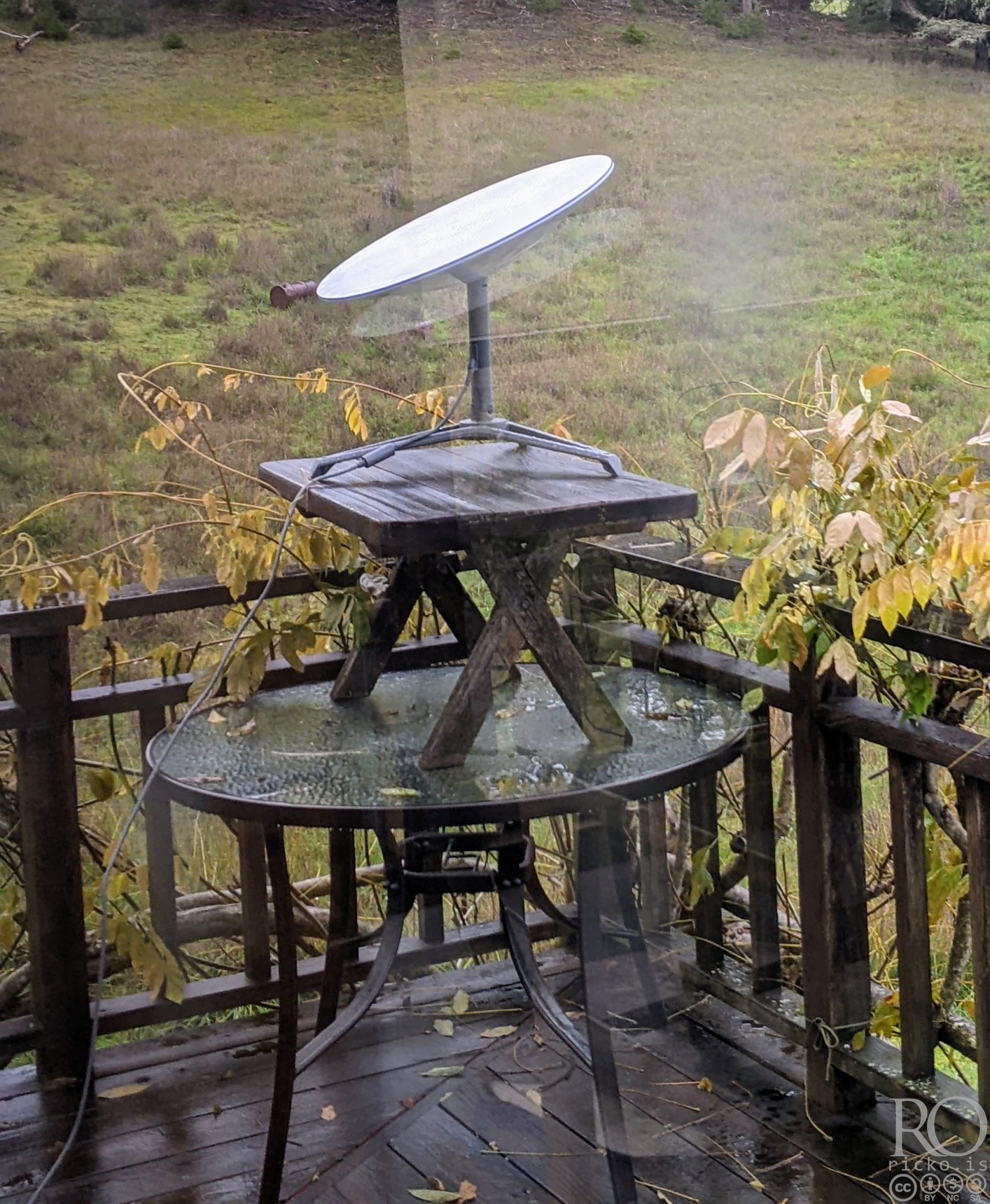

Future is complex, and not only "good" developments happens and start changing everything faster than ever before, bad ones does too. And we aren't rational enough to avoid the bad ones.
Anyway, I'm more worried about the consequences of climate change that are not the slow rise of the global sea level than about COVID. That is a general area where things are happening faster than predicted, and where we act slower than predicted.