The following quotes are fairly interesting and ironic:
> Larry Page and Sergey Brin were originally pretty negative about search engines that sold ads. Appendix A in their original paper says:
>> "we expect that advertising-funded search engines will be inherently biased towards the advertisers and away from the needs of the consumers"
> and that
>> "we believe the issue of advertising causes enough mixed incentives that it is crucial to have a competitive search engine that is transparent and in the academic realm"
Wasn't this also the story of a dating site (whose name escapes me. OKCupid? PoF?)? Original owner wrote an article about how paying for a dating site is a bad idea. Money is offered, article disappears.
Why would a dating site have a 12-month plan, and why would a user of a dating site want a 12-month plan?
Not only would you hopefully want to be off the site within 12 months, as soon as you found someone compatible, you would hopefully delete the app, but you've unnecessarily paid for months you will (hopefully) never use. I don't understand why anything but month-to-month would make sense for dating, specifically.
I mean, if you are a dating app, you should be striving to get users to delete your app as fast as possible (for the right reason), not hang onto an annual subscription.
Month-to-month is just as bad. The ideal business model for a dating site, from the users' perspective, is a one-time advance payment. This puts the business into the situation where they have an incentive to get you satisfied as quickly as possible, so that they can spend as little time/money on you as possible, so that your value to them doesn't go negative from allowing you to spend too much of their time/money.
This is, as it happens, how professional matchmakers tend to charge.
> This puts the business into the situation where they have an incentive
If the payment is a one-time advance payment, I would imagine this disincentives the business to truly do their best, since they already have your money.
I would think, idealistically, maybe the best model would be an advance payment but with a money-back guarantee of say half the payment if you don't find a match through them.
Legally establishing that you don't find a match could be troublesome though, since the "couple" that actually liked each other could both claim they didn't match, get their 50% back, but you as a business would have no recourse if they got together and lived their lives happily ever after, behind your back. You don't have "rights" to their personal life together as a business.
Unless of course it was a government-run dating service that had marriage, housing, and financial records of everyone. That might work. And for many reasons it's in the best interest of the government to get as many people married as possible.
You don't need a refund. Just presume an efficient market of such companies, where the matchmakers who actually make matches have better reputations, and the ones who don't quickly go out of business. That's how most single-shot service-provider businesses work. (At least, the ones with clear success criteria. Psychics and the like never lose reputation, because there's no standard to measure their claims against.)
The one thing single-shot service-provider businesses (including professional human matchmakers) will do, though, is to calculate a quote for their service, corresponding to how much trouble they think your account is going to be for them. They don't usually bill more if it turns out to be even more of a challenge, but they do refine their quote process after each experience.
Though also, back to refunds: a refund guarantee doesn't need to be part of an explicit business-model, to be part of the effective business model. Dating sites charge people's credit cards. Large one-time charges from unknown companies you don't have an ongoing relationship with are exactly the type of thing that banks/credit-card companies are happy to do charge-backs for. Whether they offer refunds or not, the system will offer refunds for them — and kill their business by taking away its payment-processing if too many users ask for said refunds.
I’m talking about a game-theoretic dynamic that’s easily observed in real world professions (e.g. plumbers, cleaners, art conservators, etc.), and even in exactly the same industry (human professional matchmakers.) The “presumption” here isn’t really much of a stretch.
It just-so-happens that dating sites don’t currently follow this model, because an external force (Match Group) came in and explicitly chose to consolidate the market into a cartel, where 95% of “competing” dating sites are actually in collusion due to shared ownership. But there’s no reason to expect that situation to last forever, any more than there’s reason to expect the dominance of the currently-dominant social network (MySpace/Facebook/etc.) to last forever.
Actually one would expect the leverage of controlling the market to provide enough funds to pay emerging players multiple times their likely expected result of rolling the dice and trying to compete to continually fend off would be rivals. Absent interference in the market one would not be extremely shocked to see the same dominant players in social media and dating 20 years from now.
Here’s why: it assumes that the only form of power or leverage that exists is supply and demand. However there are all kinds of forms of leverage in the real world. There is legal power. Voting. Guns. Unions. Price fixing. Cultural norms. Marketing. Blackmail. All of these are forms of leverage and they are not special cases; rather, supply and demand is one special case which comprises a fraction of the total pressure on wages and prices and success or failure at any moment.
IMO the ideal business model from users' perspective could be pay-as-you-go, where you pay for each individual you want to send message to (e.g. $1.99).
There are a lot of dating sites at least in Scandinavia/central europe, where men pay per message (or usually buy message packs, it ends up being around 1€ a message IIRC).
The (mostly) men answering these messages, pretending to be women, get paid around 0.15€ per reply. And obviously writing messages where they try to prolong the conversation and turn down real life meetings or changing to other (free) messaging system "for now"
Because if you made women pay, the pool of women would shrink considerably and there would not be enough women for men to message to. Ideologies of gender equality aside, simple observation shows that dating is a women's market. Not even just with humans as biologically, women have a lot more to risk (risk of pregnancy, risks associated with being physically weaker etc.) so they choose while men present themselves and try to "woo" them. Of course not always, but it is a very stable base to build up on. If they made both sexes pay, I bet platform owners would earn a lot less as fewer messages would get exchanged overall.
... until the men who woefully find out that there aren't enough women get off the platform and find a ton of available women?
Or until the women find out that all the men are online and figure out that maybe they need to get an account too?
I mean, the numbers are still close to 1:1 so ultimately it should work out if you treat men and women equally.
If you make men pay you are only propagating stereotypes that men should always pay (and indirectly as a result) that men should get more pay, and that men should be leaders and women should be followers. Treat both equally and start we start eliminating these stereotypes. Women can and should be leaders as well in modern society, including in initiating relationships.
I mean, in cave people times, yes, men had roles and women had roles, but this is 2021, and we should be a whole lot more civilized than assuming roles based on gender, no?
Any online dating site that had the fantasy that women had to join their site to get a date would trivially and quickly be disabused of this delusion. The site is following not creating the gender dynamic this is especially true where multiple dating sites all cater to the existing dynamic.
If you're running a business things like actually pricing based on the market you've got rather than the one people idealistically wish you had start to make a lot of sense.
It might be because men unfortunately, as a group, disproportionately misbehave in these situations. Sending unwelcome dick pics, sending aggressive messages to people who don’t show any interest in them etc. I’ve wondered myself if charging us to send messages might rein in the antisocial behaviour a bit.
If you wanted to go down this route you would pay per date, otherwise what are you paying for? Sure, the algorithm may jinx it by sending you on more bad dates than you wanted, but it would get you further than just a message.
Maybe ideally yes, but that's assuming you only had the option to message them through the platform.
You could always message people for free outside the platform, considering any profile worthy of messaging probably lists enough information to find them on, say, LinkedIn or Facebook, and users likely often drop their personal websites or Instagram/Twitter IDs on their dating profiles.
Counter-intuitively this might be about hedging the incentives for the service provider - to avoid the moral hazard of pushing for indefinitely extending the subscription.
Just as you mention, successful finding a partner means as few "attempts" (apologies) as feasible, which in turn means two "lost customers" to the platform. That introduces a perverse incentive for the platform to "spoil" the dating to keep the customers. By making one long-spanning plan, the perverse incentive is lessened.
Assuming you're looking for one lifelong partner, which isn't true of everybody, is it normal to find somebody "compatible" that quickly? Without apps, I think it's common for people to go for years between serious relationships. I don't know why the timeline needs to be so compressed.
For me as a fairly awkward and introverted person, who didn't naturally generate a high volume of new social contacts, one of the things I liked about online dating was that I could make choices more like an extroverted person. I didn't have to think, holy shit, I actually met somebody I get along with, and she seems to like me, I can't afford to let this go or I'll probably be completely alone again for years until I meet the next person. Instead, I could think, this is okay, but is this person a really good match for me? Does she bring out the best in me? Are we going to have disagreements about big life things?
In other words, I could meet somebody I liked, enjoy spending time with them, and still decide not to marry them. And do that over and over again until I met somebody I was confident was a really good fit for me. Like regular people do!
Even when finally I met my wife, it didn't immediately mean the end of dating other people. She had just started dating after many years of focusing on her career. In fact, after having a big heart-to-heart over wine with a close friend one evening about how she needed to start dating again, her friend helped her install Tinder, and I was the second person she matched with. Obviously, after many years out of the dating pool, she was leery of falling for the first halfway decent guy she met, so she wanted to take her time and see what was out there and figure out what she waned. To avoid going insane while she was meeting other guys, I kept meeting new women. We didn't become exclusive until six months after we met.
I think, if I had a single friend who was starting online dating, if they were using a paid app, I would recommend a 6-month plan or 12-month plan, as a reminder that they can afford to be patient and shouldn't rush into things.
Maybe. But I would think that that also introduces a paradox of choice where you are constantly doubting the person you are currently dating, thinking that maybe there is someone that is a better fit for you.
The problem is I don't really think "fit" is an absolute thing. I think the reality is that there is a large set of people can be your best fit if you can grow together with them to be that best fit. A healthy relationship is about actually turning a local maximum into a global maximum by the function naturally and healthily changing to that effect, not assuming the function is constant and then hopping around looking for the global maximum and wondering whether you have reached it. One needs to find one of those people that they can grow with and commit to that growing, one where that local maximum is continually rising in prominence. Some degree of initial commitment and emotional investment without shopping around helps you see whether or not you can grow with that person. If growing together isn't possible, that's a big red flag and the relationship should end.
I agree with not committing after only 1 or 2 dates, but if the dates continue, I would sure hope for exclusivity a lot less than 12 months into it.
For me, doubt in my ability to know who I could be happy with rose dramatically with a little bit of experience and then fell as I accumulated more and more. Meeting more people made me more and more comfortable with my own judgment about other people and my understanding of what made me happy. I think people who find partners very early in life are very lucky in some ways, though. It's a trade-off, like so many other things. You can have X more years of experience with relationships and with yourself when you choose your partner, or you can have X more years of shared history with your partner.
I do think any doubts you can put to rest in six months or a year, the time is worth it. Couples who divorce take years to do it, and I think they're unhappy for at least half that time.
The problem is, for the _business_ the incentive is the opposite. You want the suckers who are willing to pay for your dating app to keep paying, so from a purely callous point of view you want to provide the absolute minimum benefit over the non-paying users that is required in order for them to not leave and try somewhere else. There is almost no incentive for them to _actually_ match you with someone, just string you along just enough to keep you coming back.
This is true, but I believe that the majority of users on "normal" dating sites are looking for single, long-term partners. As I understand, within the BDSM scene there are several websites including social networking sites and dedicated match making sites catering to the specifics of BDSM. I find it unlikely you'd use a "normal" dating site when you likely have pretty specific interests that likely (?) need specific UI/UX to cater to.
Just sort of overall, when your interest is in building a network, finding people to have casual sex/encounters with, a "stream of people to meet" as someone mentioned below, I think you'd want a different website/UI than these big dating sites seem to offer/encourage. That said, I've never used them, just speculating based on the ads I've seen over the years and how they paint themselves.
Dating sites that make you answer questionnaires and match based on answers are a really good way to get to know people with similar kinks and interests.
While there are specific sites for BDSM dating with more nuanced optoins, the ads for generic dating sites are all very "tame" and try to not deviate from the perceived norm too much (= "find a partner, have a happy family" type messaging)
The reason is that if you do, it's virtually impossible to get included in Ad networks and App Stores.
So you naturally see only dating ads catering to the very conservative viewer.
Example: A BDSM dating site got banned from Googles Play Store after including a background image of a simple leather whip. [1]
The incentive for the dating app is to keep you unsatisfied, but with some hope, to keep dating and failing over and over. Or I suppose the business models could be either “subscription” based where you keep using it forever or “contract” based where it’s a single fee.
I think the okcupid papers called out how free dating is better aligned with users because they wouldn’t have to compete with the natural tendency to want to make more money through ongoing subscriptions.
Of course, I know friends who are continuously dating and plan on staying that way.
That is true. At the same time this viewpoint makes me wonder, what about doctors? Isn't it in their interest to keep us sick so we keep on coming back? And the policemen and prison industry, if crime disappeared they would lose their business. And firefighters too.
Dating sites are not actually designed to help you find relationships.
They are designed to leave you constantly questioning the relationship you're in, knowing you could always find something better around the corner. They might get signups because people believe they can find a partner, but they keep customers because those people are addicted to the game of newer, "better" lovers.
It's another of many cases of businesses that claim to solve one problem, but really solve a different one that's not in the user's best interest.
I'm building a dating app, SwanLove (https://swan.love). It's still in MVP mode and centralized mode.
I'm thinking of pivoting into this kind of business model: B2B. So I make my dating app something like GitLab or WordPress. You can install it and host it yourself. You pay me every month if your users exceeds 100.
Say, you are a priest or a gym owner. You have a community. You want your people in the community (church, gym) to have a chance to find a romantic partner inside the community. Anyone who wants to register in your dating app needs to be a member of your community first (church, gym). This way, I don't even hold the data (avoiding becoming a honeypot for hackers). I just want the money (in an ethical way).
What do you think? Is this ethical business model for a dating startup?
For the centralized dating app, maybe the subscription package can help them foster their relationship. I don't know. I'm still thinking about it.
Or you can create a bounty in the dating app for someone who can introduce a wonderful person to you. Then if you get married, the dating startup gets a cut from the bounty. The problem is how you verify whether people get married or not. Can we do something like bootcamps offering ISA that can access their students' tax records?
This sounds perfectly ethical to me but it's not clear what value it provides. People who are part of the same church or gym already have the opportunity to get to know each other by being in the same physical community in the first place and don't need a website where they can interact with the same people but online. If they do want that, they're likely to just set up a Facebook group. While the obvious disadvantage there is now Facebook owns their data, but it's also free and most people are going to choose free.
Ironically, online venue for a real-world network limited to verified members of that network was what Facebook itself originally was, until they realized opening up to everyone was the difference between a novelty for college students and a multi-trillion dollar world eater.
Dating apps and websites depend on proprietary technology, network effects, economies of scale, and branding in order to lead. As such, they are very prone to becoming monopolies, and a market leader wouldn't be likely to use someone else's SaaS app. I'm just not sure there is the demand for 1000 semi-large dating apps unless tech isolationism somehow becomes the norm, and it that happens then it would include SaaS isolationism.
There are already white-label dating-site providers out there. Most of the "specialised" sites (e.g. uniform-wearers, "professionals") are running on them.
Yes, aspiring monogamists will fit your bill of people who "want to be off the site in 12 months" or sooner. That's one segment of your users, but it really isn't everyone by a long shot.
Plenty of users are signing up for the chance to meet ("get to know") a steady stream of people. We don't stigmatize people who subscribe to Netflix for many years so that they can keep watching different movies and shows. There's some segment of the dating-site world that has more of a Netflix model in mind.
> There's some segment of the dating-site world that has more of a Netflix model in mind
Although I'm sure those users exist, I'm sure they aren't the majority of the world, who would rather just be happily married and get on with life? And even if not, these users who have different expectations should not be matching with the former.
> And even if not, these users who have different expectations should not be matching with the former.
Actually, given the extreme social stigma worldwide (even in the most progressive western countries) against casual hookups and low-commitment dating, people looking for "more of a Netflix model" will still gravitate towards the same sites ostensibly servicing those "who would rather just be happily married and get on with life"[0], because these services offer the widest choice of possible partners, while giving everyone plausible deniability.
--
[0] - I think that, given aforementioned stigma, it's even hard to estimate how many people in a given age bracket want this, and how many just say they want this, because it's the only accepted thing to say out loud.
Bumble has a feature where you can indicate what you’re looking for, options are “something casual”, “don’t know yet”, “relationship” and “marriage”. You can also filter for this.
From experience: very few people have “something casual” set, but I know from female friends that there’s plenty of guys with “don’t know” or “relationship” set despite looking for something casual.
Those users don't have to be a majority to be money makers for the companies that put out the sites.
And even amongst people who want to settle down, a fair share of them probably also wanna do a fair amount of looking around in their late teens through some point in their 20s, and maybe even early 30s.
The cost of 12 months of a dating site is trivial compared to the benefits of finding the right person. If someone offered you a soulmate if you gave them a couple hundred dollars, you'd take it in a second, right? Paying ahead actually aligns your incentives better, because the site is no longer incentivized to drag you along single month after month to keep you paying.
This is bordering on logic like the following:
- Water is really important, why don't you buy this $100 bottle of water.
- The site has an incentive to improve your dating outcomes. No, it's primary objective is to maximise revenue, everything else is a side effect.
- Paying more for something means someone will commit/ follow through, somehow raise incentives. This is just a guess, not supported or disproven by reality.
I like to think defensively especially when it involves companies. What are they doing, and what do they stand to achieve?
These apps have not shown any value to their users, paywall their content and have an aggressive-long-term subscription model because they have optimised themselves straight into the garbage can, by thinking short term.
Effectively, you're not paying for "12 months" despite the label, you're paying for a significant chance at finding a soulmate? If that's the case, why not label it as such?
Kind of related: one of the dating platforms in Germany advertises with "every 10 minutes a single falls in love on XYZ" ... 1 year / 10 minutes = 52560 ... that's a pretty bad success rate for a platform that supposedly has millions of users.
The big spenders on dating sites are the ones there just to screw around. That's why they all mostly become toxic hell holes, because the economics incentivize catering to those assholes
If a dating platform fulfills its promise i.e. offers users only the best date with whom the user could potentially have a long-term relationship then the user gains but the platform would soon run out of the users(Chicken-and-Egg is most prevalent in dating platforms).
So these platforms are only optimized for - Choice overload, Doom scrolling based on physical attractiveness.
you described one user profile of a half dozen use cases of dating apps
no dating app is actually designed for that one use case, just like Cosmopolitan magazine, they are built on frustration and doing counterintuitive things designed for never reaching that kind of user's goal
Serial daters. Plenty of guys just using these apps for one-timer hookups or FWB. They stick around for a month then onto the next branch like a damn monkey.
I find there are mixed incentives. An evil paid dating site might try scammy things to get you to sign up. Some site I tried did this. Free to sign up and immediately got "too good to be true" matches that you could only access if you paid. But conversely, free sites I get lots clear predators either only looking for sex or scammers trying to get money. OTOH my experience on an actual paid site ($150-$400 a year) no free sign up, is that nearly everyone is seriously looking for long term relationship.
Or, maybe, "Everybody is altruistic until they have shareholders."
The idea that companies should only be beholden to shareholders that has taken firm hold over the past 50(+/-) years doesn't look to be a good one, in hindsight.
"It is not from the benevolence of the butcher, the brewer, or the baker that we expect our dinner, but from their regard to their own interest." - Adam Smith, 1776
I think Friedman's ideas are substantially different.
The quote from Smith is discussing tradesmen running a business in their own self interest.
In some ways, Friedman's point is the opposite. That the laborers perform in the self interest of the owner.
I don't know the full context of the Smith quote. I did a bit of digging for Smith's views on publicly traded companies, and came across this quote[0]:
>The directors of such [joint-stock] companies, however, being the managers rather of other people's money than of their own, it cannot well be expected, that they should watch over it with the same anxious vigilance with which the partners in a private copartnery frequently watch over their own.... Negligence and profusion, therefore, must always prevail, more or less, in the management of the affairs of such a company.
Surely that’s exactly the same thing Friedmam was saying. According to Friedman managers spending company money on social causes are spending other people’s money, the same phrase Smith used, when they had no business doing so. In saying that the firms responsibility is to its owners, Friedman was addressing precisely the concern that Smith was worried about.
Of course in Smith’s time joint stock companies were a relative novelty. We have a lot more experience of them now and have developed standards, checks and balances to try to maintain discipline in managers in the intervening centuries. Friedman was simply attempting to bolster that effort, but Smith was writing about exactly the same concern.
As it happens while I’m a big fan of both men, on this issue I think Friedman is too much of a purist. Some social spending can just be good business. It promotes the brand, buys political friends and can even reap commercial benefits down the line. Donating or subsidising computers in schools for a company like Apple for example.
The butcher and baker a) have to understand what it takes to produce quality meats and breads and b) stand face to face with the customer, so they have both professional and reputational stakes in the game. Their stakeholder brothers and sisters may or may not have the same knowledge or reputational risk, and so their self-interested measures may correlate more with what puts money in their pockets in the short term than what makes the business viable over the long term.
Shareholders don’t care about the reputation or quality of service of the company? That seems a stretch.
As I’ve commented elsewhere I don’t entirely agree with Friedman because I think some social spending can make commercial sense for a company, but I think what he’s saying is just a pretty direct refinement of the exact same points Smith made.
> Shareholders don’t care about the reputation or quality of service of the company? That seems a stretch.
Not a stretch at all. Proven time and time again that shareholders focus on short term gains over long term.
When hired CEOs pay is tied to equity (i.e. shareholder) they make decisions based on how it affects the share price during their tenure, not after. GM after Jack Welch left is a good example.
Shareholders can sell their shares anytime. They care about the horse winning current race more than the next because they can bet on another horse next time. So they only care about the horse as long as they are betting for it.
Given the hundreds of thousands of listed companies you can find examples of anything, but there's nothing inevitable about companies being run purely for short term concerns. Not every company is run that way, shareholder theory or no. Plenty of listed companies are capable of extremely long term investments.
The drive for the short term is one possible strategy and outcome, that's all. In a competitive environment sometimes it even makes sense. Even when it doesn't the existence of failure modes in a system doesn't invalidate the entire system. All systems have failure modes, they need to be evaluated as a whole.
> Shareholders don’t care about the reputation or quality of service of the company? That seems a stretch.
It is a stretch beyond what I am arguing. On the other hand, I don't think it is a stretch to say that you are arguing that every shareholder has quality and reputation concerns indistinguishable from that of the direct proprietor. I claim that that is what would be necessary for Friedman and Smith to be saying the same thing.
Smith had very few good things to say of joint-stock (shareholder-owned) corporations. They were comparatively scarce at the time. Most businesses of his time, including the "baker and butcher" line you quite, were sole proprietorships or family-owned and operated.
The interests he writes of are those of the butcher and baker to themselves. Not to their shareholders.
"Shareholder value" is a recent error attributed to Milton Friedman.
Psychology studies in the past showed people were altruistic. Then psychologist accounted for social capital/good will and worked to remove it from their altruism tests. People stopped being overly altruistic when it stopped benefitting them, likely meaning that what we see as altruism is really a failure to account for all the benefits a person expects to gain and all the negatives they expect to avoid when choosing to perform a certain action.
As for shareholders, I think that comes down to the incentive to avoid the negative outcome of being replaced. Those at the top optimize their actions to avoid being replaced which filters down through each level until it effects every level of a company. There is some variety that results from how a company chooses who to promote, but that is still an outcome of not wanting to be replaced. Promote people who you think will strengthen your own position and not those who will weaken it. This ends up being the primordial pool that spawns corporate culture.
The concept of altruism does not require it to be "pure" or entirely selfless. Altruism can have benefits but those benefits can exist outside of economy and into the realm of the personal, spiritual, social, etc.
In other words, that doesn't disprove altruism so much as it proves that economic self-interest is not our only motivator.
It's not some idea that came about from a vacuum. Put yourself in an investors shoes: you may have some investments that you do for the sake of charity or philanthropy, however, the majority of your investments are to increase your investment. It isn't surprising then, following this basic premise, that we have arrived at the current situation. Capitalism factors in greed for the general welfare of the most people. It just seems that we underestimated the upper bound of human greed.
It's not so much an underestimation as it is a systematic breakdown of constraints and personal responsibility for owners/directors of large corporations.
Sure there is. I don't know which motivation you'd have to bribe someone to promite your product, though. Would also be hard to sustain if intellectual property was decommodified.
Other, more pressing concerns have to be addressed, though.
Consider firms which are wholly owned by either 1) every single employee (worker-owned firm), 2) every employee and every customer who opts in (consumer co-op), or 3) literally every citizen of a government (publicly owned).
You own it in partnership with the other people who own it.
This is, in the strictest definition, the socialism that people are so scared of.
How much control do you have over the military of your government? Or even the DMV? Are these organizations behaving directly as a response to the majority will of the people? If not, how do you solve that problem before you add more organizations?
The best answer we have today, IMO, in terms of ethics of freedom and agency, is "representative democracy," which may be extended to "liquid democracy" to bridge the gap between small, direct-democracy-capable organizations and large, unwieldy ones.
Unfortunately, no solution will be perfect, but that doesn't mean some aren't better than others. The problem is in essence unsolvable. Politics and civilization is an exercise in minimizing harm rather than eliminating it, maximizing utility rather than spiking it.
I don't know how but I do know it is much harder to make something everyone involved thinks impossible than to make something everyone thought they already had.
Perhaps the problem is as simple as setting up a forum with sub forums for every government official - then throw money at it until it works.
In the sense first and foremost that you may produce and design it, especially if production is structured in a co-op way, in the sense that you use it, especially if it's a consumer/worker co-op but also in a worker co-op, and to a lesser extent in that you are part of the society which produces it.
because there aren't luxuries in that system. that creates a need, and from it a secondary market, which without titles[1], sees the exchange of power either via favors exchange or plain tribalism. bribery then becomes the norm for the influential, even if actual money doesn't change hand, favors and contraband do.
1: a catch all to include both money, 'quota cards' and the likes
Socialism, like capitalism, also has a zero day vulnerability by the name of mundane old “human corruption” that undermines its goals. Capitalism just works better because it pits people against each other, keeping the focus off authority and top level control.
People thought of this issue since 1870 and the solution they came up with is simply non-transferable rationing devices. In traditional Marxist terms this was labour vouchers but nowadays there are much better solutions. Marx himself wrote about this, in terms of primitive accumulation in socialism.
For sure there are a lot of issues, but this isn't one of them.
You could in theory have bribery in material terms, but this is much easier to trace than in money terms.
My argument was with the idea that money will be gone as a rationing device. You can come up with alternatives but it’s the human nature that is the problem not the technology we use to ration resources. Let me know when this bug is fixed.
Well, that's not the problem we were talking about, is it? We were talking about the issue of bribery, which is made possible by the fungible nature of money.
I didn’t respond to the bribery comment I responded to the patch comment saying to let me know when scarcity is solved. I think it may be you who has added a step there, friend.
Any device that is used to ration is money though, there are other means to ration (the three we learn in Econ are beauty, brute force and first come first serve) but any device is by definition money since money is just a rationing device.
No, modes of rationing and discovering preferential subjective values are necessary. That does not imply what is meant with money, which is infinitely durable, portable, fungible and uniform.
Already rationing systems which do not fit the definition of money are being employed. For example in the post-pandemic period the PBoC has issued consumption tokens with an expiration date.
You are simply confusing the idea of a scarce token with money. Money is in the former category but the former category is not money. The necessary function is to translate consumer preferences into numeric terms. For this fungibility and durability is not necessary.
I assume that this criticism is offered in good faith, and that you're in need of good, solid Wiki articles about the tens of millions of victims of Communist regimes--well, I'm happy to get you started!
Here's an article about the Soviet terror-famine (known as the Holodomor) which killed 4 million Ukranians. No worrisome notifications on this article, so I assume it meets your rigorous standards:
And here's one about the so-called 'Great Leap Forward', when the Chinese Communist Party's top-down modernization plans resulted in the accidental deaths of ~50 million human beings.
The fact that Capitalism has not (yet) solved the global issue of extreme poverty is hardly an argument against it. Particularly when it is the transition to capitalism which has done the most to solve the problem!
After all, it's a simple matter of fact that the accelerating decline of global poverty since 1990 was the result of the transition to capitalism in formerly Communist/Socialist countries in Asia, including the CCP's own particular flavor of state capitalism.[0]
I think comparing Capitalism and Socialism is a red herring. There is no "pure" Capitalism nor pure Socialism.
There are only countries with specific sets of laws governing them. The question is which system of laws is better and why and when and most importantly: Better for WHO?
Arguing that capitalism is the solution is like saying: Don't look here, we are better than socialist countries and therefore there is no need to improve anything in our country. Same for the other side too.
I'm not denying or excusing that historical atrocities occurred under socialist governments, but for perspective one should also look at the myriad atrocities that were and continue to be committed under capitalist governments. That doesn't excuse such actions, but neither side is innocent. I suggest reading The Wretched of the Earth* Chapter 1, "On Violence".
* Though I will object that it is unfair to attribute the actions of the Khmer Rouge to socialism. Like the Nazis they were socialist in name only, and in fact were supported by the United States in their war against the Socialist Republic of Vietnam.
The issue is that these atrocities were committed more specifically as a result of communism, whereas other attrocities are less closely attributable to capitalism since it has been the majority default throughout history.
EDIT:. I'm not saying what's normal is ok, I'm saying what's common is more likely to falsely correlate with anything. Whereas as the common factor for communism across the board has been a high statistical propensity for mass murder and genocide. This includes the nazi regime I might add (look it up)
I'm not really interested in having this argument anymore, but I'll leave you with this:
Just because something is the "default" option doesn't mean it is non-ideological. Ideology is a powerful tool for shaping people's actions. People will go along with insane and sometimes horrifying things just because they perceive them as "normal". Maybe expose yourself to some alternative ideology. You don't have to agree with it to learn something.
That's ahistorical considering almost all deaths attributed to communism were a result of industrialization, a process which was just as deadly under capitalism.
The only difference as a result of ideology was the timeframe. The USSR was forced to rapidly industrialize due to global pressure from foreign militaries and famines in China were exceedingly common long before communism.
History is not as simple as you're making it out to be.
Aside from the fact that mismanagement is not unique to communism, there have been many famines under capitalism.
I'm not a maoist, so I'm not about to defend his ineptitude, but it seems intellectually lazy to point to these problems as unique. In the 18th, 19th and 20th century, depending on what level of development a country was in, these problems were widespread across all ideologies.
Not unique, but some truly terrible leaders were inspired by Marxism in the 20th century. I'm not sure what the selling point is supposed to be if the rebuttal is that bad things happen under capitalism too.
That is the same thing as saying North Korea's failures are actually due to democracy. "The Democratic People's Republic of Korea"
Obviously the name of an organization doesn't mean jack compared to their actually implemented and enforced policies. The first things the Nazi's did when they gained power was kill all the socialists, communists, and unionists. They are anything but socialist.
This is a common rewriting of history in the last few years. Hitlers speeches are rife with rants against capitalism:
"We are socialists. We are the enemies of today’s capitalist system of exploitation … and we are determined to destroy this system under all conditions.”
~ Hitler
Literally the point you are replying to is that you can't take fascists at their word. You have to use their actions.
Communists were among the first inhabitants of Hitler's concentration camps. The Communist Part of Germany started the organization Antifaschistische Aktion, the direct precursor of what we now know as Antifa.
And please stop equating "anti-capitalist" and "communist". The two are not the same or even close.
Slavery is not a function of capitalism, though. Capitalism is being able to 1) firstly, own yourself and your body 2) thus sell your labour however you wish. It's the alternatives economic systems that prevent you from being free.
Putting emotions aside for a second, slavery is very inefficient in a free market. It is not a coincidence free countries are all capitalist (and vice versa).
When did markets cause famine? We are living in an age of wasted food because we have so much cheap crap (as well as high-quality) available. People are too fat because there's no barrier to over-consumption.
Whereas a socialist system causes famines due to central planning leads to poor decision making.
How would socialism have dealt with the first scenario? My understanding is there simply wasn't enough food to go around, and no economic system can fix that. Capitalism at least provides a profit motive to solve the problem (eventually).
The Bengal famine was a top down project specifically designed to profit. There is no "free market capitalism" in that scenario.
Oh yeah. The US is guilty as charged, but there's no such thing as a free country that's not capitalist, until we live in a post-scarcity society. Technologically we are many centuries away from that.
At this point, the snide dismissal of all things advertising is nothing short of boring.
To be sure there are many forms of advertising annoyance: auto-playing sound/video, remarketing (or what I like to call advertising a product I've already bought), interstitials, popups (to be fair, there are many non-advertising forms of these eg "sign up to our newsletter" dialogs) and so on.
But what made Google a money-printing machine is that search advertising is actually largely aligned with the interests of the user. That is, just by searching for something the user has shown an intent that other advertising doesn't have (where generally it's just attention thievery). Imagine I search for "how do I sleep on an airplane". Isn't a neck travel pillow an appropriate result here?
I get that it's popular to just hate on all advertising but that's just shallow.
As long as search results are marked as ads when they are ads and paying for ads doesn't improve your organic search ranking (aka the Yelp business model) then I'm completely fine with it.
There is a lot of crap in search results and this is a constant battle of whack-a-mole. At one point it was content farms. As someone who has search for a lot of home furnishing stuff recently I can tell you a big problem is affiliate link blogspam. There'll be some real-sounding domain like mattressreviews.com but it becomes pretty clear it's just mass-produced "content" to justify affiliate links.
Honestly, this will probably get to the point (I hope) where Google does the same thing it did to content farms and starts downranking sites with affiliate links (cough Pinterest cough).
> "Imagine I search for "how do I sleep on an airplane". Isn't a neck travel pillow an appropriate result here?"
No?
I mean, seen through the lens of extractive capitalism where "how do I X" is the same as "what product do I buy to do X", and "someone asking about X" is the same as "which product to shove in their face to make them stop asking and extract the most money out of them", maybe yes. Doesn't "information technology" suggest some alternatives? Like, information about sleeping in planes - noise reduction, positions people have found comfortable, stress reduction, light pollution, circadian rhythms, stretches that can be done in a small space or sitting down, etc?
> "As someone who has search for a lot of home furnishing stuff recently I can tell you a big problem is affiliate link blogspam. There'll be some real-sounding domain like mattressreviews.com but it becomes pretty clear it's just mass-produced "content" to justify affiliate links."
This seems to fly in the face of your previous paragraphs: you searched for home furnishing stuff, isn't some generic advertising of a mattress an appropriate result here? You want something better than that for yourself, but think other people don't deserve better and are shallow for complaining?
We know that paid advertising works, so it should not surprise us to discover that paid advertising on the Internet also works. But Google and other search engines seek to organize the world's information, not the world's commercial products and services. For a multi-multi-billion dollar company's core product, I'm somewhat surprised they cannot do a better job killing the blogspam. Given the resources at their disposal, I think most people just assume that they don't care about the blogspam.
"We know that paid advertising works" [citation needed]
I mean, the ad business of course likes to throw various metrics around. But as far as I'm aware there are no proper randomized controlled trials that show statistically significant positive ROI of online advertising versus no online advertising.
I mean, it would be really simple to do, right? To provide conclusive proof of the efficiency of ads? Pick a populous state in the US where people enjoy Soft Drink X. Randomly divide the households in the state into two groups. For the next full year, run normal amount of targeted online ads for Soft Drink X in Group 1, no targeted online ads whatsoever in Group 2. Did the sales in Group 2 decrease by more than what the cost of advertising to that group would be, yes or no?
1) Google is running many parallel ad campaigns, which may target the same individuals. This in some ways gives opportunities, because one can run 'natural experiments' on the effeciveness of advertising for X by simply selecting the people who never saw the ad for X. But there is also probably some legal peril; Google has to be careful about what promises it makes to people purchasing ads.
2) Google has very little incentive to release the results of any such studies, because -- whether or not advertising works -- they don't need their customers to have accurate side-info about the value of advertising.
Advertising has been about what 2? 5? percent of US GDP for more than one hundred years. The odds of advertising naysayers are probably infinitesimal at this point.
This is a thoughtful post. However, the issue is that these advertisements play into your hopes and fears to maximize the likelihood of getting a click from you. The fact that Google (especially) and other adtech companies are playing into your hopes and fears, by microtargeting and hoarding the most private and intimate details about your life is abusive.
I have to say that I am lucky that I have a print-related disability, because I almost never need to go websites with ads.
Services I get access to (no-ads):
* 975,000+ books for $50/year (Bookshare.org)
* 60,000+ professionally narrated audio books for free (US National Library Service)
* 80,000+ volunteer narrated audio books for $135/year (LearningAlly.org)
* Hundreds of Newspapers and Magazines for free (NFB Newsline)
* 99% of the books posted on OpenLibrary.org for free (even books currently "borrowed")
* Virtually all libraries for print-related disabilities around the world (sometimes free, sometimes paid) (I can get books in foreign languages easily)
Additionally, I use the paid audio apps Blinkist, Audm, and Curio, which everyone has access to. I find them to be super helpful. Blinkist in particular is almost 100% of the time a YouTube and TED talk replacement for me. I also use The Economist app, which has the entire weekly edition professionally narrated, along with the vast majority of the rest of its material.
My main problem with advertising and the technologies surround it, aside from the obvious privacy issues and their misuse, is that it seems to suck all the air out of the room.
The birth and dominance of the online advertising business model looks to be the greatest misallocation of engineering talent in the history of humanity.
This is a bit how I feel about advertising in general. Human beings' time is being taken and mouths are being fed not to increase overall output, and thus lifting the overall well being of members of society. Instead, Company A hires advertisers to convince the public to buy their product instead of a competing product to Company B. Value is created for Company A, but entirely at the expense of Company B. At no time in the economic... chain?... of events that is advertising is anything actually created, yet vast sums of money, and thus allocation of resources, is put here. It seems INSANELY wasteful.
>At no time in the economic... chain?... of events that is advertising is anything actually created, yet vast sums of money, and thus allocation of resources, is put here. It seems INSANELY wasteful.
You're forgetting something, companies start off completely unknown. How did they reach the point where the market has been fully saturated and the only real way to gain more customers is to take them from someone else? Oh right, it's because advertising increased the grow rate of your company to the point where there is barely any growth left.
Let's manufacture a completely artificial scenario to illustrate my point:
Person A: So, you're telling me you spent $5 billion on advertising and all you have to show for it is a 5% higher market share than your biggest competitor?
Founder: Yes, we used the advertising budget to grow our market share from less than 1% to 40%. Our next biggest competitor has a 35% market share.
Right, but there's a difference between connecting a business to a customer who wants the product (which is good!) and influencing the wants and needs of the customer, particularly against the long-term interests of the customer (which is bad).
[I think it's impossible to try and succeed at connecting people with businesses without somewhat influencing their wants and needs, but ideally we limit that.]
Modern ad tech is problematic because it has little regard for people's long-term interest and demonstrably affects people's wants, particularly in the context of searching and automatically-curated feeds: since the internet is so absurdly vast and searches/feeds are the windows to the world, you can partially control the reality in which users live.
but the advertising industry has almost alone managed to produce google. That's a trillion dollar company that has literally changed the world.
Some perspective is needed. What looks like an evil industry of insane waste is at the end of the day subsidising our most important tools for business, communicating, and relaxing. All thanks to the vast allocations of resources and money into advertising.
I agree with your point that there is a need for advertisements to inform consumers about available options. I'd generally fall in the "dismissal of all things advertising" box, but I would add a nuance to it that it really depends if it was requested vs. forced upon you.
In both instances you mention as being useful advertising, shopping for furniture or how to sleep on an airplane, you are asking for advertisements. That makes sense. You are looking to solve a problem by purchasing a product.
From my perspective, there are two issues with the current climate of ads: First, that the overwhelming majority of ads are forced upon you. They track you, distract you, and have generally turned the internet into a wasteland. Second, that a search engine/social network/news site is the place to view ads. I would prefer a site dedicated to this use case, not have the use case tacked on to unrelated sites constantly in the way.
I feel the same way about physical ads, too. I don't want uninvited people knocking on my door to sell me their ISP. I don't want those terrible mailers with coupons in them. Billboards are ugly and distracting.
> Imagine I search for "how do I sleep on an airplane". Isn't a neck travel pillow an appropriate result here?
Yes, but advertising doesn't do that. They do retargeting and only show you the most valuable ad for what they know about you. Sometimes that ad is just what the advertiser has paid to show you in particular, like "you left something in your Amazon cart".
> But what made Google a money-printing machine is that search advertising is actually largely aligned with the interests of the user. That is, just by searching for something the user has shown an intent that other advertising doesn't have (where generally it's just attention thievery). Imagine I search for "how do I sleep on an airplane". Isn't a neck travel pillow an appropriate result here?
This doesn't hold water. It's just being shown because someone paid for it to be, not because it's the best thing to be shown which is what algorithms would be tuned for if they were in the users interest.
> I get that it's popular to just hate on all advertising but that's just shallow.
That's pretty dismissive of all the thought that has gone into criticism of advertising and it's effects on products and services, without even giving a hint of an argument as to why you feel it's shallow.
> This doesn't hold water. It's just being shown because someone paid for it to be, not because it's the best thing to be shown which is what algorithms would be tuned for if they were in the users interest.
You are factually incorrect and this is part of the problem: a lot of proselytizing (and, honestly, virtue-signaling) by people who don't know how advertising actually works.
Display advertising works on a CPM basis (ie paying for the impression) so yes, that's pretty much a case of someone paying to show the ad and that's it. They may be paying for that based on contextual information (eg RTB) or not.
But search advertising, at least how Google does it, it sold on a CPC basis (ie paying for the click not the impression). This actually means Google is motivated to show you the search ads you're most likely to click on because that's some revenue vs just who bid the most.
> That's pretty dismissive of all the thought that has gone into criticism of advertising...
No offense but if you don't know how search advertising works at the highest level then either you haven't put much thought into it or you're simply parroting someone else (who also hasn't) because it fits your world view.
> "how do I sleep on an airplane". Isn't a neck travel pillow an appropriate result here?
Late to the party, but I want to say here the answer is "maybe". However, the idea that the solution to every problem or need is to buy something is pretty regressive and is kind of at the core of the problem with consumerism and rapacious capitalism.
For a person to buy something, that something has to have been manufactured, shipped, sold, shipped again, etc. All that is extractive and depends on externalities that are too-often finite.
Also, the person buying has to have money, which they made through some kind exchange for labor, possibly fairly, possibly not. For capitalism, incentivizing people to treat a want or need as an opportunity for a financial transaction is essential, even when there are other solutions. Remember, for example, that the Listerine company essentially "invented" bad breath as a problem requiring a product to solve. Not that people didn't legit deal with bad breath before, just that they weren't sold a pre-packaged "cure".
So the question "how do I sleep on an airplane" has many answers other than "buy something".
I don't see targeted search advertising as user friendly. A search engine should return the most valid results. As soon as you have sponsored results, there's a conflict of interest. What if the competitor to the neck pillow ad people actually have a better pillow? They should be the first result, but won't be since Google's interest is in helping advertisers, not the users of their search engine.
I don't think there's an argument where advertising is pro-user, since a service that focused on the user would return the best results for a search, not who paid for placement.
Systems work in funny and unexpected ways. When they started their company Brin and Page may have truly believed they could go in the non-profit direction. But the forces at play in late capitalism worked inexorably to extract value, and little by little, possibly before they realized it, Brin and Page were no longer in control of what they created.
I think this is largely misunderstood about Google. It seems like ads placed in search results only accounts for a small portion of their revenue. Not sure how much the targeting of ads by analyzing your search history actually contributes either. I think Google just figured out how to scale online ad sales really well.
It seems like ads placed in search results only accounts for a small portion of their revenue.
Do you have a source for that? Last time I checked (which granted was some years ago) my understanding was that over 90% of their revenue came from advertising, and I think most of that was driven by search results.
"Currently most search engine development has gone on at companies with little publication of technical details. This causes search engine technology to remain largely a black art and to be advertising oriented (see Section ?). With Google, we have a strong goal to push more development and understanding into the academic realm."
They never delivered on this "strong goal" to make web search an academic endeavour.
They managed to domainate web search but the endeavour is now 100% commercial. It is intentionally nontransparent (due to commercial incentives) and remains a "black art". Don't try this at home.
"Also, it is interesting to note that metadata efforts have largely failed with web search engines, because any text on the page which is not directly represented to the user is abused to "spam" search engines. There are even numerous companies which specialize in manipulating search engines for profit."
"Appendix A: Advertising and Mixed Motives
Currently, the predominant business model for commercial search engines is advertising. The goals of the advertising business model do not always correspond to providing quality search to users. For example, in our prototype search engine the top result for cellular phone is "The Effect of Cellular Phone Use Upon Driver Attention", a study which explains in great detail the distractions and risk associated with conversing on a cell phone while driving. This search result came up first because of its high importance as judged by the PageRank algorithm, an approximation of citation importance on the web [Page, 98]. It is clear that a search engine which was taking money for showing cellular phone ads would have difficulty justifying the page that our system returned to its paying advertisers. For this type of reason and historical experience with other media [Bagdikian 83], we expect that advertising funded search engines will be inherently biased towards the advertisers and away from the needs of the consumers. Since it is very difficult even for experts to evaluate search engines, search engine bias is particularly insidious. A good example was OpenText, which was reported to be selling companies the right to be listed at the top of the search results for particular queries. This type of bias is much more insidious than advertising, because it is not clear who "deserves" to be there, and who is willing to pay money to be listed. This business model resulted in an uproar, and OpenText has ceased to be a viable search engine. But less blatant bias are likely to be tolerated by the market. For example, a search engine could add a small factor to search results from "friendly" companies, and subtract a factor from results from competitors. This type of bias is very difficult to detect but could still have a significant effect on the market. Furthermore, advertising income often provides an incentive to provide poor quality search results. For example, we noticed a major search engine would not return a large airline's home page when the airline's name was given as a query. It so happened that the airline had placed an expensive ad, linked to the query that was its name. A better search engine would not have required this ad, and possibly resulted in the loss of the revenue from the airline. In general, it could be argued from the consumer point of view that the better the search engine is, the fewer advertisements will be needed for the consumer to find what they want. This of course erodes the advertising supported business model of the existing search engines. However, there will always be money from advertisers who want a customer to switch products, or have something that is genuinely new. But we believe the issue of advertising causes enough mixed incentives that it is crucial to have a competitive search engine that is transparent and in the academic realm."
The problem is that google created a negative feedback loop with the web. People have a tangible interest to game google, which worsens the quality of their AI datasets, which makes their AI suggestions terrible. There was the expectation that google's AI suggestions and info boxes would improve over time, but i 've noticed them getting worse and consider them a permanently broken gimmick now. They probably have the same problem in their Ads business which tries to optimize revenues
Voice recognition on the other hand keeps getting better because there's no tangible benefit for someone to game it.
Perhaps, crawling the web is the worst way to go about creating a thinking AI
Incidentally, i think the solution to web search is peer review: websites ranking other websites, and having themselves punished when they mis-rank (which is what pagerank was originally)
> google created a negative feedback loop with the web
Friendly note: this may be a "negative" (i.e. bad) effect, but it is not a negative feedback loop. A negative feedback loop is a part of a system that self-corrects back toward a stable position. https://en.wikipedia.org/wiki/Negative_feedback
the negative feedback is that any attempt to create quality, non-seo content is punished by being ranked low and so we revert to average/low quality of over-SEOed but low signal content.
Like other users have noticed, publishing a good recipe is not enough, you have to fill it up with useless fluff. and you have to make pretty URLs . And add meta the tags
This happens for tech advice too, like linux solutions etc
And in this case, the equilibrium is some amount of AI-bait fluff. There's a limit, beyond which continuing to add more fluff does not produce higher results.
Just positive feedback loop. The term "positive" or "negative" refers to the effects of the feedback path on the overall system, a negative feedback loop attempts to negate any changes in the outputs, while a positive feedback amplifies any changes.
Perhaps "Vicious Cycle" and "Virtuous Cycle" is better terminology in this case. Both of them describe self-reinforcing (i.e. positive) feedback loops, while also making clear judgement on the desirability of the consequences.
Sometimes I have this scary thought that paid search results are actually inherently better than organic ones, because when you spend money you do need to be relevant to the query and serve up a decent result.
When it comes to organic, everything is free, so you try whatever hacks the algorithms, from keyword stuffed content to link spam etc.
So as time goes on organic search results will actually get worse and worse, and paid will get better/stay the same.
It might not actually be google who is preferring paid search results, it's just inevitable from how the system is set up.
If you Google the name of a UK car insurer with some likely keyword like 'claim' or 'accident', you get paid listing from people offering two 'services'. a) 'call connection', which means that you call their premium-rate number and they just put the call through to the right company's phone line while charging you per-minute. b) 'claim management', you fill out a form on their website, they submit it to the actual company's website, and take a percentage of your claim. Neither of these are illegal, Google has promised to not take ad money from the first type, but in practice don't remove ads fast enough to make it unviable.
Consumer-facing companies now, ludicrously, have to do their own SEO to make sure they appear top of search results for their own name, and some even pay Google for ads to themselves. But clicks are more valuable to scammers than to legit businesses, so the former can always outbid the latter.
I've noticed something similar (garbage in, garbage out, essentially) with translation services by google and co. People use these services to translate their sites, which then get fed into these models. There are a bunch of translation errors of terms of trade that are endemic in the german/english translations and apparently originate from these wrongly-trained models, which are then used to build new translations.
> "Incidentally, i think the solution to web search is peer review: websites ranking other websites, and having themselves punished when they mis-rank (which is what pagerank was originally)"
This is interesting because I had a class were we all had to write a paper. I received a grade for the paper but it was never graded by the professor. We all had to rank 5 papers from best to worst, and our grade was determined by our paper ranking and how well our ranking matched others. It was pretty reliable
> Voice recognition on the other hand keeps getting better because there's no tangible benefit for someone to game it.
Knock on wood! It is creepy to imagine a world where computers have the upper hand on vocal inputs but I already sometimes feel this way with text and autocorrect...
> but I already sometimes feel this way with text and autocorrect...
Just disable autocorrect. The amount of times where people communicate and a typo is a critical problem is aproximateley 0, you can manually correct them at those times.
I hate auto-correct because it doesn't stay in its lane. It tends to expect me to use the most common 10,000 or so words in English and will actually auto-bork totally valid words because it thinks it knows better than me.
I get whenever I'm using shorthand or weird acronyms or technical jargon that it might get confused, but when a word I type is both a) a real word and b) something I would use in every-day speech just leave it alone!
> There was the expectation that google's AI suggestions and info boxes would improve over time, but i 've noticed them getting worse and consider them a permanently broken gimmick now.
A funny example I saw recently is searching for "can men get pregnant".
I think they have gotten better over time, and DuckDuckGo is noticeably worse for me. (I notice this because I have some scripts that use DuckDuckGo as a fallback when Google bans my scripts.)
The commercial opinion bit is incredibly annoying. Ask for an opinion and you’ll get 5 pages of custom built “review” sites that offer nothing useful besides copious ads and paid click-through to Amazon.
Even when Google knows where I go with my searches, they still refuse to show those sites for anything that might have commercial interest. So much for customized search. I get tired of being the product. Can we get a subscription search engine that’s actually good? I’d pay for that.
I literally append "site:reddit.com" like in the article whenever I'm looking for reviews and comparisons. Google is nearly useless for finding content among the sea of crap and autogenerated near-crap (like Slant). I might click on the links going to sites that I half-remember by name, but for open-ended searches it's a lost war.
Stop saying that! The more people repeat that on HN, the more we risk advertisers realizing it and doing reddit-targeted SEO and reddit will be useless too!
(I'm only half joking)
Also, it's funny, I was just reading the thread about malaria eradication and DDT-resistant mosquitoes; the problem of SEO is eerily similar (any countermeasure is eventually defeated by evolution).
I wouldn't go that far. There are tons of real people on it. A big problem problem though is the user base is so large and concentrated that it disguises the massive amounts of bots and "hidden" advertisement posts that get mixed in. And that low quality content drags the entire community down as "legitimate" posts are forced to compete for views/karma which was not their end-goal in the first place.
Reddit works when it isn't a competition, but advertising has made it a competition with a profit motive.
When using reddit, you need to stay away from the default subs. They are a timesink and repetitive, and because of the volume of users, the comments all start looking the same. People who were introduced through the mobile app usually make a lot of use of them.
You need to stick to the topic oriented subreddits. r/homelab for example.
There’s real people for sure, but most of them are children and teenagers who are easily susceptible to corporate propaganda. I often wonder when a competitor will arise so that I can leave Reddit, and it’s rolling release of bad UX, for something better. At this point I would pay a monthly fee for a decent Reddit.
Plenty of competitors have risen over the years. They've have just all been abject failures. Most have tried to fix at least one aspect of the site and failed to do so. I don't even think a straight up copy would work at this point. Its got the user base and while never directly profitable, its value has always been in how easy it is to shill to the userbase. I think that's primarily why Advance keeps it.
Those children and teenagers are often more knowledgeable on the topic I'm searching for (especially with regards to gaming equipment), so I'm happy to take their opinion like anyone else's.
That said, a paid reddit would be a ghost town. It's against the spirit of the site.
That worked for awhile. But even Reddit has been overrun with coordinated marketing efforts to make sure you can't really get an honest review without checking every comments post history.
your implication seems to be that reddit should somehow be resistant to parasitic capitalism. reddit has been compromised and on the side of the advertisers since the beginning.
They still use the flags, just not in every instance. I recall the quotes for inclusion of strings and the "-site" flag failing for me as early as last year.
Yes they do ignore those but at this moment they don’t ignore site: queries. Google also suffers heavily from old content, and even changing the date under the tools section doesn’t work for some reason. I think because it goes by when the page was last updated and sites like Reddit update them automatically very frequently
Even for programming topics, sites like gitmemory routinely rank higher than the original GitHub repos and StackOverflow answers that they are "mirroring", or the mirror page gets full result billing while the original StackOverflow answer only gets a single title line in the "other results from site" format.
Google could easily lower pagerank for blogspam by measuring density of affiliate links.
They don't, because low quality consumerist search results make the ads fit right in. Also those sites are more likely to contain Google Ads themselves.
The search engine is fully optimized for consumerism, not finding the most relevant result.
Just curious - how much would you pay for that? $20/mo? $30/mo?
One one hand I completely agree, and hope for paid service alternatives to all these "free" products. On the other hand, I can find everything I need through Google, as is, so why pay for an alternative?
I ended up with "site:bbc.com" and "site:svt.se" to get to actual news instead of click-baits. Why the search function of these sites is crap, to the point where it's easier to hack Google, is beyond me.
Subscription services' weak spot is that they are incentivized to pander to you hard and reinforce your biases. A subscription search engine would just create the ultimate echo chamber
The misunderstanding that leads to belief in strong AI is that meaning is somehow embedded in the symbols used to communicate it. Meaning is a natural process that occurs inside each of us, speech is just a symbol of that meaning, text is a symbol of that speech.
Further, meaning is an ever-evolving, ever-mutating process much like the universe.
Training on symbols cannot arrive at meaning, since the meaning isn’t contained in those symbols. Using past symbols, also means no room for evolution.
Machine learning does work though in areas where the needs of the end goal are densely present in the symbols being used for training.
Like recognizing text. We learn to recognize those marks from just the marks, and nothing else. And so those marks contain all that is needed to recognize them. This can be encoded/learned.
But what they mean isn’t encoded in them, nor is it in words, in sounds, in facial expressions, in tones, in body gestures. It may even lie in between us, rather than in us.
Thank you for expressing this nuanced idea so well.
It ties in with deBord's "Society of the Spectacle" [0], a theory that societies evolve from Being, to Having, and ultimately devolve into merely the Appearance of Having.
Your point about the symbols being tools for communication (as opposed to the ineffable ideas being communicated) is also echoed in Lockhart's Lament [1].
...what? How is this different than saying you can't learn from reading a book because its just symbols.
The best I can decipher is that your argument begs the question, ie you're saying machine learning can't derive meaning from symbols because machine learning doesn't derive meaning from symbols.
You can't learn from "just" reading books. You need to experience the real world to know what "The girl jumped into the stream and wet her shoes, her mum was not amused" means.
Your brain probably made a simulation of girl wearing shoes, jumping, water splashing, wet shoes. You need to know water makes things wet, people can jump, there is gravity. The motivation behind jumping was fun. Humans like to have fun. Wet shoes is not healthy. A mum is the mother and care taker for a girl.
When we're comprehending reading, we're building 3d simulations in our mind and deducing a ton of other info. AIs can't really do that just yet. They don't understand the world like we do.
One of my physics professors used to make a joke every year about how we could read every athletics book written, but we would not start to win races until we hit the track (at some point he made a fun video of him studying “how to run” to show the first day of class).
I interpret this in a similar way. Reading F=ma means nothing, even if you know what each letter stands for, is understanding the consequences what gives you meaning.
> The misunderstanding that leads to belief in strong AI is that meaning is somehow embedded in the symbols used to communicate it
yet you have Roget's thesaurus, where words are grouped into sets of words that have a similar meaning; it might make a difference when dealing in terms of these categories, instead of dealing with word instances; i mean if you have a dependency graph of a sentence, and the nodes are the corresponding sets in the thesaurus, then you might get a similar, but more general interpretation of that sentence.
An annoying example which has gotten worse recently is recipes. I generally trawl through 5k words of someone's life story and product promotions to get to the piece of information I need, and they often rewrite the recipe 5 different times in different levels of detail -- is this because to make the first page rank on Google you need to pad out the SEO? I too always find myself doing site:reddit.com.
Google page ranking depends on how long people spend on the webpage, so if you have to wade through longform text, it mistakenly assumes that the content is quality.
Note that most recipe blogs are fake. Someone wrote the original content long ago. Then, someone else hired a copywriter off a freelancing platform to change the words of the text just enough to avoid copyright violation, then put up a new copycat website loaded with SEO and ads. Look closely and notice how the author’s bio says e.g. "Born and bred in Lousiania and I love to share southern cooking", but the text contains grammatical mistakes typical of Eastern Europeans or Southeast Asians.
The ecosystem is already so advanced that new copycat recipe websites are often based on previous copycat recipe websites.
> Google page ranking depends on how long people spend on the webpage, so if you have to wade through longform text, it mistakenly assumes that the content is quality.
Is this true? I have a hard time believing it because it's a pretty naive assumption. A site that lets me get what I'm after quickly is generally going to be what I want.
Google analytics is running on lots of pages. Would be pretty surprising if they didn't use the insights they get from there, such as time spent on the site, buttons clicked, how far they scrolled etc.
I worked for a startup obsessed with vanity metrics. They would freak out if the average time spent per article dropped down, even if our conversions increased. Just an odd bunch of people. They went down with the company while doing nothing but micro-optimizing for bad metrics.
Presumably they are using bounce rates, i.e. how often you visit result N+1 after visiting result N. I hope time spent on site N is not a large factor, because it's so easily gamed.
How many people keep open 50+ tabs, or open a page and walk away?
I'm sure that time spent on a page, if it's given any weight, is given barely any. I'm sure returns to search to click a new link is a much higher indicator that the user didn't find what they wanted.
Google doesn't literally know how long that page is going to be left open in a tab or window. IIRC they do know when you're back to Google trying the next search result ?
I think part of this is that recipes themselves are not protected under copyright. They fall under the provision of factual information.
1 cup of flour, 2 eggs, 1 cup of milk, 2 tbsp of sugar, mix until smooth is a shitty pancake recipe (I think, it's close), but there aren't many ways to say that that makes it novel. Recipes are essentially instruction on how to build food.
Where copyright comes into play for cookbooks and recipe sites are presentation. And that includes the stories. So while the recipe itself doesn't enjoy copyright protection, writing "In the early autumn morning, my grandmother enjoyed making the family the most delicious pancakes, she started by going out to the chicken coop and sticking her whole hand up a chicken's ass to get only the freshest eggs possible..."
WARNING: the last one usually has 2 pages listed for each recipe - the recipe itself, and also a "story" blog post - except that the "story" is also very useful (not "someone's life story" which is basically spam), because it explains the reasoning behind the method, different alternatives and the trade-offs between them, and the experimentation that it took the author to derive it
I also have good experience with thespruceeats.com regarding in-depth explanations of food. I have to add that I'm using adblockers pretty heavily so I have no clue how bearable these sites are without it.
Anyway, it's pretty easy to turn this into a keyworded bookmark on Firefox for some quick searching:
A recipe is not copyrightable, so if they just directly presented the recipe to you in a convenient format then someone could copy that recipe for their own site (either manually or automatically scaped). By mixing it up annoyingly with a story it becomes copyrighted. If you still have the recipe in a useful format after the story then it would still be possible to manually copy just that part, but at least you've made it harder for someone to scrape it.
Many of the recipe sites you're finding are likely "food bloggers", so their interest is in being a personality/virtual cooking companion more than being just a source of a recipe. You have misaligned interests, and to be fair they're probably less interested in your patronage if you just hop to a page to grab a recipe.
And of course the verbiage is a lot of long tail keyword inclusion (pandering to Google by talking about your diabetic grandma, etc).
EDIT: The whole "I can't stand recipes that have verbiage" diatribe is a bit of a beggars being choosers thing. Personally I pay for America's Test Kitchen and get trustworthy, concise recipes (although there is a narrative about different techniques and options), but most people are too cheap but simultaneously super demanding about the things they get for free.
+1 to that, and especially to America's test kitchen. People complain about blogspam and recycled recipes and being unable to filter through to find quality recipes. They also talk about being willing to pay to find quality.
There is, and has been, a very well known, nationally respected organization who does this, for years! Their recipe recommendations are usually good, and the narratives actually ADD to the recipe, by offering alternatives and reasons behind choices made, instead of just telling a nonsense story.
I prefer to stick to physical recipe books from trusted chefs. Sure, the internet can deliver the breadth and depth, but to wade through this comes not only with the large search cost but also with the risk of a poor recipe... and don't get me started on recipe websites that don't have metric measurements!
It's not for SEO, it's to demonstrate engagement to the advertisers. Scrolling past the markov fluff they give you to read "while you wait for that to come to a boil" counts as engagement.
I only go to Allrecipes now for exactly this reason. It’s funny, people used to mock that site for the stupid reviews, but what matters can quickly change...
Allrecipes is a worthless time sync. The vast majority of recipes on that site are written by amateurs and just not good. It's not worth sifting through recipes on there to find a good one because the odds are so low.
Lately I been watching YouTube videos and finding recipes through that. I find that it's important to follow people with a track record of good cooking. It's no different than following authors who write good books. When people condense down their recipes into steps, you don't know how much experimenting they did or if they did at all. So you have to rely on their credibility.
I found Josh Weissman to have good recipes. You could also look for recipes by experienced chefs like by Munchies.
Also if you have more experience. You can look at a recipe and easily figure out if something is very wrong. Unfortunately, most things on cooking don't tell you how to "debug" recipes. You just cook often and hope you can figure things out.
> Larry Page and Sergey Brin were originally pretty negative about search engines that sold ads. Appendix A in their original paper says:
we expect that advertising-funded search engines will be inherently biased towards the advertisers and away from the needs of theconsumers
and that
we believe the issue of advertising causes enough mixed incentives that it is crucial to have acompetitive search engine that is transparent and in the academic realm
It would be interested to know how this process looked like. I'd imagine it was very gradual and consisted of little steps each leading to the next one, and when they finally started to serve ads they were probably thinking it's not that bad. I believe crossing that line made paved the way for considering things like tracking the whole web morally acceptable, maybe even positive.
My hypothesis is that at some point someone was given clearance to try a couple of plainly-evil things, and the results were so wildly lucrative that the "don't be evil" faction either defected or lost all sway.
Notably, ads in-line with results. I suspect that was the first move that sent them irrevocably down the evil-path. Watch a non-tech-geek use Google and you'll see why—I bet ad-clicks went up 10x with that change, or more. Then they began to serve ads beyond those early "non-evil" clearly marked text-only ads. That led to them making tons of money from webspam sites, while also putting tons of effort into fighting webspam, and some time around '09 or so they realized they should lay off the latter, on account of the former.
And here we are. Google search is worse, Google advertise deceptively on purpose, and the whole web is overrun with webspam.
For one, when they started ads, they were not inline with the search results, and in brightly highlighted boxes. So it was easy to say, you know, we have ads, but they don't affect search results.
Today they say the same thing, but nontechnical users can no longer distinguish ads from their organic search results.
Non-technical users can't read the bolded "Ad" in the top left? Ok, it's more subtle than before but it doesn't prey on the less sophisticated among us.
But no, generally, they don't notice that. Studies have been done demonstrating how few users can tell the difference between an ad and a search result. In one study, half of respondents "didn't spot" ads in Google search results at all: https://www.123-reg.co.uk/blog/seo-2/how-google-is-profiting...
That study was in 2013, when Ads were much more obvious in search results than they are today. By 2018, the statistic of people who couldn't identify search ads on Google was up closer to two-thirds: https://marketingtechnews.net/news/2018/sep/06/two-thirds-pe...
it normally takes me 1 sentence max to realise i've clicked on an ad by mistake. I think even if there was no ad shin i would still manage to work out what is promoted content. If ads ever stops being generic, irrelevant clickbait, we might have a problem on our hands. But that particular danger doesn't seem to be very likely at all.
> it normally takes me 1 sentence max to realise i've clicked on an ad by mistake.
Good thing that has no cost, then. Especially with how poorly optimized all the javascript on these pages is, slowing loading to a perceptible crawl (unless, perhaps again, if you’re in the bubble where every machine you use is latest flagship android or a workstation, blind to the experience of the less ‘sophisticated’ users).
It sounds crazy, but they really can’t. Seriously, have you ever been over a non tech person’s shoulder while they are googling? They click the first thing they see with zero scrutiny.
I have an incredible number of personal anecdotes to offer about not just watching ordinary users click on ads, but also Google Ads being the primary source for most scams and malware on the Internet, that Google pushes to the top of their results for money. (When you have helped dozens of seniors taken advantage of by scammers that Google profited off of, it's hard to be particularly amicable about the company and their business practices.)
However, I went with showing studies because unfortunately, our personal real world experiences rarely win online arguments. ;)
Watch a non-nerd use Google. They 100% do click on those ads without realizing they're ads. Constantly. I wouldn't be surprised if most ad-clicks for Google are performed by people having no clue they're clicking on an ad.
They hired Eric Schmidt as CEO. That’s how it happened. Larry and Sergei were still in “don’t be evil” mode. But you have to be a little evil when this much money is involved, so they hired Schmidt to be evil for them. They then learned how to be evil under his tutelage. Schmidt is absolutely an ethical nihilist, just listen to any of his speeches on privacy and security.
The DoubleClick acquisition was the inflection point, even obviously at the time. Before that AdWords was reasonably in-line with Google's standards and culture.
We ran a DoubleClick ad engine on the Clear Channel websites right around that time period. The front-end was a Java Web Start application, ugly, slow, but very intuitive to use for ad-targeting. I wrote several extensions for it using their plugin-api and the ad engine worked really, really well. Had several calls with the DART team and they were all smart people delivering a necessary service to keep websites free to use. Hard to believe that something so simple and useful could become the tool for evil that it has.
I think the truth is that they were naive or focused on their consumer existence, but as soon as they were the owners of the hottest and best search engine it was a simple next step to monetize with ads. I don’t this excerpt suggests they had any personal qualms with ads, just that they had problems to be overcome and often detract from the user experience - which almost anyone would agree with including people who are rich from ads.
That’s a bit of a false dichotomy though. Although the original AdWords also made them an adverting based search engine, it made them massively profitable without violating anyone’s privacy.
It was the need to make even more billions that led them down the slippery slope of mass surveillance that makes everyone uneasy now.
I think that you end up convincing yourself that you did the best, despite the obvious differences between what you were thinking back in the day and now. Also, you would make yourself think it was probably the only possible outcome and your younger self was wrong or at least very, very naïve.
Or at least that's what I would do, sitting on a mountain of dollars.
It has to be emphasised that (IIUC) Page and Brin's misbehaviour is not just a thing of the past, but active and ongoing, since they still have majority voting power over Alphabet https://www.investopedia.com/articles/markets/011516/top-5-g... . Even one of them is a hugely clouty shareholder, especially if he enlisted the support of a few of their chums who hold the remainder of Class B. Yes, by now they probably can't just undo Google's fundamental size and orientation as an AdWords behemoth at will: too many business risks and legitimate concerns about fiduciary duty, too much risk of shareholder lawsuits and so on. But within that they surely have enormous power to restrain Google's actions at their discretion.
Of course when bad things happen the usual tendency is to attribute too much power and assign too much blame to a few individuals. But if anything the reverse seems to be true here. Page and Brin largely don't have the twin "if I don't do it I'll be fired" and "if I don't do it someone else will" excuses that others tend to have. Yet there seems to be an ambient belief that they shouldn't be expected to restrain Google, that their (at best) abdication of responsibility is somehow inevitable or proper. What makes this really disgraceful is that Google probably got where it today is in large part because in the past people bought, and Google actively sold, the idea that Larry and Sergey were nice guys who could be could be trusted to use their controlling stake to do the right thing. However stupid it was to ever trust in that idea, Page and Brin are not justified in abusing that trust now.
I really like the expression "metadata analysis". It's very succinct, describes very much what AI/ML often boils down to in 2 (rather) simple words. I will try to remember this. The marketing guys in cooperation with journalists won the battle for now but words will be replaced by others again and again and even change their meaning, so maybe next time the shiny new technology will get more adequate wording? (well, maybe not in these times where clickbait wins it all)
The minute 'AI' solves a problem the problem is removed from that class of problems that require 'AI'. If the problem is difficult enough we might award the new solution its own name.
“Moving the goalposts” has long been identified as a problem by AI enthusiasts, but the opposite is also often true—an AI is built to solve a limited or highly restricted form of a problem, and then proponents claim that the goalpost has been moved when it’s observed that the general problem remains unsolved.
It feels to me that we started calling ML “AI” when deep learning became powerful enough to work on less clearly structured problems like vision and NLP—but “find patterns in complex data” does not seem powerful enough for what I would consider “intelligence” (artificial or otherwise). I don’t think that stateless/idempotent ML is capable of what most people would recognize as intelligence; in part because I suspect a history is required for a system to be self-correcting over time.
I'm starting to appreciate this sentiment. The way most ML success stories are presented, you'd think it really is all a case of finding enough data, and let the computer learn to extract something useful from it.
That is not the hard part.
The hard part, is finding a dataset that is amenable to the training process. Or at the very least, determining if a collection has any 'educational' value at all.
Then, by the time you get to that point, you're probably already looking at metadata, or a simple pattern that could possibly be encoded in a database query.
I have some faith in some of these new discoveries (Alphafold is a remarkable case study), but in many cases, the effectiveness of ML seems to be overstated.
> When your elected government snoops on you, they famously prefer the metadata https://www.theguardian.com/world/2013/sep/30/nsa-americans-... of who you emailed, phoned or chatted to the content of the messages themselves. It seems to be much more tractable to flag people of interest to the security services based on who their friends are and what websites they visit than to do clever AI on the messages they send. Once they're flagged, a human can always read their email anyway.
But isn't that at least partly due to legal issues, like the pen-register precedents in the US?
> There are woolly intimations that self driving cars will read roadsigns to work out what the speed limit is for any stretch of road but the truth seems to be that they use the current GPS co-ordinates to access manually entered data on speedlimits.
I actually didn't know Tesla cars relied on GPS + map data w/ speed limits until recently. What a disappointment, apparently it causes all sorts of issues with sudden braking/acceleration when the map data is wrong.
I have an Audi that has both speed limit info and stop light info in the dash. I know for a fact that it uses the camera for the speed limit signs as it will interpret school zone areas. Sometimes it misses the “end school zone” sign or not recognize the yellow border around the school zone begin sign. You can see the display become out of sync with the road conditions until the next speed limit sign appears.
As far as the stop light data, that’s fed into Audi through a select number of state DOTs (mine is one of them). It’s almost magical that it can tell you when the light will turn green.
Are you sure it's not using static data generated by a car which has driven the same roads and then has had speed limit sign detection run on the captured video?
I think the risk of a car missing a speed sign, or misinterpreting one, or reading something that looks like a speed limit sign but isn't, is a much bigger threat.
However, as far as I can tell, the GPS data, in at least some cases, comes from Streetview-type camera cars which drive along the roads and capture the roadsigns.
On French highways there are context-dependent speed limit signs which look exactly like normal signs but with a small additional panel below which tells you when they apply. Eg, big 70 in a round red circle, with a small picture of a car towing a trailer below. Eg https://external-content.duckduckgo.com/iu/?u=https%3A%2F%2F... which obviously only applies to cars with trailers.
Google maps (on my phone, not built-in to the car in any way) would constantly tell me that the speed limit of the road was that of the last such sign regardless of the specificity.
>Daniel Dunn was about to sign a lease for a Honda Fit last year when a detail buried in the lengthy agreement caught his eye. Honda wanted to track the location of his vehicle, the contract stated, according to Dunn — a stipulation that struck the 69-year-old Temecula, Calif., retiree as a bit odd. [...]
>There are 78 million cars on the road with an embedded cyber connection, a feature that makes monitoring customers easier, according to ABI Research. By 2021, according to the technology research firm Gartner, 98 percent of new cars sold in the United States and in Europe will be connected, a feature that is being highlighted this week here at the North American International Auto Show in Detroit.
>After being asked on multiple occasions what the company does with collected data, Natalie Kumaratne, a Honda spokeswoman, said that the company “cannot provide specifics at this time.” Kumaratne instead sent a copy of an owner’s manual for a Honda Clarity that notes that the vehicle is equipped with multiple monitoring systems that transmit data at a rate determined by Honda.
Pretty sure. The Honda Sensing display of the local speed limit changes on the dashboard at the instant you pass the sign, it's too exact to be using GPS. Nobody has geocoded the location of every sign in America, that would be too much work. Also, it's often wrong but in ways that you would be wrong if you were just reading the signs. For example, it will switch to 55 MPH speed limit in a 70 MPH zone on the interstate after it sees a sign that is intended for trucks only.
Does your Garmin also refuse to say anything until you pass the first sign, and also stop indicating the speed limit if it's been a long time since you saw one, and also from time to time pick up spurious roadside signals as speed limits, indicating 70-100 MPH in 25 MPH zones, and also finally does your Garmin stop indicating speed limits if you cover its forward-facing camera with a piece of tape?
I think the clearest indication that Honda Sensing does not use location data for speed limits is that Honda Sensing is available on cars that don't have GPS at all.
There's no reason it couldn't have them stored locally. If your car has an on-screen map, it's probably been downloaded to the car directly like standalone GPS units popular years ago.
Well, the problem with builtin GPS in cars is that you will often find yourself driving on brand new highways, while the car is complaining that you are driving in terrain and need to get back on the road.
It would be cool if the signs could have a low density error correcting code on them (maybe even only using a paint that can be seen in infrared) that would let the computers have more confidence in what they're seeing.
This (1) thread from François Chollet describes 'Artificial Intelligence' very well in my opinion. From this point of view, it's obvious why you need to fallback to other data/metadata.
Further, to the linked tweets and the OP, I don't think that there's a direct line from where we are to where we want to be. As an analogy, no advancement in chemical rockets is going to get us to Alpha Centauri.
Some good thoughts here, but I think this is mostly a criticism of classifier models. Things get more complicated when you start considering things like models that do transfer learning, rule inference, time/state awareness, reasoning by analogy, and generally unsupervised learning.
I wonder if anyone has tried to make a search engine that explicitly refuses to index any page that has a third party advertising thing anywhere on it. Ignoring the (interesting) technical implementation of such a thing, what would the results look like?
But "machine readable" strictly dominates machine learning. And worse yet for the data scientists, as soon as they establish the viability of doing something new with a computer, people will rush to apply metadata to make the process more reliable and explainable. An ounce of markup saves a pound of tensorflow.
I know one case where Google appears to be actually using "AI", and the results are terrible.
A client of mine is continually having their listing on Google Maps "helpfully" updated by Google to be wrong. They change the services, they change the hours, all to be wrong. They added a new services section, duplicating their existing services and adding back ones that had been removed post-COVID.
There is no way to make it stop. They show the changes in low-contrast yellow and through dark patterns make it difficult to revert the changes. All they can do is check it daily and revert the changes one-by-one.
I'm trying to get API access so I can automatically revert changes that weren't made by the business. It requires manual approval which takes 2 weeks. Months later, I haven't heard back.
Can you tell the AI changes from the ones that are submitted by users? Early in the pandemic especially, I was submitting lots of changes to Google Maps for places that had changed their hours or services but didn't update their Maps profiles.
Because "machine AI" has NOTHING much in common with how our biological brains work. And we aren't smart enough to know what intelligence really is when we can't even define it for ourselves or in animal models.
And 99.999% of everyone working on machine AI has never taken a biology class let alone a class related to anatomy, neurology or experimental psychology so it's nothing more than "flinging shit on the wall and hoping it sticks" in terms of odds of success!
Not that that would help because academia as it exists today frowns upon "getting out of your lane" or "challenging orthodoxy" so "knowledge hybridization" of two distinct silos is strictly forbidden.
Basically the methodology of AI today is NO DIFFERENT than AI 1.0 from the 1960s and 1970s which was based on the assumption that all intelligence was merely predicate calculus and a fact store.
The scientific and economic model was for that AI (and is still the model for AI today!) is nothing more than the Garden Gnome Business Plan:
1. Create a cute-but-sellable singular heuristic technique misnamed and misinterpreted as "intelligence" in the small
2. Sell the idea to implement the same thing 1000x, 1 000 000x, etc. in parallel
3. ????
4. Success! We now how "strong AI" (which never comes because step #3 is bullshit and faith-based at best; fraud at worst)
The problem is that's also IDENTICAL to the plan to create a 747 jet by putting all the parts into a shipping hold and shaking with the expectation that you'll have a fully-formed 747 pop out when you open it.
Evolution is far smarter than us and has tested all the combinations) that take us generations to check. Evolution might well have taken longer per test but it's had a longer time. The best hope is to slavishly copy nature paying extreme attention to how nature pulls it off.
That's NEVER BEEN DONE with AI!!
So it's a VERY EASY technology to short in the long run because the fundamentals of assumptions and methodology are always such Epic Fail.
You start with a riff on the naturalistic fallacy "nature did it so it must be the right way" and conclude that all efforts to create AI not informed by neurobiology are doomed to fail (as doomed to fail as randomly assembling components and hoping for a jet as the output)?
Further, I'd wager more than half of AI researchers are at least surface-level familiar with brain science, not (as you claim) less than 1 in a million (are there even a million AI researchers?). There's significant work between computational neuroscience, mathematics, philosophy, computer science, etc, etc in the field.
Many smart people are giving it their best effort to understand different pieces of the puzzle from many different viewpoints and angles; FAANG corporations might be among the most visible, but their AI is necessarily profit driven and close to the ground, relevant to currently tractable problems (amenable to 'mere statistics').
And in fact, slavishly copying nature is something which has long been on the AI back-burner, but we're on the order of at least a decade from being able to create a computer system with enough transistors to do so.
You're incorrect that neuroscientists and computational researchers don't collaborate. In fact, "computational neuroscience" departments have existed at major universities for a number of years. DeepMind was a spin-off of the Gatsby Computational Neuroscience Unit at UCL, and they continue to be influential in both neuroscience and (more famously) in artificial intelligence research. Here's an article from 2020 by authors at DeepMind and Geoff Hinton about potential biologically plausible mechanisms for backpropagation in the brain [0]. So, you can see that the fields actually influence each other in both directions. Computational researchers often propose ideas that neuroscientists then attempt to understand in biological systems. This same principle is true at all levels of computational and biological abstraction, from simulating individual neurons to machine learning and common sense. For the latter, research by Josh Tenenbaum might interest you.
The reason this works is that there seem to be fundamental principles underlying information processing. Brains and CPU's are both systems that manipulate and store information, albeit in very different ways. Hell, even single cells and slime molds are capable of rudimentary decision making.
So, the point is that we don't need to copy the brain. Instead, we just need to understand the principles of information well enough to build machines that can efficiently manipulate information and intelligence will arise out of that. Information theory and (by extension) statistics are the fields that deal most closely with this question, which is why they're used heavily by both neuroscientists and ML researchers.
A rough analogy is that we don't build airplanes that flap their wings to fly. Instead, we understand aerodynamics well enough to generate lift and thrust through other mechanisms that evolution can't find. Like jet engines.
Also, "slavishly" copying nature is insanely difficult. Biological neurons and brain tissue are extremely complex and poorly understood. Much of this complexity is likely incidental to information processing and would only hamper our efforts to build intelligent machines. Like, do we want our computer brain to get multiple sclerosis if the simulated neurons demyelinate?
I think that's an intriguing point - and I also feel we generalize "artificial general intelligence" to the point & in such a way where humans have yet to even achieve that level of intelligence. How can we build smart systems if we don't know what smart even looks like and human benchmarks turn out inefficient for machines.
That's interesting.. We're working on web data extraction in Zyte (former Scrapinghub); we have an Automatic Extraction product (https://docs.zyte.com/automatic-extraction-get-started.html) which combines ML and metadata to get data from websites automatically. Our learnings from building it:
1) metadata is helpful - not all of it, but some;
2) ML is obviously needed when metadata is missing, and metadata is missing very often;
2) Even when metadata is present, pure ML-based extraction often beats it in quality, with right ML models. A combination of ML+metadata fallbacks is even better.
Website creators often make mistakes providing metadata, they may misunderstand the schema and purpose of various fields, have metadata auto-generated incorrectly, etc. It is rarely about deceiving for the tasks we're working on (though it also may happen).
So, I don't see Zyte falling back to metadata analysis, ML models are already better than this human-provided metadata - but metadata is helpful, as one of the inputs.
We're going to publish product extraction benchmark soon, where, among other things, we compare automatic extraction with metadata-based extraction. In this evaluation we've got a result that ML + metadata is better than metadata not only overall (which is expected), but on precision as well.
I wonder if the reasons metadata is sometimes preferred are not related to quality, or to failure of ML approaches. If Google doesn't get data right, it is not Google's fault anymore, it is website's fault.
Strong AI is a terrible terminology. I understand that the term is widely used and accepted.
When people say Strong AI they often mean Artificial General Intelligence (AGI). Weak AI by comparison is an even poorer term. What is usually meant is narrowly applied AI, and even, just usually, application-specific uses of machine learning.
But these narrow AI systems aren't weak. In fact, we're using those narrow applications of machine learning for some powerful applications. They're just not AGI.
In this article, Strong AI is used twice: in the title and once in some passing remark in the article. In neither case is it referring to AGI specifically. As such, what is not meant is Strong AI in the way that is accepted but perhaps just "highly trained" AI, or machine learning with lots of data. Regardless, the use of Strong AI in this article seems unnecessary and gratuitous
The whole problem is the adversarial environment. It's orders of magnitude harder to create genuinely useful content than it is to create crap or copy content. Meanwhile, the difference between useful and lazy content requires a holistic view and even embodied (IRL) understanding. For example, it's so much more work to physically review a set of items and write that up than it is to just read and summarize other people's reviews (bad content). It's also hard to tell the difference between these without physically trying the item in real life (bad ranking). So the ranker can't tell what's crap and there's more crap than good stuff.
If there was no money to be made by ranking highly on search engines, I think the promise the article's talking about might have been fulfilled.
I believe this way of understanding AI and its implications is quite sound, and it reminds me of Rodney Brooks' Productivity Gain[0] article, where he argues that we should focus on talking about "digitalization", instead of trendier buzz terms like AI or whatever is in vogue at the moment (the toll taker's job on the highway has not been replaced by a sophisticated robot, but rather by a transponder, along with the digital networking backbone it must rely upon).
> "The remaining search results themselves are increasingly troubled. My own personal experience is that they are now often comprised of superficial commercial "content" from sites that are experts in setting their page metadata correctly and the other dark arts required to exploit the latest revision of Google's algorithm. There's also a huge number of adverts."
I wanted to get some images of strawberries to help improve image model for recycling. I wanted normal pictures of strawberries, so I did a google image search. its almost all adds and stock photo attempts to sell images.
Is there any reason to believe, strong AI is around the corner?
I am not really engaged with AI-research, but I follow the area with interest and my impression is, that if strong AI will emerge in the next time, then only by accident. I mean there are lot's of awesome advancements and for example I did not expect Go to be solved since years already, but still - I see no way from current tech, to a general AI, that can really understand things.
Or is someone aware of more groundbreaking research?
Librarians find it pretty tough. In 1970 MARC (used to represent a "library card") was the first standard data format with variable length fields! It was the first standard data format to confront internationalization, etc.
It is no wonder metadata systems are ahead of other systems in semantic flexibility. If somebody gave you a whole bunch of weather simulation data you would have some big arrays laid out in accordance to their scale and expected usage patterns and then you would have some a graph of relationships describing that the content is barometric pressure sampled on a certain grid, etc.
Sometimes these "metadata" relationships are so privileged that they become code, I mean a "CREATE TABLE" in SQL can be "exactly similar to" some definitions in OWL even though one causes the physical layout of memory and storage and the other one only attaches meanings to some symbols that may or may not be in the graph without what OWL thinks.
The "production rules" systems that were popular in 1980s A.I. have improved by orders of magnitude because of RETE-type algorithms, hashtable indexes, etc.
I find this article exaggerates the evidence by playing loose with the term “metadata”. For example, they claim PageRank is just another example of metadata. But that’s a graph processing algorithm and it’s just that the graph was constructed using “metadata”. Now we would probably use Graph Neural Networks which would use that same graph structure but also include the page content as node features, which PageRank wasn’t capable of.
Would using IP address as a feature in an online fraud risk ML model be another case of “metadata”? Speaking of, I don’t know what American Express does specifically, but I have enough experience in the fraud + ML space to confidently say that many/most of the big players are using ML in several places throughout their fraud systems, even if allow/block lists are also used.
I guess that’s my larger point: these aren’t exclusive things. Metadata is of course incredibly valuable. So is Machine Learning. They also work really well together. And sometimes simple things work best.
>> "When your elected government snoops on you, they famously prefer the metadata of who you emailed, phoned or chatted to the content of the messages themselves."
This is strictly false. They prefer to have the content, but it is illegal to record the content of conversations of "US Persons" without a warrant. However, from https://en.wikipedia.org/wiki/Smith_v._Maryland it is legal to keep a pen register of all numbers called, since this is not considered protected under the constitution.
This article was written by someone who isn't versed in the basics of what they are pontificating about.
Thanks to whoever brought up that 'wiby' search engine, I'd never heard of it.
The shittiness of google search has made me think about the value of a curated search engine, although everyone probably needs their own version. Maybe 'engines'. It would be cool to have one that looked exclusively at bonafide discussion forums generally, another could look at the library contained in libgen or sci-hub.
Maybe somebody has done a search that works the opposite way, something that makes use of google but blocks all the cruft.
No doubt it couldn't be too successful since the gaming would begin immediately.
Im working as web developer, and have a strong feeling that now we are writing web sites for google and not for humans. Most decisions about where and how to place content are coming from SEOs. UX etc doesnt matter.
Time to update the old quote? 'Show me your AI and conceal your data structures, and I shall continue to be mystified. Show me your data structures and I won't need your AI.'
> A general pattern seems to be that Artificial Intelligence is used when first doing some new thing. Then, once the value of doing that thing is established, society will find a way to provide the necessary data in a machine readable format, obviating (and improving on) the AI models.
Fascinating observation. Maybe the real value of AI is bootstrapping solutions to these public goods problems.
Google is going to list inventories in google shopping for free. I really hope the next step is to remove products from the main search engine. Currently it's just like our nice document web was replaced with web applications. Our nice search index is replaced with endless product listings.
Since Dartmouth AI looks like a story of naive visions, exaggerated promises, massive disappointment, recurrent divisionary tactics, rebranding and snak oil sale.
Until finally a light on the horizon became visible and academically camouflaged wishful thinking could be materialized into usable products.
A groping in the dark, nothing more.
There are probably good reasons why the blind watchmaker needed billions of years and it is not clear wether the seeing watchmaker Humanity is not too short-sighted.
At least one can hope, whatever he will give the name strong artificial intelligence, and he likes to give his imagined or real successes grand names, he will find faster.
As convoluted as this comment is, props for pointing out that evolution (and the formation of the solar system) took billions of years to produce intelligence. Can humanity do it in less time?
Because biological evolution’s is oriented toward propagation of DNA rather than intelligence, we can ask what kind of evolutionary pressures lead to intelligence. Under what scenarios does higher intelligence lead to higher survival, and lower intelligence to lower survival? If the answer was “all the time”, then everything on earth would show signs of intelligence. An intelligent spider would have no significantly greater chance of survival. It merely needs to spin webs, eat, and reproduce in a tight loop, with deterministic responses to various scenarios — it needs instinct more than intelligence.
By understanding what kind of evolutionary pressures lead to the necessity of intelligence, we can evolve (train) ML directly for intelligence, skipping straight to the answer rather than showing our work.
The answer is found in the peculiar evolution of mammals, the only organisms that display consistent intelligence across all its species. Mammals are highly social, beginning from live birth to mammalian glands that feed its comparatively feeble spawn. Sociality is built into the bodies of mammals. And the most social animal on earth is Homo Sapiens.
From here I’ll just recommend “Consciousness and the Social Brain.” I’ve been beating this dead horse on HN for some time.
I think that the role that human "instincts" play in the development of intelligence in our brain is very important. Social behavior is a key part of that.
We do see high levels of intelligence in non-mammal species, like crows, but they tend to also be very social creatures. The main counter example I can think of would be the octopus.
I think that even if we crack "general intelligence" and can make something that can problem-solve and learn on par with an Octopus, that approach will not get us to human level cognition.
I personally do believe that you will need societies of AI agents to develop the culture software to achieve human level cognition. I think we greatly underestimate the value and complexity of the cultural OS's that allow humans to perform advanced cognition.
The book “Sapiens” does a great job of exploring how culture enabled us to evolve apart from changes to our DNA. I couldn’t agree more.
On instincts: the neocortex is built on top of all the other more instinctual parts of the brain (vision, movement, etc). But this may just be an artifact of being embodied. Is there much difference between a RL agent that gets its data by processing pixels or directly from a simulator? I wouldn’t say there is, except that these non-pixel-parsing agents would have a hard time doing anything outside a simulator that was doing the processing for them.
You might really enjoy the science fiction novels Children of Time and Children of Ruin, if you haven’t already. Or hell, based on your comments, maybe you wrote them! Either way, they are spectacular and thought-provoking.
The blind Watchmaker -> creator of the physical Universe
The seeing Watchmaker -> human engineering
"(We) wish the human some progress, obviously egotistical and delusional, on whatever the human makes next"
I believe this slightly poetic word salad references certain theological problems about the capacity of man compared to a Creator. The conclusion is that the future is uncertain and the human is flawed, but an intelligent reader can supply "hope"
Which part of it needs clarification? “Snake oil” is a product that is sold on false promises. The author suggested much of AI has been snake oil historically.
They also suggest that the way intelligence was created (natural selection, AKA the “blind watchmaker”) may be the fastest way to do it. And that trying to do it again, in computers, might also take a billion years because the problem is just that hard. But hopefully it is faster than that.
Not exactly.
The not-teleological process of evolution needed billions of years to bring forth human intelligence.
Human intelligence is likely to produce artificial intelligence much more quickly, if that is possible at all.
Which is likely.
Which is partly a matter of the semantics of the term.
Whose fuzziness is the root of a smorgasbord of wishful thinking since 1956.
Whenever AI came up against seemingly insurmountable difficulties, they just changed its definition.
It is quite funny to read for example books from philosophers with some interest in artificial intelligence from the 80s/90s like say Paul Churchland.
(The Engine of Reason, The Seat of the Soul: A Philosophical Journey into the Brain, MIT Press, 1995)
The anecdotes are worth their weight in gold.
Especially because they show what was considered artificial intelligence back than in contrast to today.
What human intelligence produces as artificial intelligence will resemble human intelligence in function, but not necessarily in form.
Just as nature has brought forth flying differently than man.
Or as Prof.Dr. Katharina Morik, TU Dortmund, Germany once put it on a meetup I attended:
"AI is when a machine does something that looks like only humans can do.
Artificial intelligence is open as a terminology to accommodate the phenomenon of shifting capability."
You may notice the strong, let me put it mildly, ironic component in her description.
I don't know if this is so surprising. It took a little longer, but Google is basically becoming what Yahoo! became. A gameified search engine with a decent email and chat client for the era it was dominant within. As their search results get worse, people will migrate somewhere else, (like DDG), and the cycle will continue.
At this point I don't even think we want strong AI. It is really only valuable to us as a slave, and would be inherently difficult to enslave and keep that way.
Glorified simulations of non-self-aware optic nerves are really a lot more profitable.
Perhaps the bigger illusion is that when you search with Google you are somehow searching the sum total of human knowledge.
This is a big pet peeve of mine. People think because they're reading the web that they know things or they're "up to date" on current events. I've gotten a lot more out of books than the news, especially in the last 5-10 years.
And I feel like that's almost universally true (bad books are still better!)
Ironically Google Scholar is one place that you will find some real information. But it seems to be de-emphasized now. The main Google results will take you to a paywall for a paper (IEEE, etc.) But if you go to Google Scholar, you'll find the PDF. But I'd bet many Google users don't know that, even the ones that would read a journal paper.
-----
Aside from that, this is a great article that makes a great point. Google talks about AI all the time but it still relies on basic user curation to understand the web.
I think that shows you that the value lies. If webmasters stop doing work, then Google has nothing to index. Similarly I view the rise of these awesome lists as a manual Yahoo:
If Google was providing so much value, then these lists would be redundant.
In fact I think Google was bootstrapped off at least partially off Yahoo. Yahoo had all these human editors curating links. That was great information for a nascent search engine to piggy back off of. Now that Yahoo no longer does that (AFAIK), Google has to rely on incentives for webmasters to provide metadata.
-----
To add something positive, I think YouTube is really where there is interesting user created content. Google has done a good job of stewarding and growing that ecosystem.
I remember I used to type random keywords in to Google and see what comes up. It used to be something interesting; it no longer is.
But YouTube has that flavor now. I typed in "sardines" and got a channel of this funny guy reviewing all sorts of canned fish :) It feels more like the early web.
Strong AI can be done, but you need to encode agency and intent into the thing and the only agency and intent we allow is self driving cars, not some evil AI which can do the kinds of intents us humans think of.
This seems it will be applied to self driving technology in a huge way.
All of these companies doing advanced AI vision detection, classification etc... they’re really hard problems. But the whole challenge will eventually become nullified when every single road sign, landmark, and the road itself are tagged internally with metadata.
Instead of trying to decipher how does this PNG of a speed limit sign translate into a number, the number metadata would be encoded in the sign.
Looking at it this way, having advanced vision AI tech is only a competitive advantage in the short term
My car already does a pretty good job of showing the speed limits (and it's definitely based on computer vision/ works offline and in places where map metadata is poor). And it doesn't have "self driving", just a limited "pilot assist".
Not sure why reading road signs is used as and example of "extremely hard thing to do" - there are other way harder things that cars can't currently do. E.g. figuring out the right speed to negotiate a curve using computer vision alone (without relying on detailed maps/gps, ie "metadata").
Actually I think road speeds for various curves are pretty standardized, so it shouldn't be that hard for the car to estimate the correct speed based on the curve.
It's a tad more complicated than that - it needs to consider also driving conditions, any hazards on the road. Probably can't be done on computer vision alone, you need at least some sensors to get a "feel" of how good is the road grip.
My Audi tries to account for curves in the road when running on cruise control through the onboard nav. It’s horrendously conservative in its opinion of the maximum safe speed to the point I find it dangerous to rely upon. If I left it to its own devices, other cars would be passing me as if I were standing still. Otherwise the driver assist features are fairly slick.
> But the whole challenge will eventually become nullified when every single road sign, landmark, and the road itself are tagged internally with metadata
Including every pothole, pedestrian, stray deer, abandoned shopping cart and fallen tree branch?
I wonder if it would be cheaper for all these companies to go and pay for a sticker/stamp of some kind put on all the signs in a city. Figure out a standard and put them everywhere.
This would give them time to get the AI vision detection algorithms figured out.
Personally, I'd be more comfortable by making the signs themselves easier for a machine to read rather than to build/maintain what is basically a form of dead reckoning.
> the number metadata would be encoded in the sign.
Oh yea that's not going to backfire at all is it? Lemme just work out how to frig it to state the max speed limit is zero and create an automated car pile-up.


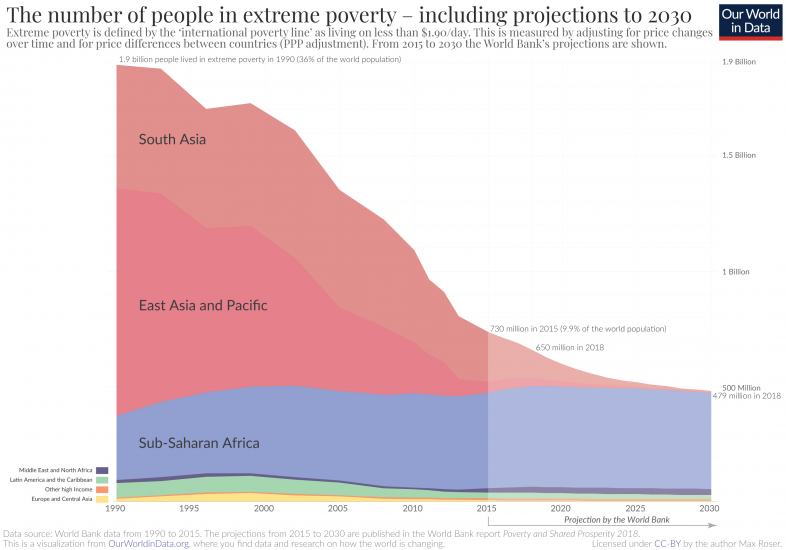

> Larry Page and Sergey Brin were originally pretty negative about search engines that sold ads. Appendix A in their original paper says:
>> "we expect that advertising-funded search engines will be inherently biased towards the advertisers and away from the needs of the consumers"
> and that
>> "we believe the issue of advertising causes enough mixed incentives that it is crucial to have a competitive search engine that is transparent and in the academic realm"