They call it the "Tesla shock" and the article says that by 2040 there will be 150 million electric cars. Yet a few paragraphs later they admit that there will be 2 billion cars in use in 2040 (ergo 90% internal combustion engines).
I'm not saying that the progress is not impressive, but 10% maximum market share in 24 years doesn't feel like a shock.
I hear what you're saying, but I think the shift will happen faster than is commonly anticipated. The simplest way to sense this is to just drive a Tesla. Doing so is reminiscent of seeing early iPhones. There is a strong sense of, "Ah, yes, this is obviously the future."
As soon as the initial cost of electrics becomes remotely competitive with gas-powered cars, pretty much everyone is going to want one. Yes, there will be the much-ballyhooed challenges of installing charging stations in parking garages and so forth. All those commonly cited issues will remain issues, but they'll be like AT&T's initial network congestion due to iPhones: short-term problems that'll be overcome because the product is that good.
Another reason things will change fast is that, like film cameras, gasoline cars have a long logistical tail. As soon as they start to fall out of favour, there's a feedback loop. Suppliers and mechanics close close. Fuel prices rise as fixed costs are amortized over fewer buyers. Gas stations are further away. You can't get the fuel or parts, who'd want a car like that? And so more suppliers close.
Even if you are stuck with a gasoline car, can you keep it running? Many of those two billion cars will end up scrap or modified with converter kits.
There's an alternate feedback loop. As more people drive electric cars, demand for oil drops and decreases the price of gasoline, making gasoline cars more economical.
I predict a bifurcated market: Cars wind up as electric while light trucks (and their large SUV brethren) stick to fossil fuels.
> There's an alternate feedback loop. As more people drive electric cars, demand for oil drops and decreases the price of gasoline, making gasoline cars more economical.
A car payment is maybe $200/month. Car insurance is maybe $100/month. 12,000 miles/year at 30MPG and $2/gallon is $67/month.
~$1.20 of the $2/gallon is taxes, refining, distribution and marketing.
So if the market price of crude oil falls by 75%, its contribution to a gallon of gas goes from $.80 to $.20. That's $20/month difference, or ~5% of the cost of operating a car.
And that's assuming crude prices actually fall by that much, and that governments don't raise the fuel tax to make up revenue and/or fight climate change. It's not hard to imagine adding $.49/gallon to the gas tax.
Governments will increasingly switch from fuel excise to road use taxes, in most cases removing the excise to help bolster their domestic oil industry.
This may be true, but the cost of oil would have to drop below the cost of electricity.
According to this article, gasoline would have to be very cheap in order to compete with the cost of electricity. At one point the marginal difference probably doesn't matter.
The dismantling of the existing infrastructure might be a bigger challenge than you are letting on. I think that Tesla has the advantage of being a centralized, adaptive force for change, while gasoline and automotive suppliers are disparate and do not act as one cohesive force. There is a huge money advantage for the existing players, but perhaps their immobility will nullify that cash advantage.
The most vulnerable part of the existing infrastructure is "the little guy", gas stations that are franchises and can fold if demand falls below costs. But they are also the most visible part of it to consumers. Having to drive out of your way to get fuel would be an increasingly annoying chore.
I'm a little worried about the industry and workers that would be affected by such a huge change. I don't know what could be done, especially in the name of progress, but it's something that needs to be considered.
Yes, technology has created new jobs, but it has also massively devalued it; a highschool graduate can no longer support a family at a lifelong factory job.
> a highschool graduate can no longer support a family at a lifelong factory job.
It's worth keeping in mind that this was only ever true for a large number of people in a very short window in history, basically a few decades in the middle of the 20th century. Before that, you had (essentially subsistence) farming, craftsmen (neither of which could be done without substantial apprenticeship, ie education) or sweatshop factory working (which did not allow for the kind of middle class supporting a family you have in mind).
I am very curious what led that time in history to spread wealth so evenly. I don't know much about it, but for about 50 years technology was giving us such amazing, shared increases in productivity and standard of living that people dreamed of a post-labor society. (like star trek).
I met someone who's been with a company for nearly 30 years. When they started, everyone got 15 vacation and 12 personal leave days a year.
I think you were trying to parody comments on HN or elsewhere but I've rarely, if ever, heard anyone espouse such a view. The overwhelming majority agree that increased automation will lead to higher productivity but also cause unemployment. It's easy to write a snarky comment like that one, but I don't think it really adds value to the conversation.
There are definitely some people here who espouse the view that the technological changes will certainly create new jobs that replace the ones that disappear and there is no worry about unemployment going up. I think they are in the minority though and not really parody-worthy.
I might consider a Tesla, but for the logistics of using one. I live in a western Chicago suburb and commute to a northern suburb. Despite the many commuting routes I take, I have never seen a charging station. I cannot charge at work, nor can I charge at home (I park in a garage in a apartment building that has no EV charging abilities or even 120v outlets available).
If you can't charge overnight, you really shouldn't have an electric vehicle. You end up MORE inconvenienced than a gasoline/diesel driver, instead of LESS inconvenienced.
Apartment landlords are coming around, quickly, though - it's a selling point and not all that expensive to install a few 240V outlets in the garage.
If you CAN charge overnight, waking up to a full 'tank' every morning is amazing! It's a surprising benefit that isn't immediately obvious to the new EV driver.
> If you can't charge overnight, you really shouldn't have an electric vehicle.
That's true now, but may not be so in a few years if aluminum-air battery technology continues to improve. Aluminum-air batteries have much higher energy density than lithium ion, but they cannot be electrically recharged [1] so when they are out you have to swap them.
The idea is that you build car with both a small lithium ion system and a large aluminum-air system. Lithium ion has higher power output, so you want that to actually drive the vehicle. You use the aluminum-air to recharge the lithium ion, to extend the range.
Current experiments with this approach add about 1200 miles to the range of the car compared to a pure lithium ion system.
If starting from full on both batteries you got 1400 miles, that would be enough to let a lot of city drivers go a month between having to go have the aluminum-air batter swapped out in the worst case where they are not able to do any plug in charging. That would be quite feasible for many people, assuming that there was a battery swap place within reasonable distance.
[1] In other words, you cannot recharged them by forcing a reverse current through them like you do normal rechargeable batteries. They essentially have to be rebuilt with new anodes, and the old anodes become scrap for recycling.
Sounds complicated. Musk has said that Lithium batteries are improving at a rapid enough pace that they expect impressive increases in capacity and duty cycles by the third iteration of the Model 3.
A friend of mine drives a Tesla. She can only charge at work, and that was enough for her. For context, we're in the bay area, where long drives are quite common.
Cranking Red Barchetta at full volume? I know what you mean. Though I'm a little more saddened thinking of the day when autopilot replaces me at the wheel.
Yes, manually driving a car will become illegal probably sooner than one expects.
While I'd like to leave the driving to Otto most of the time, sometimes I really like to drive myself, and would miss it.
I like my drag racing manual transmission and clutch, it's a heluva lot of fun to drive on the open road, but it's agony in heavy city traffic. (The engine just will not run at low speeds, the clutch is very grabby :) It can be really hard to get moving uphill from a standstill without rotating the tires in place a few times.)
There's no reason why manual driving needs to be made illegal.
A much more likely scenario is that safety features, starting with AEB collision avoidance, will become mandatory.
This will progress to the point where autopilot will always be running in a supervisory role, ready to take over in an instant if you're doing something dumb that could harm yourself or others.
Older cars can be prohibited from using, first, HOV-style "automatic" lanes, then highways in rush hour, then highways altogether, much sooner than that.
That recalls Kodak's mistake: not anticipating how very fast consumers/users can switch to new tech, no matter how vested in old technology they were. The switch from film to digital was a no-brainer for most people. Having driven an EV for two years, I think many will feel the same about electric cars.
Definitely. I'm waiting until the engine fails in my 15-year-old jeep to purchase a new car, but as that's close on the horizon, the only consideration is which EV. Not buying another carbon-emitting vehicle if I can help it.
I don't know. :/ Are you thinking about a particular niche? For example, I don't remember conversion kits for regular gas automobiles to switch to unleaded. Not exactly the same thing, but perhaps somewhat comparable? And given the state of engine integration in vehicles today, I'm not sure how easy it would be to replace everything that's different between an electric vehicle and an ICE one. For example, batteries versus fuel tank.
Regular gasoline cars run fine on unleaded gas, so no conversion kit was needed. But you are right in being skeptical - it wouldn't make sense to convert a gas powered car to electric. You wouldn't just swap a combustion engine for a electric engine. You'd need to change everything - engine, transmission, gas tank, air conditioning, dash/info center. And then you'd want energy recovery, so you'd change out braking systems. Best case is you'd end up with a heavy, expensive, inefficient, poorly balanced electric car.
The rest does sound quite plausible though. At best one would end up with an improperly balanced car from the difference in engine weights alone unless pains were taken to ensure the car's weight and weight distribution stayed the same.
conversion kits did exist for the fuel change. It was mostly about putting in harder valve seats. The lead was a useful lubricant for the valves.
My idea is that the small block Chevy engine is ubiquitous in the hot rodding world, and it is often combined with a Turbo350 transmission. This combo (or one roughly the same shape) has now been built by GM over 100,000,000 times. They hit that milestone in 2011! http://media.gm.com/media/us/en/gm/news.detail.html/content/...
So we take the Remy250 motor, used to propel the Chevy Tahoe Hybrid (I own one), the Remy is small, about the size of the torque converter in the Turbo350 transmission. That leaves the shape of the engine as a shape to fill with lithium batteries, and the rest of the transmission case can hold the inverter. There is enough room, I have measured.
You may only get 50-100 miles, but it could be a drop-in replacement. Since all the mess is self contained in one blob, it is a matter of yanking the old stuff out and shoving the new stuff in. Basic hot rodding, being done since the automobile was invented.
If it could retail for $20,000 to $25,000 the aftermarket industry would eat it up. I am a SEMA member for 12 years, so I know.
Any VC want to fund this idea? I have most of the pieces pulled together, just need to pay for some engineering time.
It's a lot easier not to be vested in old technology when the replacement runs for longer without new infrastructure and doesn't cost a couple of months' wages to upgrade, a few more if the old technology is rendered obsolete...
This is patently false. If you turn off your WiFi, 4G, Bluetooth and NFC, and only use your phone for calls and SMS, a smartphone can easily last a week. More than a dumbphone with the same features.
Agreed. You can also lower the brightness of the screen when you don't need it. My Sony Xperia Z5 Compact in "Stamina Mode" (basically what you're describing) can last for 7-8 days as far as I can tell.
As much as I would like it for electric cars to be commonplace, I think there are bigger hurdles.
Free charging stations are going to be less appealing when you have hundreds of cars recharging every hour, not to mention the increased space requirements because a car takes 2-4 minutes to refuel but 30 minutes to refill the battery. Someone will have to pay for the price of energy and infrastructure (don't say the government will: actually they make a lot of money on gasoline and diesel, at least in Europe, and they will have to recoup that too!). And right now one of Tesla's selling point is the free recharging stations.
The charging time itself is an issue. It's a real pity that Tesla's battery swap stations programme was halted. If you're traveling with two kids you certainly don't want to waste half an hour while they're both asleep just to charge the battery... :-)
Scaling production and having a compelling product is already hard enough, and Tesla's being excellent at that, but scaling the infrastructure for consumers is a whole different business.
Tesla discontinued battery swap because people do prefer to spend 1/2 hour charging, even when traveling with sleeping children.
Note that this is only an issue for long-distance travel; for day-to-day driving, most people will charge in their garage, their apartment's garage, or at a street-side charger.
Well, there was one battery swap station, and you had to book it and pay for it. Not exactly encouraging.
Who is going to scale the street-side charger network? In Europe, a lot of cars are parked outdoors during the night. In smaller towns, parking spots around residential areas aren't even painted.
Many other cars are parked in shared garages that don't guarantee one plug per car. I guess garage owners could install the chargers (but that would be hundreds of kW if electric cars were really commonplace---that is expensive infrastructure) and meters, but still it's hard to reach critical mass.
In a handful of big metropolitan areas. Good luck doing that throughout multiple continents. Most European countries are still on the order of magnitude of 1000 total EVs sold per year. Growing, sure, but still hardly a serious market penetration.
And I am talking about problems with scaling: "beginning to happen" and "available for everyone who needs it" is not the same as "available for everyone". Installing a dozen chargers, unused most of the time, in a shopping mall's 1000-car parking lot is not the same as installing a few hundred chargers in a multistorey parking downtown that previously only needed to power some neons.
Your error seems to be that you insist on seeing a big-bang overnight solution that works for Everyone(tm). That never happens.
There are millions of people in Europe who has a private garage/carport/parking spot and can afford to install a charger there, and who lives within round trip battery capacity of where they need to go. Millions more who don't, but whose employers can be convinced to install chargers. That's more than enough for the kind of critical mass where apartment block landlords, employers and shopping centre parking lots will start to install chargers, not for novelty or green credentials, but for naked self interest. It's not overnight, but it will be very quick.
"Tesla discontinued battery swap because people do prefer to spend 1/2 hour charging, even when traveling with sleeping children."
That was set up to fail.
There was only one battery swap station. It was aimed at people commuting between LA and SF. Except:
- you had to book in advance to use it
- you had to pay a fee to use it
- it was set up across the street from a Tesla Supercharger
- despite ostensibly being for the commute between those cities, it was actually 15 miles away from the freeway, making for a significant detour
If I was Elon Musk and wanted to demonstrate how people would much rather use charging stations than any kind of battery swap program, I think the above is a pretty good example of how I'd set up my battery swap program (for failure).
Battery swap doesn't really scale. It's hard to imagine battery swap stations being set up wherever you could conceivably need one, with all the associated infrastructure and labor costs, just so you can swap a battery in 10 minutes rather than supercharge in 30.
And remember, chargers of the future will be faster still. CCS has been designed to scale to at least 300kW.
The economics completely change with fleet vehicles (aka, self driving taxis). Instead of taking an entire car out of commission for half an hour, you can just replace the battery in 1 minute and keep the car on the road and earning money. Because both the car and battery swap station is owned by the same company, there's no arbitrage between trading an old, worn out battery and a new battery and fleet cars can be designed alongside the swap station to make the entire process entirely automated.
But the big plus is that if you design a fleet system around battery swap, you can get away with puny batteries on the vehicles. A battery sufficient for 1 - 2 hours of city driving is optimal which saves both cost and weight for the vehicles. Instead of relying on expensive, power dense advanced Lithium batteries, you can shove cheap batteries into the thing, scatter the entire city with drive-thru swap stations and drive the cost of transportation way down.
While that's true, I think you can also have taxis stop at charging stations more often when they aren't in use. Particularly if you have self-driving taxis, you're not bothering passengers by doing that. You could even have trucks with large batteries which act as mobile charging stations.
i strongly disagree with your thesis that a 1-2 hour long driving capacity sized-battery is optimal. If you have an electric car, being able to not constantly worry about whether you can drive home is far more important than the cost of recharging. its so cheap it almost doesn't matter, like $10 for an 85kwh tesla. not worrying about running out of power is the big value.
Yes, for individually owned cars, range anxiety is a real thing. I'm talking about electric taxis which shuttle multiple people around on short trips throughout the day.
From first principles, a battery swap station seems to add just one relatively isolated component to an existing charge station... they would use the same power infrastructure, the same authorization protocols, the same locations...
I believe that battery swap was effectively a scam. There was some arbitrary full recharge time that had to be met to access some rebate program, and Tesla did exactly as much as they needed to do to meet the terms and then stopped.
Electric cars are the future, and Tesla's are cool, so don't take this as a negative. The complexity of battery swapping was in ownership of the batteries, not in the physical swapping. It maybe makes sense for big taxi firms, but not for standard consumers.
Tesla is already beginning to end free charging. Any car ordered after 31/12/2016 will be limited to 400 kWh (~1000 miles) of free charging per year, after that you have to pay. 1000 miles is around 10% of the distance most cars go in a year. And reserved != ordered, so this limit applies to all Model 3s.
> 1000 miles is around 10% of the distance most cars go in a year.
Comparing usage of the supercharger network to the total amount driven by the car in a year doesn't make much sense. You only need the supercharger network when going a long distance; otherwise, you can charge at home or perhaps at work.
Exactly. But when it's free, people do crazy things like queue for half an hour to charge at a supercharger even though they could easily charge at home. I think this is the primary motivation of the new rules, to restrict supercharger use to those actually needing it.
I heard (secondhand info and all that) that there's some taxi startup somewhere that is using all Teslas, but instead of approaching Tesla about installing superchargers for their own use[1], they decided to just use the existing public superchargers, tying them up and creating long delays for anyone else who wants to use them. So it seems that this new rule is meant to combat that type of behavior.
[1] Apparently companies can approach Tesla about installing their own private superchargers, though I don't know the details.
They're 'Tesloop', based in LA. I've seen complaints on the Tesla forums from LA area Tesla owners about how they keep hogging up the chargers.
E.g Charging for Supercharging Won't Deter Local Fleet Operators
I've thought about this, and I disagree. I think driving habits - and fueling stations - will simply change along with it. Truck stops are especially experienced with this. Older pumps can take a good while to fill the tanks. Improvements were made so they are faster, but they are still slow compared to cars. Hence the tendency to have a bit of shopping and food at a good number of fueling stations.
For passenger cars, this can turn into a number of things. Entertainment places, coffee shops, and the like fit in well here - as do fast food with play areas and other such things.
This will take time, but I think it's right. If you are charging your car overnight, the only time you'll need to charge mid-trip is on long-distance trips. If you're driving 10 hrs, you'll need to take an hour-plus break sometime in the middle of it regardless.
Many people will probably only seldomly need to charge at stations, as they'd probably charge their batteries at home each night. Many office parking places will probably have charging stations as well.
If you're traveling with two kids you certainly don't want to waste half an hour while they're both asleep just to charge the battery... :-)
Supercharging time is almost never wasted. You (and the kids) need a break after 3-4 hours on the road anyway. Quite often, in my experience, the car is recharged and ready to go well before the occupants are!
I don't think you'd ever want to take a road trip with me. One of the big reasons I bought a VW TDI is that I can go for 8+ hours without stopping at all.
I hope you are exaggerating. Otherwise I don't think I want to be on the same highway as you either.
People like you are a hazard on the road. Driver fatigue is a real thing - and saying you can go 8 hours without stopping isn't a testament to how awesome you are - it's a testament to how little you care about others sharing the road with you.
Some people think they have super-human reflexes, or are immune to fatigue, or have trained themselves to task with a phone and driving. Most of these people are wrong. Chances are, you are just an ordinary driver - and there is nothing wrong with that.
I'm more than willing to admit I'm an average driver - and so I will take breaks, or forgo using the phone, or drive slower to compensate for that. Yes, sometimes I do drive poorly (sleep deprived, stressed, or in a rush) - but I'm never going to claim I can go 8 hours without a break. That's going a bit far.
Sure but I will want to take a break at the beach, at an attraction, or worst case at a supermarket.
When going from Palm Beach to Orlando, we traded more time on the road for a visit to Cape Canaveral. (Way) more than 30 minutes, but the kids didn't notice neither that nor the 5 minutes stop to fill the tank...
Oh well, at least if there is going to be some kind of valet service around superchargers, it's going to be more healthy than a job filling up tanks.
Absolutely. We're still in the infancy stage of charging infrastructure.
However the time and costs to build them are really pretty small (and will continue to improve with scale). You can easily put them in wherever there is parking and a grid connection.
Businesses, restaurants, malls, hotels, etc, are already starting to figure out that having charging is a great way to attract more customers. We'll see this snowball as market share of EVs grows, and it will get to the point where you can charge at most attractions you'd conceivably want to stop on a long trip.
Tesla's move to PAYG supercharging is also positive for the wider charging industry and should encourage more investment by 3rd-parties.
I had that iPhone moment when I first drove my kei car (Suzuki Lapin) in Japan. It cost around USD13K new, gets around 80 mpg, carries four people easily or decent amount of cargo, and is packed with simple and useful tech like exterior cameras, radar-assisted braking, airbags, touch screen, etc. If I could own this car in America, I definitely would.
Once you factor in the cost of the home charging station(and the required charging infra) and the battery and other electric components ,electric cars are(and will stay) more expensive ,meaningfully than ICE-cars. And ICE cars are much more reliable , they don't need an expensive battery swap every 5 years.
And when fuel is priced low it isn't more expensive than electricity.
So yes, an EV might have some extra benefits and some western consumers might be willing to pay more for that, others won't and especially not people at the 3rd world.
So only 10% global penetration rate unless there's some government incentive by 2040 and maybe longer seems likely.
As an owner of a pure electric car (and a home renter) for more than 5 years, I logged in specifically to respond to this.
In 5 years, our Leaf has needed new tires, brake fluid, and... windshield wiper fluid and blades. We didn't need any new infrastructure. We plug it into a normal outlet at night, and it's full every morning. We've been taking the money we save on not doing transmission fluid and clutches and oil changes, and all of that stuff and put it in a savings account. In another 3 years, we'll need a new battery, but by then, it will probably be twice the capacity of the old one. (Nissan has discontinued the 24Kwhr battery, so fingers crossed, we'll get a 40KWhr battery when the time comes).
From a more global perspective, even here in Northern California, electricity is very inexpensive at night, because of all the spare generator capacity. Practically everyone can plug in their car at night, and with nothing more sophisticated than a $10 outlet timer, fuel up the fleet no problem.
Will every car be electric in 2040? Probably not, because cars last a long time. But I'll bet there will be very few gas cars sold by then. Battery prices are falling over 7% a year, and that's the most expensive part of an EV.
And then the next step is to talk to the grid in realtime and soak up any excess wind energy when demand is otherwise low and pause charge if there's a sudden spike in demand and get a discount from the utility company for helping them out. This is already built into some chargers, but should be standard in cars in future.
Exactly. Experts have been describing for some time that, especially down the curve, maintenance costs for electric cars will be substantially less and lifetimes (less untolerated obsolescence) longer.
Switch to composite construction and other corrosion resistant materials, and...
Another reason not to let DRM dominate this emerging market; so that we are not faced with profit-driven forced obsolescence.
>especially down the curve, maintenance costs for electric cars will be substantially less and lifetimes...
There was a time when the maintenance cost of cars (traditional) were little. Things changed because now things are made to fail after sometime aka planned obsolescence.
Do you think electric car companies will be different?
I did. It did't require "regular tuneups". You pour petrol and plain tap water for coolant in the radiator and the thing just goes...When it get stuck, you open the hood and take a peek, pull some wires, adjust some plugs and it goes again...
I don't recall any really expensive repair work in the 15 years that we owned that car.
Personally I hope demand will rise enough to make the stupid oppressive darkness-destroying asinine "security lights" the damnpowercompany constantly pushes much less affordable.
It seems unlikely that demand will rise to daytime and early evening levels, however.
I don't like the subsidized outdoor security lights that only exist to increase demand for nighttime power. I hope that nighttime demand will increase so that those lights will no longer be economical. I look forward to actual darkness in rural areas as a result.
> Once you factor in the cost of the home charging station(and the required charging infra) and the battery and other electric components ,electric cars are(and will stay) more expensive ,meaningfully than ICE-cars. And ICE cars are much more reliable , they don't need an expensive battery swap every 5 years.
Once you factor in the cost of initial purchase (and the the new cables required) and the case and other attachments, touch-screen phones are (and will stay) more expensive, meaningfully than flip-phones. And flip phones are much more reliable, they don't have a screen that breaks when you drop it, etc.
Not really a valid comparison. Flip phones basically do just one thing, which is make calls or SMS. Calls and texts are just a very minor part of what smartphones do. It's actually a little surprising we still call them smartphones at all. If you downgrade from a smartphone to a flipphone, you've lost an incredible amount of functionality.
Meanwhile, electric cars, while nicer in many ways than ICEs, still fundamentally perform the same task. And if you downgrade from an electric to an ICE, you haven't lost any functionality.
That's just not true, many flip-phones ran S60, which had most of the features of a current smartphone: camera, music player, web access (full, not WAP) over 3G and WiFi, running downloadable apps, GPS, etc.
I was running a podcast downloading app and writing Python scripts on my E65 before the iPhone even had the Store.
> they don't need an expensive battery swap every 5 years.
You are right, but ICE cars need all manner of other maintenance often new transmissions or outright replacement. This is a minor issue, and is exactly the kind of problem that the GP poster was talking about. These battery replacements will be talked about like they are a huge showstopper, but the reality is probably closer to wasting a an hour or two at the mechanic or dealership and some kind of fee as they take the old battery for refurb and give me a fresh one.
And someone will figure out how to charge a car on a normal outlet.
Well it is, in a sense that it's part of the cost of your lease. But if it's still affordable enough, then that alone would indicate that it's not really a costly problem in general.
Charging a car on a normal outlet is already possible. It just takes for-fucking-ever. You can't draw enough current from an outlet to charge it in a short span, without tripping the breaker or burning out your home wiring.
There will be some solution to this too, we will come up with some clever hack, like pluggable capacitors, multiple breakers or something. Or better outlets and breakers will become the norm.
I had 2 new breakers put in for an office of mine a few years it cost less than $200. If I could pay this then pay half as much for fueling my car for the next year, I would do it every year.
You can already buy a portable box that lets you combine the power from two different circuits that are out of phase with each other, to get twice the power. I saw a post by a Tesla owner who uses it to get effective Level-2 charging from friend's country homes.
We had the same issue. Our 120V circuit couldn't recharge fast enough overnight to handle ~ 50 miles daily of commute/errands. We ended up getting a 240V/40AMP circuit installed for a 32AMP charger and now it charges in ~ 3 hours. The faster charger also meant we could time it to always use the night time electricity rates.
The fuse box is normally located in the garage anyway. It strikes me that it should be fairly cheap to install a higher amp hookup for the car in that case.
Once you factor in the cost of the home charging station(and the required charging infra) and the battery and other electric components ,electric cars are(and will stay) more expensive ,meaningfully than ICE-cars.
EVs are fundamentally simpler and cheaper to build than combustion vehicles. Fewer parts, less complexity, more commoditisation and potential for economies of scale.
The only reason EV's are more expensive today is battery prices, which are dropping rapidly and will continue to do so.
ICE cars are much more reliable , they don't need an expensive battery swap every 5 years.
In testing, modern EV batteries last much longer than this already. Even after 10 years and hundreds of thousands of miles, you're still likely to have over 80% of the original capacity. In something like a Tesla, that's still a very useful vehicle. And the battery technology will only get better.
> they don't need an expensive battery swap every 5 years.
You need to stop thinking about electric vehicle batteries like those in your phone or laptop.
EV batteries have a lot more (and better) management, keep things within (or closer to) optimal temperature and state of charge which all have major impacts on battery life.
Tesla has a battery pack with over 500,000 miles of simulated usage that's still got more than 80% of it's capacity. Surveys of Model S owners has shown that degredation is not an issue. [1]
I think the argument is that the iPhone set the trend for what all phones looked and felt like (large, touchscreen-based devices that can run third party applications).
Saying that the iPhone is a small minority of phones is similar to saying that Tesla will have a small minority of vehicle sales, which is undoubtedly true, but doesn't portray the reality that a ton of other car manufacturers will be selling electric cars.
Well a huge fraction of the world is still on shitty $20 keyboard phones that are technically running Android but are more like feature phones in terms of capability and specs. You can't really argue that those are descended from the iPhone in any meaningful way.
Oh definitely. I think the point is that the trend in automobile sales is toward a vast majority of new sales being electric cars, just as the trend in phones is towards smartphones[1], and those smartphones overwhelmingly resemble the first iPhone.
I think it's a fair analogy: most people don't have iPhones, but a huge portion of people have a smartphone. Tesla doesn't need to be the only source of electric cars, there are plenty more mainstream options.
>I hear what you're saying, but I think the shift will happen faster than is commonly anticipated. The simplest way to sense this is to just drive a Tesla. Doing so is reminiscent of seeing early iPhones. There is a strong sense of, "Ah, yes, this is obviously the future."
What part of it says "this is the future" vs. "this is what it feels like to drive a car that costs 6 figures"? Because I very much got the latter.
I don't know the details of how expensive it is, or how secure, but Dutch cities are installing charging stations on the street curb. Typically one unit can charge two cars. To charge, plug in your cable, enter payments details and the car will be charged.
People can afford to buy a new iphone every couple of years, and the cost was built into your monthly plan. Moore's Law made them worth buying every couple of years.
Electric cars are expensive and they don't improve rapidly.
10% of cars being electric is huge when it comes to limiting demand. It's enough to whittle gasoline capex down to practically nothing, raising its price and driving more and more electric adoption.
Electric cars are an order of magnitude more efficient than ICE cars. The only thing keeping them from going mainstream is the existing industrial base. With growth now impossible in that sector, mainstream adoption is just around the corner.
Why is this getting downvoted? I think its very relevant, that the cost of oil production at lower volume, could be a tipping point. Here en nothern europe, this is already effecting non profitable oildrillings, which are beeing closed, and new drillings beeing postponed or altogether cancelled.
The most efficient vehicles on the market today extract something like 40% of the energy from the fuel they burn. ICE installations can get to around 50%, but that's typically for very large CI engines. Absent comparing something like a top-fuel dragster, I think you're correct about a factor of 3.
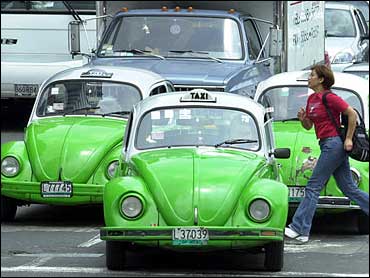
Sure, but many of those cars in use by 2040 got sold new before today or will be sold in the next 10 years. In many places around the world, driving a 30 years old car is not uncommon (I mean, parts of Mexico still have this as the most common type of cab: http://www.zonalatina.com/Zldata313a.jpg ).
Now, the current market share of electric cars for new cars in the US is 0.62% (it is 0.08% in China). By 2040, in terms of new car sales, the market share is expected to be 35% worlwide [1]. That is a 6 orders of magnitude increase (at 2x each time) in 24 years, using the US number. So, extrapolating and saying the market share doubles every 4 years (24/6), you'd be reaching 70% electric in new cars by 2044 without regulation. With regulation banning non-electric cars as soon as it make sense for each country, I expect it to go 50% of all new cars electric one year, 100% the next.
Either way, by 2048 the number of new gasoline cars will be negligible, but the existing stock of cars already sold might take a few more decades to dwindle.
VW had Bug factories in Mexico until 2003. It's not like they stopped making them in 1974. Also, it possible to build one from all after market parts for which there is an efficient supply chain. Nonetheless, most Central American countries do not allow cars older than 10 years to be imported. My friends bought several acres of land on the Belize coast where he wanted to build a resort. Before he left he bought a 1988 CJ Jeep which can also easily be built from all after market parts, so he move on his land. They wouldn't let him import it.
I mean, there is a 2017 Bettle: http://www.vw.com/models/beetle . But that's not what you see in rural areas (or even, cities other than the capital[1], in Mexico). Maybe not many from 1974, but 80's for sure. As for importing, I don't know the rules for Mexico, but that's not what I am talking about, there are old cars in the country already and the people that own them don't have the income to replace them unless they are at the point at which they are 100% not worth repairing, which is often more than the 30 years mark.
[1] The capital has super strict emission verification requirements on account of being in a former lake basin surrounded by mountains and boasting a 20-30 million population depending how you count...
The post-1998 US market Beetle is a completely different car from the original. (For starters, it has the engine in the front.)
But long after the original rear-engine design was discontinued in the US, they made them in Mexico for the domestic market there. They wouldn't pass crash standards and thus were illegal to import into the US (although people periodically tried, and I suspect if you were even slightly cagey about it, you could have made it work using an old hulk's VIN; there are certainly enough of them around in junkyards).
The last ones were made in late 2003, so they actually overlapped the production of the "New Beetle" by several years.
Interestingly, a decree prohibiting the issuance of taxi permits to 2-door vehicles reportedly contributed to the decline in sales, which shows you the role of government in killing off older products. They might still be made if not for that, just for the Mexico City taxi market.
They wouldn't pass emission tests for Mexico City for a while now, though (I was there when the ones already on the street started disappearing in favor of Tsuru there). But they were/are also very common in other cities in Mexico, even after new ones stopped being sold. I wasn't aware they made full Beetles until 2003, though I knew they made repair parts.
Yeah, its really a stretch. The Royal Dutch Shell guys apparently used a combined efficiency trends + electric car market share to get to a "total mean gas demand" peak. As far as I can tell for poorly articulated arguments, is that it goes something like this: We can model the gas market as the total cars on the road multiplied the average gas mileage per car multiplied by the average miles per car. As a composite number, the average gas mileage is affected strongly by cars which are on the road but use no gas. For each percent of market share which is electric only cars, its equivalent to something like a 3 - 5% reduction in the average gas mileage figure. And total market growth slows, and the percentage of electric cars rises, the actual aggregate demand for gas is going to start going down. Which hasn't happened in a sustained way since the invention of the automobile.
Well, it is a shock if you make 95% of those internal combustion engines electric too, that's it, hybrid, because they are way more efficient.
For example, just adding supercaps means you could recover 20 to 30% of your energy from regenerative braking. This will happen when tech is ready(cheap in big quantities), and it is getting ready. It is not just Tesla, but hundreds of companies working on those problems.
But also, the real shock is making cars self drive because suddenly your cars do not need to stay in a static place for hours in cities. Today cars carry an average of 1.1 to 1.05 people in cities, but are made to carry 5 to 6 people, they weight over 1500kilograms for moving 80 kilos.
If you can make cars 5/6 smaller like you can easily do with electric(it is very hard to make a small 4 stroke engine) you can improve enormously the efficiency and reduce contamination of cities.
Furthermore, what you are proposing is not new: a tiny car with a tiny engine for one person. That's called a microcar. Wikipedia has a long list of these, starting from the 1950's onward to today, some of which have sold in quite large numbers:
Given that these already exist, why are they not the solution to our problems? For one, they're well-documented death traps. They use a loophole by classifying as a four wheel motorbike, meaning they don't need to be crash tested. Also, they are a replacement for only a small part of what a real car does, and this is the part that's also most easily replaced by public transport.
I don't think I understand the last point. Even if my car is self-driving, I still don't want to share one with anyone. I also want it to be big to take all of my music equipment,computer rig, etc etc etc with me.
I think cars being as large as they are has absolutely nothing to do with a size of the engine. There are some cars with absolutely tiny 4-stroke engines and they are still "large" because anything smaller would be unstable on the road. You can't make a cabin for a single person on 4 wheels, because it will fall over in any turn - you have to make it a motorcycle, or a tricycle - and you are losing a lot of things that make a car a car at that point. Not to mention the fact that I don't want my car to be a tin can - I want to be comfortable.
That's fair enough, but many people will enjoy having access to economical transport without sinking tens of thousands of dollars in to a depreciating asset.
In my experience, people who want to have access to economical transport without sinking money into depreciating assets take a bus. If they have to have a car and don't have money to buy a new/almost new car, they buy a car that's 10 years old and drive that. I think people who own a car now won't be tempted to switch to a small non-personal-space vehicle even if it's much cheaper - if they cared about cheaper transport, there were already other options available, and they didn't pick them. They drive cars because they need them. And if those people who now use public transport decide to take cheap self driving pods, then the traffic problem gets worse, not better.
Public transportation is a poor replacement for a car in many places and a 10 year old car raises reliability issues with many people who are afraid to have a problem while driving.
And while people sometimes appreciate a lot of space in a car, most often, when they commute , they might not need that.
> a 10 year old car raises reliability issues with many people who are afraid to have a problem while driving.
In ~15 years of car ownership, I have never owned a car less than 10 years old, and I don't understand this at all. Currently I drive a 2002 Peugeot 307. Regular maintenance costs me less per year than the depreciation cost alone on a new car, and I've never had a breakdown that's left me stranded. Not once.
Well, lucky or just taking good care of my vehicles..
But anyway, my point is exactly what you say: the risk of having a breakdown is small enough for any well-maintained car that it's pretty independent of car age.
I think most people who have 'bad luck' with cars tend not to maintain them very well. I think that this is probably even reflected in car reliability statistics; there are models of cars (e.g. Ford Crown Victorias) which have very good reliability records when in vehicle fleets, where they receive regular preventative maintenance, but much more mixed results when in private ownership, where my sense is that they tend to be owned by people with a more relaxed attitude towards good PM.
I have always been surprised that car manufacturers haven't done a better job of rolling regular maintenance expenses into the initial cost of a car (and thus, into the financing arrangements that support most new-car purchases), because doing so would appear to be something of a win-win: a more reliable car for the consumer and also a more reliable-seeming car for the manufacturer to tout. But I think the mandated separation of auto manufacturers from retailers and servicers in the US tends to conspire against this.
"In my experience, people who want to have access to economical transport without sinking money into depreciating assets take a bus"
Our experiences differ. In my own, they own a car. They just wind up impoverished as a result.
The only exception is in places with good public transport and cycling/walking infrastructure in human-scale development, but those places tend to be pretty pricey.
Yeah, that seems like a rather optimistic (from the oil industry's perspective) projection that electric cars will be adopted gradually. Seems more likely that there will become a point when electric cars are better/cheaper than gas even for low-end vehicles, and then from then on there's no reason to keep making gas-burning cars except for specialized purposes.
One argument in favor of a gradual transition though is limited battery supply. However, if there's a market for more cells, I don't see any reason to expect that the necessary factories won't be built.
Not only will electric cars reach parity for new cars, it seems likely there will come a point where even buying an old second hand vehicle will be uneconomic since the primary cost will be fuel. This will tank the resale value of ICE cars, making them competitive again, but the process will continue.
Yeah, I think the used marked for ICE cars will be with us for a long time. There will always be people who need a car and don't have the savings to buy a new one, and if used ICE cars are cheap people will continue to buy them and drive them until they aren't worth fixing. So, there's probably a ten or twenty year lag between when ICE cars are no longer worth making and when ICE cars are no longer widely used.
(Some googling led to a claim that the average car life expectancy is about 8 years and 150,000 miles. That seems low to me, but maybe I'm biased by having owned long-lived reliable cars.)
I really don't see why that sentence deserves a smiley. Ice caps doomed seems to mean a lot of unexpected, including threatening, consequences for me and you.
Well, it wasn't meant to be funny, just to emphasize the point: we're talking so much about combating global warming yet the current forecast is for 90% fossil fuel powered cars in 2040(!).
I, personally, can't do much, so I'm just going to watch the show in this restaurant at the end of the universe :)
It also means faster warming, because of reduced albedo - and part of that warming is transferred to the adjacent land ice (esp. Greenland) and permafrost, melting it in turn, which translates to higher sea levels. For bonus points, when permafrost melts, it releases methane, which is also a greenhouse gas.
Then there's reduction of ocean salinity, affecting existing ecosystems established around the current level (and with a rate of change too fast for gradual adaptation).
And not to forget about the disruption of existing ocean currents, which significantly affect weather patterns. And if I remember correctly, atmospheric circulation would also be affected.
Open shipping lanes are well and good, but when you can't grow the usual crops where you used to be able to grow them, because the climate is no longer appropriate for them in that location, and seafood catches are lower because the ecosystem is disrupted in a big way, you may well find that all that extra cargo capacity is used up just shipping food to places that used to be able to grow their own.
Alaska is bigger than Hawaii, so warmer is better. Alaska has enough land for the entire USA. There is plenty of space to grow mangoes, papayas, bananas, and pineapples.
I think 150 million is a crazy underestimate. Since electric vehicles will be categorically better than gas vehicles, companies will be forced to produce them just from competition.
The article is focused on the market for gasoline and oil, not on the market for new and used cars.
Demand for oil has been consistently rising for 100 years. Imagine you run an oil refinery and 5 years ago you thought the market would rise 25% by 2040. Now you discover that it will not grow at all. Pretty shocking.
Here are a few things to be considered, and have all be well discussed on hn. Some things we know for sure such as:
- Ride sharing means much fewer vehicles needed to do the same thing. Current numbers would indicate by quite a lot, this was before pooled ride sharing was widely used.
Other things we don't know, but we will learn in years ago:
- How do overall global demographic shifts change the demand for vehicles?
- Will employment trend changes reduce the amount of commuting time?
- Will self-driving tech be coupled with all-electric cars?
- Electric seems like it will be a commodity function, but will self driving? Or will there be some other platform effect that makes the vehicle business overall look and behave much more like software?
- How quickly does improved safety from self-driving lead to much lighter vehicles due to regulatory changes? (lower gasoline usage, with or without electric)
- Will regulators decide to impose outright bans on gasoline vehicles for environmental reasons?
- Will there be a carbon tax and if so will it be high enough to make gasoline unfavorable to electric?
- Will regulators decide to ban non-self driving vehicles for safety reasons? Presumably, this would remove old cars from the road quickly.
- Will continued improvements in electric vehicle manufacturing lead to dramatically more favorable economics over gasoline vehicles? (This seems very possible to me, given the simplification of electric motors.)
- Will major ride sharing companies get exclusive transportation rights to municipalities or even nation-states? Will those ride sharing companies be manufacturing their own vehicles?
Whatever parts do or don't happen, it seems like a giant mistake to draw a linear line and predict how things will look in 2044.
Ride sharing means fewer vehicles existing, but many more vehicles on the road.
Today my car goes with me to work, and then it goes home with me. If I accept ride sharing, then it has to also travel empty. Each time I use the car, the car must first drive to where I am. This roughly doubles the number of cars on the road.
With self-driving, it gets worse. I can send small children places alone. This means they can visit friends whenever they like, and they can participate in more activities.
Ride sharing could also mean fewer vehicles on the road and, crucially, taking parking spaces.
Today, even if I had a car, I would not use it. Why? Because there is no place to park.
The last couple times I tried driving a car at night, I spent double the travel time, just crawling around the streets near my house until I could find an open parking spot. After the last time, I vowed: never again.
With self-driving, it gets better. When driving is a monetary transaction and human-powered transportation is free, then I expect that people will feel less impulsive about just taking a quick drive. With other necessary trends in human-scale urbanism, I expect that means the small children will just have to bike themselves to their friends’ places.
In going from an 8 cylinder to a Prius you are going to save more gas than in going from a Prius to a Tesla, and even though we might not all be driving Teslas anytime soon the majority of us will drive more efficient cars.
Old observation: "The difference between two headlights & one headlight is a whole lot less than the difference between one headlight & no headlights."
A hybrid may sip a fraction of the gas a V8 consumes, but a pure EV doesn't need any of the gasoline infrastructure at all. (My casual calculations indicate you can run an EV off home solar for half the price of the car.)
8-cylinders are maybe 5% or less in Europe. But there are many 1000cc engines instead. A Prius is "only" 15-20% more efficient than a similar non-hybrid, even less if you consider diesels (which pollute more even though they consume less fuel).
> diesels (which pollute more even though they consume less fuel).
Diesels pollute more (much more) the kind of air pollution (NOx) which makes bad air quality locally. But they pollute somewhat less greenhouse gas pollution, which is directly related to the amount of fuel burnt.
I heard that claim before, that Tesla's aren't a huge increase in efficiency over a Prius. It was based on the fact that they were powered by the grid and a mix of coal, gas, and hydro power in the US which generates carbon emisisons.
Assuming the future goes more green, which it getting looks that way, electric cars will get more efficient over time since the grid will change.
Your current Prius will always be the same level of efficiency though. A 40 mpg car won't magically become a 800 mpg one like an electric one will when it's powered by solar.
What do you mean by the same level of efficiency? I'm not sure if you're trying to shit on the Prius brand but every Prius generation have improved the MPG efficiency by ~10%.
It started at 40 mpg, then 44.5, then 50, and now the latest is 55.
You don't understand what I'm saying. A 40 mpg Prius will always be a 40 mpg Prius. It's tied to the pump. It has to burn gas.
A Tesla will get more efficient as the grid gets more efficient because it only uses electricity. That also means when it runs on solar it will be impossible to beat against gas cars. Make sense? This is why we shouldn't settle for hybrids.
You can now get a plug-in Prius. So, depending on how their mpg is calculated, cleaner electricity may have an effect. The batteries are still small, but the same argument that applies to short range EVs applies, most journeys are relatively short commutes, not long distance, and so plug in hybrids can spend a lot of time on electricity alone if they are topped up every time the reach home (and/or work).
Sidenote: it's better for the environment to buy a used Ford pickup truck than to buy a new Prius. The pickup will have been made in one factory while the Prius is made from parts from all around the world. It's already done a million miles by the time you buy it. Tesla not only has zero emissions, but they're also vertically integrated. For me, it's not all about which is the cheaper option to own. It's about what's going to help the environment the most.
Do you have a source on that? It doesn't seem right to me. Transportation is not the largest energy expense that goes into a product like a car; the largest energy expense is extracting and refining the raw materials into processed materials that are ready to be used for final production.
There's no way that the equivalent of one million driving miles' worth of pollution is emitted merely by moving around the pieces that then get turned into a car. Bulk surface/marine transport is extremely efficient.
> Transportation is not the largest energy expense that goes into a product like a car; the largest energy expense is extracting and refining the raw materials into processed materials that are ready to be used for final production.
Sure, maybe the GP's point is that (she thinks) (environmental impact of new Prius construction + n years of Prius driving > impact of n years of driving an existing pickup truck). I have no evidence for or against this, but I wouldn't be surprised if it's true for n=5 years and typical mileage/day.
As you point out yourself, besides bringing the parts from all over the world, you need to mine the resources, spend the energy to cast them, etc.
That pickup part is not true(this is a myth invented by Top Gear). Most(over 80%) of the life cycle emissions of a car come from driving, not manufacturing. During its lifetime a Prius saves more than two metric tonnes of gasoline(comparing to another car of this size) - that's more that it weights.
Tesla is quite good at PR, and adding Tesla in a headline gets clicks. The article does say it's all the car companies, not just Tesla though.
Also Hydrogen vehicles are a thing now. Trains coming online in Germany, and Toyota are selling hydrogen cars now in Japan/USA. There are shipping container sized hydrogen production stations being produced in Germany that run on solar.
Hydrogen powered cargo ships have already been made as well. However, I'm not sure if hydrogen generation on board ships has been explored yet. Who knows... it may be possible for ships to run without ever needing to refuel if generation is done on board.
Now it's possible to use the extra power from renewables to make Hydrogen. Often solar and wind are over provisioned so they can provide extra when the sun or wind is low. However when wind or sun is high, the extra power is just wasted. Many home solar systems for example work on charging three days worth of power in case there are a couple of cloudy days. So even though conversion is only currently around 35% efficiency, that power would have gone to waste anyway.
The writing is on the wall for fossil fuels. I think this is the main reason why so many big funds are divesting from fossil fuels.
Hydrogen powered cargo ships have already been made as well. However, I'm not sure if hydrogen generation on board ships has been explored yet. Who knows... it may be possible for ships to run without ever needing to refuel if generation is done on board.
Sorry. Go back and study thermodynamics again. If you have the energy to generate hydrogen, you might as well use that energy to move the ship. You're always going to spend more energy generating the hydrogen than you will get back burning it or combining it in a fuel cell. The one exception is if you start from just the right feedstock to generate the hydrogen from, like some hydrocarbon. The leading candidate now is natural gas. However, in that case, the byproduct is CO2 -- so what's the point?
Or, maybe you were thinking of hydrogen as energy storage? Batteries are far better than hydrogen as far as that goes.
Energy generation is not a problem, there is nuclear, sun, wind. Energy storage is. Currently, hydrogen should be a better option for energy storage as it is cheaper than the expensive and explosive lithium-ion batteries. Never mind that lithium-ion loses its capacity on every cycle and requires rare minerals.
Yeah, you're probably right... generation on board ship doesn't make much sense. Unless the ship is stopped for some time I guess.
Storage for hydrogen can be really large, in the TWh size. Because they can use natural gas storage tanks. There's nothing that big for batteries. The big Tesla solar installation on that Samoa island was six megawatt hours, with 60 battery packs.
I'm going to have to disagree with you there. Electric cars are absolutely a thing; if you pay close attention you will spot a decent number of them in a day's worth of driving. Dedicated supercharging infrastructure is already fairly widespread, and basic wall electricity is already everywhere and is available as a second resort.
So sure, hydrogen cars themselves may exist, but the infrastructure does not, and I'm not aware of many people who reasonably expect that it ever will exist. Electric cars seem to have already won in the competition of "what renewable will replace gas".
For sure EV are a thing, and I don't think they are going away. But I don't think they'll be the only game in town.
There are quite a few hydrogen cars driving around in Japan, and infrastructure there is almost rolled out. For cars only Toyota is starting to roll them out in California. Some are starting to be sold around Europe as well. I think they've only sold around 700 in the USA.
Natural gas pipeline and storage infrastructure can be used. Because an order of magnitude more gas can be stored as hydrogen, than in lithium batteries I think they will be in the mix.
I definitely think it's a better idea for larger vehicles like trains on lines which aren't electrified.
It remains to be seen whether those are mass produced cars or just test market cars that Toyota produces just enough to get their eco-friendly credits. Toyota made cars just so they can claim they fill the quota in the past.
Where I am, the only electric cars I see are car sharing vehicles. Maybe a Volt or a Model S every few months. I do see a good deal of Toyota hybrids and maybe a Lexus every week or so, but those are still burning fossil fuels.
Has the storage problem of hydrogen been solved? I thought that a) most containers leak hydrogen, and b) hydrogen makes (most) containers brittle over time?
Or do these new trains use some kind of (electric) hydrogen fuel cell, that doesn't work like traditional combustion?
Toyota seems to be the only ones able to do it in small vehicles well. Whereas it seems to be much easier in larger vehicles, since many more companies are bringing big vehicles to market. They use lithium batteries with the hydrogen charging the lithium batteries. I guess this is why Toyota is doing well - since they have lots of experience with hybrid vehicles.
If you're just going to burn hydrogen in a fuel cell to generate electricity, why even bother? Why not skip the middleman and use all-electricity to start with? The only possible advantage I see hydrogen having here is quicker fill-up times, but that comes at the cost of many other downsides, the worst being lack of existing infrastructure and reduced efficiency.
The current Toyota car being sold can go 312 miles per 'tank', and takes 5 minutes to refuel. Which is better than Tesla EV cars.
It's much easier for trains, and larger vehicles to bring the infrastructure online. Existing natural gas pipeline and storage infrastructure can be used. Probably only a big company like Toyota could pull off getting the infrastructure in place for car sized vehicles. So far they have only done Japan, and parts of California.
I've seen TWh storage being quoted. Which is quite a lot higher than battery systems. Sure, if you can use the electricity directly, there is no need for storage. However, if you need to store a lot of energy, and you need the ability to send it around then gas isn't so bad.
Time will tell if it all works out I guess. But from the systems selling now, it seems like it's now viable.
For the German trains, luckily there is plenty of hydrogen that is a waste product of existing chemical industry in Germany. In many places there is extra power from wind, solar, and hydro which is wasted when production is too high. So the idea is to use this excess power for hydrogen production.
Additionally hydrogen can use the existing natural gas pipeline infrastructure.
In times of high wind, there can be enough energy to power all of Europe/Japan in a few days. New types of turbines need to be put into production that can actually use this however. Current ones are shut down so they are not damaged. So far I'm only aware of prototypes, but it's being worked on.
Self driving cars will mean the huge shift. As rehashed many times, most people won't buy a car but rather use it on demand. Right now a car is driven perhaps 15 000 miles a year which means probably two hours a day. This will jump to 12, perhaps 18 hours a day. Maintenance costs and reliability will be king and electric cars are huge leaders in that.
Considering that use of cars is highly synchronised for commute times, and people's pride in car ownership as a status symbol extends to spending a non-trivial portion of their annual income on depreciation to ensure their car is unsullied by previous owners, I'm not so sure...
Very affordable ownership will be viable if you're willing to lend your car into the share fleet when you're not using it. Might even be near break-even; the natural benefit of fronting the capital for production.
Well, that's one half. Like, Teslas and Nissan Leaf have no transmission at all, they are direct drives. That's a hell lot of sensitive gearing gone. Also, the load on brake pads is much lighter because breaking is regenerative and so instead of needing to waste away all the energy of the spinning wheel as heat on the brake pads, you just use it as a generator for a while.
But in general, there are less consumables, so to speak. Like oil filters, what oil filters? An electronic cable has a lot less chance to break than a seal to grew old. No spark plugs. And, again, see brake pads above. Still some parts require maintenance (wiper blades) but much less.
Current Teslas [1] along with the Nissan Leaf and Chevy Bolt all have single gear transmissions with a ratio of about 8 to 1. It is true that these are very simple transmissions that never need to shift, which should reduce complexity.
1. Very early Tesla Roadsters had 2 speed transmissions.
We'll have to see how the Chevy Bolt does. That's the first mass-market electric car.
Electric car tax credits in the US are halved after a manufacturer sells 200,000 electric cars. Chevy is likely to hit that in a year or so. So is Tesla.
As a fan of all electric cars, I really hope the Bolt does well. However, my understanding is that GM/LG only have enough battery manufacturing capacity for 50,000 units a year. So that puts a major cap on how much success it can have, at least initially.
This is why Tesla longs are so bullish on the stock... even if the other car companies instantly switched all their models to electric, there wouldn't be enough battery supply to meet that demand for years. Tesla, on the other hand, should be sitting pretty with their Gigafactory 1.
Tesla's "Gigafactory" currently has just the assembly line for battery packs that used to be in Fremont. LG's factory in Holland, MI is the largest battery factory in the US and is set up for easy expansion.[1]
The Chevrolet Division of General Motors has a good track record at manufacturing large numbers of cars. They can probably make as many as they can sell.
I'd be glad to be wrong! But according to [1] LG's factory might get to 3 GWh output in a few years. At 60 KWh per Bolt that is 50,000 cars, in a few years.
Tesla is planning 150GWh eventually, but starting at least in the 10's of GWh's to start. Lets say 30. At 30 GWh that is potentially 500,000 Model 3s.
Obviously, this is all speculative on both sides. Let me know if my calculations are off or I missed something.
LG has other battery factories for EVs. One in Poland, one in China, some in Korea... Also, since the Faraday Future project seems to be tanking, and LG built up battery capacity for that, they probably have some extra capacity.
China is building about 100,000 electric buses a year. That's where the batteries are going right now.
I have to say that it's insteresting how the IEA consistently, year over year, underestimates the growth of renewables and overestimates the growth of fossil fuels.
Oil will not be cheap forever. It is a scarce resource that will only become even more scarce as we go hence the price inevitably will go up.
In terms of Tesla (and electric cars for that matter), I never had the need to own a car because I happen to live in a cosmopolitan city that has a good transportation network. However, since I am now moving into the suburbs I am thinking to buy a car and I am pretty sure it will be a Tesla because electric makes sense if you happen to care about the environment.
That being said, I am not convinced that electric powered vehicles are better for the environment in this very moment because 8% to 15% of the electricity is lost in transmission and electricity generation is not a zero sum game. However, this can change very rapidly if we happen to build more localised sources of energy such as local photo cells, etc. - and yes solar roofs is the way to go.
Oil price may run into Jevons’s paradox, though. The prices are already depressed because new production outpaced demand back in 2014.
I expect as oil production continues to outstrip demand, while all this production machinery is still operational, then the price will continue to plummet. Making it more attractive to use oil frivolously, like driving SUVs into pedestrians.[0]
I’m not convinced that oil will become expensive quickly enough to avoid catastrophic climate change. Not without a major carbon tax. For the price to go up due to scarcity, we would need to extract the oil from our currently available reserves, leaving only the more difficult resources. It’s better for the climate if we leave the reserves where they are.[1]
More electric cars on the road means that oil will be cheaper for everyone else. The fossil fuels industry has massive infrastructure that isn't going away anytime soon, I'd guess their growth period is over though.
There is going to be a very long transition from combustion engines to electric motors.
Broadly maybe yes, but much of that infrastructure pays for itself because of the volume that goes through it. That includes processing plants as well as gas stations.
To take gas stations as an example, if 25% die off, that increases the everyday inconvenience of filling up gas, which may push X number of people to buy an EV over an ICE even considering the fuel cost. So then there will be even less volume, and more gas stations will close, so you will have a death spiral. Ironically it may become harder to fill up gas than to charge your EV.
Not saying this is what's going to happen, rather pointing out that the death of oil will be complex and it will be beautiful. :D
Not if the oil is instead refined for aviation, petrochemical, and shipping uses.
The article seems to suggest that the increase in demand for those applications will more than make up for the decline in gasoline, electricity and heating demand.
The real change will happen when EVs themselves become cheaper than gasoline equivalents. And that is probably going to happen sooner than a lot of people expect.
When Ferrari begins to make EV, we will know gasoline demand have been decimated, but it's an existential question for exotic supercar manufacturer with a long lineage & tradition that plays so much in to their brand.
Ferrari have stated that they will never make a fully EV vehicle. I'm not sure what Enzo Ferrari would think.
I would be very interested to know what an EV supercar will look like I expect something like sub two second range with instant torque and lightweight composite material.
I get giddy thinking about the torque to weight ratio of such vehicles.
I would like a future where I can download the plans for a super-car engine, like Ferrari/Lambo/Porsche/Etc where I can have my 3D printer print me an engine at whatever scale I want and put it into my go-kart...
Well, all I can say is if these gasoline car companies - many of whom have actually experimented with EVs - don't follow through, they're going to learn the lesson of Kodak.
well they make roughly 62k from each margin. As soon as they begin to see the ROI from EV R&D (assuming in the future they do) which increases that margin, either by cutting costs associated with assembling a combustion engine and all the relevant components like the transmission, gearing, etc OR producing an engine that absolutely kills the biggest and baddest V12 engine. then it's not far fetched to say Ferrari might begin to steer towards making EV "cool".
La Ferrari's use of electric motor on top of the V12 may just be the beginning. It doesn't make sense for Ferrari to be "slow" which eventually will be the case when EV's instant torque + new lightweight materials + less traditional components adding weight.
It might be that the baseline EV model from Ferrari will be at the track spec cars like the Scuderia, Speciale series but with all of the ameneties and technological innovation that you find on a Tesla, which shows a whole different demand for cars that excel on the technological front.
That might also win Ferrari more customers, people who thought Ferraris were "uncomfortable" or "I just want from A to B while my car drives me home" etc.
I think the idea here is that Ferrari increases desire for cars of whatever engine type Ferrari is making.
If Ferrari started making an all-electric super car and proclaiming it was better in every way than their fuel burning vehicles this would help sway opinion.
Note the word "Gasoline" not fossil fuels burnt inside cars. The age of electrics is not here, nor does this article predict it anytime soon. Gas stations beside the road aren't going anywhere, at least not worldwide.
>> While the agency anticipates a gasoline peak, it still forecasts overall oil demand growing for several decades because of higher consumption of diesel, fuel oil and jet fuel by the shipping, trucking, aviation and petrochemical industries.
One have to be blind and ignorant if you believe that the number of cars will double by 2040. I believe they will be halved, if not quartered or more. Have they not seen any of the self-driving cars appearing, and getting here much faster than most anticipated?!


I'm not saying that the progress is not impressive, but 10% maximum market share in 24 years doesn't feel like a shock.
Also, the polar ice caps are doomed :)