You have two sides, one out in the field and one in. Each man that's in the side that's in goes out, and when he's out he comes in and the next man goes in until he's out. When they are all out, the side that's out comes in and the side thats been in goes out and tries to get those coming in, out. Sometimes you get men still in and not out.
When a man goes out to go in, the men who are out try to get him out, and when he is out he goes in and the next man in goes out and goes in. There are two men called umpires who stay all out all the time and they decide when the men who are in are out. When both sides have been in and all the men have been out, and both sides have been out twice after all the men have been in, including those who are not out, that is the end of the game!
"The missile knows where it is at all times. It knows this because it knows where it isn't. By subtracting where it is from where it isn't, or where it isn't from where it is (whichever is greater), it obtains a difference, or deviation. The guidance subsystem uses deviations to generate corrective commands to drive the missile from a position where it is to a position where it isn't, and arriving at a position where it wasn't, it now is. Consequently, the position where it is, is now the position that it wasn't, and it follows that the position that it was, is now the position that it isn't.
In the event that the position that it is in is not the position that it wasn't, the system has acquired a variation, the variation being the difference between where the missile is, and where it wasn't. If variation is considered to be a significant factor, it too may be corrected by the GEA. However, the missile must also know where it was.
The missile guidance computer scenario works as follows. Because a variation has modified some of the information the missile has obtained, it is not sure just where it is. However, it is sure where it isn't, within reason, and it knows where it was. It now subtracts where it should be from where it wasn't, or vice-versa, and by differentiating this from the algebraic sum of where it shouldn't be, and where it was, it is able to obtain the deviation and its variation, which is called error."
Test cricket (international matches played over five days) is a truly wonderful experience that I urge everyone to try and watch* at least once.
When you try and explain that the most engaging of matches can end in a draw, after all that time, you rarely succeed on winning over sceptics, but find a friend that is willing to sit and watch for a few days and try it out.
*or listen to, it's equally at home on the radio, where you can keep up in a state of semi-aware engagement. Test cricket doesn't require complete concentration, just a willingness to know what is going on.
For those who don't know it: in cricket, a draw is different from a tie. A tie means both teams are equally strong, a draw that no conclusion could be reached because time ran out, either because the weaker team managed to postpone defeat long enough or because of the weather (playing in bad light or in rain makes the game too dangerous, so play can get stopped, even when one team is on the brink of victory. Watching the weather forecast is very important in test cricket)
Draws can be very interestng even if the teams involved have widely different strengths.
Only us Brits would invent a game decided largely by the weather.
Quite apart from rescuing a side in a desperate position by raining for two whole days, even slight changes in atmospheric conditions significantly affect the difficulty of batting for reasonably evenly matched professional sides.
That's recent because, one could claim, test cricket has suffered from the loss of attention span of "kids these days" (prime example: the Ashes this year consisted of a few slightly lengthened 20/20 games and a ODI, with no test match in sight :-))
Test cricket is the ONLY cricket... none of this one-day nonsense ;)
Once you know the rules (easy* ) and start to understand the strategy (hard) then test cricket is fascinating and pretty exciting!
* The easy rules are easy, then there about a thousand weird rules that hark back to ol' England. You take "tea" for example. Though my favourite is that if a ball is damaged or goes missing in the middle of a game, they go down to a kind of ball library and choose other balls that would be in similar condition (ball condition is extremely important and plays a major part in game strategy). Then both team captains must decide which of the candidates should be used.
My favourite weird rule is the one where the bails are already broken and the stump needs to be removed from the ground to affect a run out or stumping. Nice example here from the 2011 world cup: https://www.youtube.com/watch?v=VXChmlp2g0Q
"doesn't require complete concentration" is key. Many people new to watching cricket expect continuous stimulation, which it is not. It is more a meditative repetitive cycle of spaced intense activity. And it's amazing how many jobs you can get done in 30second ad breaks between overs.
People who compare cricket to baseball ("baseball on valium" as Robin Williams said) generally miss the variety that is made possible by bouncing the ball off the pitch, which greatly enriches the sport.
When watching cricket on television, the commentary team is crucial. One of the greatest commentary teams of modern times is generally acknowledged to have consisted of Richie Benaud, Tony Greig, Ian Chappell, and Bill Lawry. From Benaud's understated command of the game's history and personalities, to Lawry's excitable tone and banter with Greig, these four men anchored decades of cricket coverage and may have done more than anyone else to dispel the myth of its tedium.
When I was young, our concentration would always lapse. We would watch the first hour or so, then start itching to play, so we'd run outside and have our own game of cricket in the backyard. Mum would yell if a wicket was taken, and we'd rush back to the lounge room to watch the replay. Good times!
Indeed. I took a few sceptical European friends to a game in an English village while I was at university.
We spent a lovely afternoon sitting on the grass, drinking good beer, having a nap and chatting amiably to the players (whilst they were playing). All without missing anything important in the game.
Result? 100% conversion. And once they discovered the joys of TMS? True believers.
> "The most infamous event in cricket was the 1932-33 English tour of Australia "
Many fans of the game would likely disagree; personally, a couple of match fixing scandals and the underarm delivery vs New Zealand were worse.
https://www.youtube.com/watch?v=UkQRERykq5M
The underarm delivery was disgraceful. Almost as bad was those caramel fudge coloured uniforms the kiwis were wearing.
In New Zealand in the months following the underarm disgrace, my ten-year-old friends would establish the rules for our games of backyard cricket by asking, "proper bowling or Australian rules?"
I have always wondered why we have not had a repeat of the underarm delivery [1], but just done by bowling overarm very, very slowly. As far as I know there is no rule in how fast the ball has to be bowled and if you bowled very slowly the ball would reach the batsman rolling along the ground.
1. For those that don't know the history of the underarm delivery, in a match between Australia and New Zealand the final ball was bowled underarm so the batsman had no chance of hitting the ball over the fence for 6. This was the only way NZ could win. For historical reasons bowling underarm had been allowed, but it had not been used for more than 100 years.
Edit. There have been some changes to the rules so you can't let a ball bounce more than twice now [2]. You should be able to bowl very slowly though.
A very slow ball with no spin is very easy to hit for six, especially if you're delivering the ball with an unnatural movement so the batsman knows your intention from your arm movement.
Fast bowlers bowling towards the end of limited overs cricket and facing aggressive attacking shots actually do bowl occasional "slower balls" using their normal delivery stride to try to catch out opponents who tend to mistime shots when the ball arrives slightly later at ~70mph rather than the expected ~85mph. But you're not going to catch them out with a gentle 30mph lob down the pitch, just like a decent tennis player will not have difficulty returning an attempted drop shot serve
>just like a decent tennis player will not have difficulty returning an attempted drop shot serve.
County champ tennis player and LTA coach here. You might not see this much from tour players (though Razzano had a crack at it in Paris this year [0]) but I can assure you a well executed 'drop shot' serve will befuddle even the most experienced player. So much so that it is considered unsporting [1]. In fact, 'under hand' serving is allowed in tennis but it is conventional - though not a rule - to inform your opponent that you are doing so for this very reason.
For a quick take on why, your expectation (long serve) will be violated. While you're getting over that you'll need to be running up court (getting on for 12m depending on where you were standing to receive) starting from a stance that was balanced to go left or right. By the time you get there, you're likely going to be hitting the ball on the drop with an over extended racquet which limits your shot selection quite drastically, and the whole back of the court is now open, rendering you vulnerable to a lob or passing shot - the very things that make drop shots such an effective weapon.
I know a few players who are constantly working on their drop serves, but it is a super hard shot to play well, which is at least one of the reasons you won't see it much at pro tournaments, another being that spectators will literally boo you.
I wouldn’t say it was easy to hit a slow ball that is on or near the ground for 6, especially if the bowler hides their intention by releasing the ball out of the back of their hand.
Letting the ball bounce twice was effective enough that the ECC banned it for county cricket just recently so obviously someone had the same clever idea as me :)
Not quite. The only way NZ could tie. Although the whole thing was deeply traumatic at the time, the incident in fact was an absolute net win for NZ. Reason: In any dispute, irrespective of the details, we can simply reference underarm bowling and immediately claim the moral high ground whilst simultaneously making big brother squirm.
I have never understood the huge fuss about the underarm delivery. It was legal and just showed that Greg Chappell knew the rules. The way the NZ batsman (I have forgotten who he was) chucked a wobbly and threw his bat away was worse as it is actually contrary to the rules.
I have never seen a single serious commentator defend the underarm delivery in this way. A few (including Greg Chappell himself) have offered up excuses, but your perspective (Greg Chappell did absolutely nothing wrong) is unique in my experience. Richie Benaud's reaction is canonical in this respect youtube.com/watch?v=mIL6KZox6Ao
The reason for near universal opprobrium is that in cricket fair play is supposed to trump strict interpretation of the rules.
I do agree with you in one respect, I didn't like Brian McKechnie's reaction either. Much more classy to remain aloof. Alternatively I would have liked to see him pick up the ball, toss it up and attempt to clear the boundary with a free hit. Why not at that stage.
Incidentally, amazingly enough McKechnie was a central figure in another one of the great national sporting controversies of the 20th century in a different sport entirely. Particularly bizarre given that he was never much more than a journeyman in either sport (cricket and rugby). On that occasion we were on the wrong side of history, or sportsmanship anyway. Andy Haden dived out of a lineout in injury time against Wales, and McKechnie kicked the penalty to retain our long unbeaten streak against the Welsh. But that's another story.
Yes I do seem to be in the minority on this - I do have a love of the creative use of rules though :)
Australians seem to want to forget about the whole episode, while kiwis seem to want to bring it up everytime they can. Far worse things have happened in cricket without them getting the same attention - for example the rebel tours of South Africa in the 1980s.
You're right we do like to bring it up all the time. I remember watching and the anger still burns.... It's hard enough to compete with Aus in Aus without playing against a stacked deck. Example; In that game Greg Chappell was cleanly caught by a brilliant diving catch by Martin Snedden. TV replays showed it was a clean catch. At the time all convention dictated that the umpire's decision could only be "out". In those days you were supposed to trust the players to be honest. For some reason Chappell was allowed to discuss the matter with the umpires and then to stay in, and only his innings kept Aus in the game. It should really not have come down to the last ball.... To be honest that little bit of chicanery offended me more than the underarm thing. Casts a shadow over an otherwise great batsman's reputation in these parts. Perhaps it is time for me to get over it.....
It looks to a bit complex, but in international cricket the ball can't bounce more than twice. This change was made in 2000. What I found interesting reading the wiki article on no balls is that you can still bowl underarm provided both teams agree before the match starts.
Oh the match fixing scandals definitely did ruin the face of the game. There were other notable infamous incidents - the Rebel Series to South Africa during the 80s, the ball tampering scandal
This is like Cricket 101 - a wonderful introduction to the rules of cricket.
However, this is from 2009 and as such slightly dated. Recent years have seen the explosion of Twenty20 (20 over games - shorter and supposedly more entertaining) as well as other innovations like Batting and Bowling powerplays and so on.
The writer is probably one of the games many purists! I love Twenty20 but I have to agree with whoever said "it's not cricket, it's a form of entertainment performed using cricket equipment".
There's an error regarding bowling.
The bowlers arm does not have to be straight; the law is that you must not straighten it during the bowling action. Muralitharan who bowled with a bent arm was the reason we have a 15deg rule.
Cricket is a great example of where disruption created a larger pie for the incumbent. Kerry Packer popularised the One Day International at a time where the (five day) Tests were on their last legs, which in turn re-ignighted interest in the Tests.
Cricket has experienced no other disruption prior or since.
what about the latest craze T20? It's a multibillion dollar industry! Tho I am too much of a purist to watch it often, Its far more monetarily successful than the last disruption. Its tailor made for 2000s generation who dont want to sit thro a whole day to enjoy cricket
The funny thing is I love Test cricket and I love T20 - but have no time for One Dayers. Even though it was created first, it just strikes me as being the worst of both worlds.
It pays vastly more than Test and One Day cricket, has radically shifted the balance between batting attack and defence (including in the One Day Cricket played today) by making strike rates matter more than batting averages, has made superstars of players that would have previously been considered severely lacking in defensive technique, encouraged athletic fielding and made Indian franchises an attractive and lucrative destination for overseas players. And probably made generations of kids grow up not wanting to be bowlers! That's a pretty radical set of changes.
The reason Twenty20 was incremental was because it took an entrepreneur like Packer, with connections and money, to prove that cricket could even be changed in the first place.
I grew up playing cricket.I recently broke my foot playing after not having played for 15 years(collided with an idiot that ran across the pitch close to my crease to backup the wicket in an attempt to run me out).
Go West Indies(we sure aren't what we use to be)!!
> I recently broke my foot playing after not having played for 15 years(collided with an idiot that ran across the pitch close to my crease to backup the wicket in an attempt to run me out).
I feel like cousin avi from snatch here, that or rick in that it appears like you're just shuffling english words together in a sentence.
Was in London last month and toured Lord's Cricket Ground. That experience got me to watch some test and ODI matches between England and Australia on ESPN3.com. Strange for an American with no Commonwealth ties!


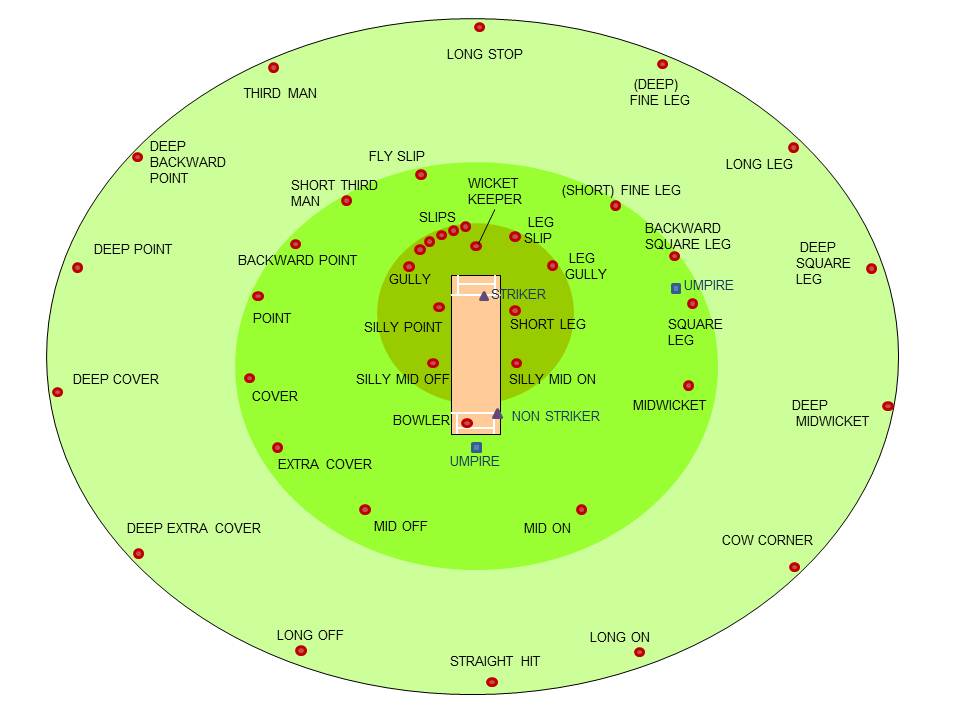
When a man goes out to go in, the men who are out try to get him out, and when he is out he goes in and the next man in goes out and goes in. There are two men called umpires who stay all out all the time and they decide when the men who are in are out. When both sides have been in and all the men have been out, and both sides have been out twice after all the men have been in, including those who are not out, that is the end of the game!